

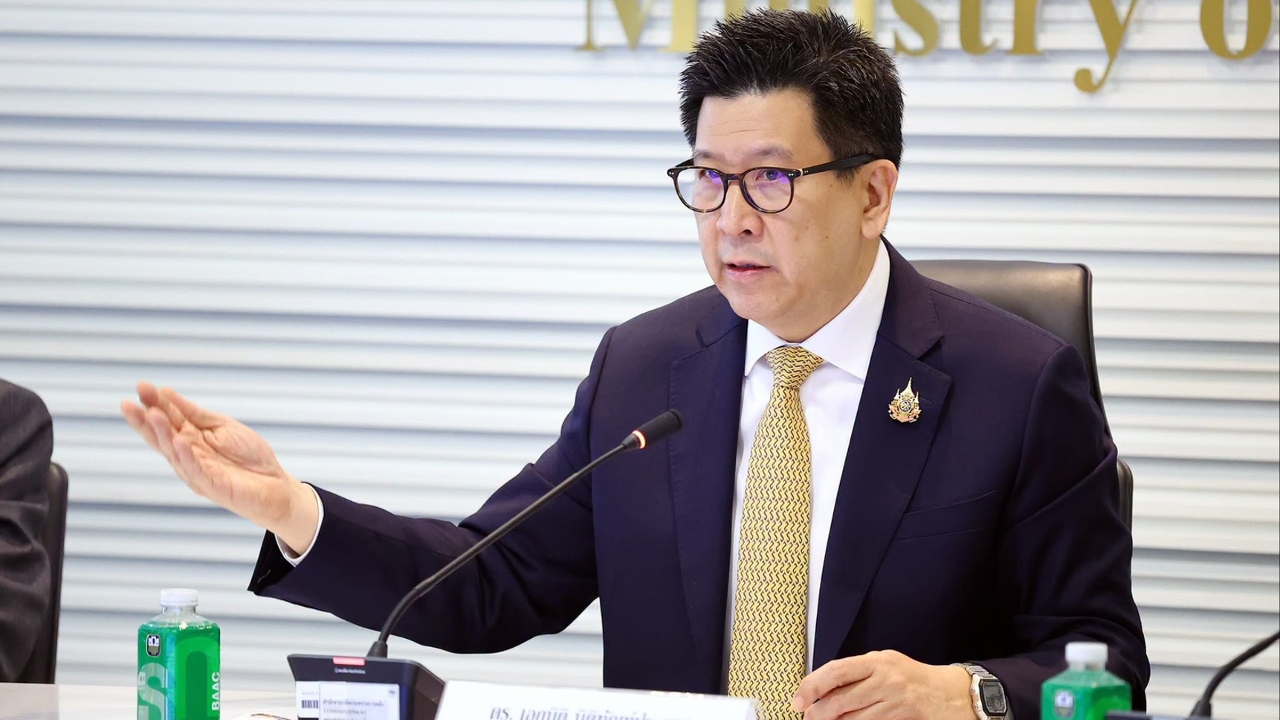
“Aekniti” aims to transform Thailand’s economy through 7 industry groups, proposing a plan to generate 5.4 trillion baht in revenue by 2030, while ensuring SMEs, startups, farmers, and Thai workers benefit and grow alongside new industries and sectors.
On 9 Nov 2026, Mr. Aekniti Nitithanprapas, Deputy Prime Minister and Minister of Finance, chaired a meeting with the Joint Private Sector Committee of the Three Institutions (JPSC) and representatives from 7 industry groups to review progress on the Reinvent Thailand plan before submitting proposals to develop a national plan for presentation at the joint public-private committee meeting (JPC) chaired by the Prime Minister.
Mr. Aekniti stated that the goal of this plan is to create a new wave of growth, or a Second Take-off, targeting economic expansion over 3% annually, increasing investment share from about 23% to 30% of GDP, and raising Thailand’s competitiveness ranking into the world’s top 20 by 2030.
The National Economic and Social Development Council (NESDC) will review relevant aspects to link private sector proposals with the country’s economic development plan before pushing them through the JPC mechanism.
“We will consolidate proposals from all 7 industry groups into a national action plan to present to the Prime Minister at the upcoming JPC meeting, scheduled for 2 December, to drive Reinvent Thailand towards tangible results,” he said.
The 7 industry groups have set a target to generate combined additional revenue exceeding 5.4 trillion baht, divided as follows:
1. Agriculture and processed food aiming to increase revenue by 860 billion baht.
Mr. Phot Aramwattanon, Chairman of the Thai Chamber of Commerce, proposed three strategies: improving productivity and reducing production costs, upgrading agricultural and food products to premium markets, increasing export value, and creating new industries from high-value agricultural products.
2. Automotive aiming to increase revenue by 640 billion baht.
Ms. Pimjai Leeissaranukul, Chairperson of the Federation of Thai Industries, proposed that Thailand accommodate multiple vehicle technologies, including combustion and electric vehicles (EVs), attract production of new EV models domestically, increase use of Thai components, and develop battery recycling and automotive parts industries, targeting production of 1.95 million vehicles by 2030.
3. Smart electronics aiming to increase revenue by 500 billion baht.
Mr. Panithan Pavaroanwitaya, electronics group representative, proposed leveraging AI and data centers to attract orders to Thailand, target producing at least 50% of parts and devices domestically, use investment to upgrade the power system as a market for Thai producers, develop Thailand as a testing and co-development base, and create an energy-saving appliance market through a trade-in program valued at no less than 30 billion baht annually.
4. Tourism aiming to increase revenue by 500 billion baht.
Ms. Chadathip Chutrakul, tourism group representative, proposed shifting focus from increasing tourist numbers to attracting visitors with high spending power, investment, and long-term residence. She also suggested linking major cities with secondary ones and developing five pilot areas—Bangkok, EEC, Phuket, Chiang Mai, and Nakhon Ratchasima—into attractive destinations for tourism, living, and investment.
5. Medical and health aiming to increase revenue by 1.1 trillion baht.
Mr. Saranyu Chanes, medical and health group representative, proposed expanding medical and wellness services to international markets, targeting revenue from foreign patients of no less than 100 billion baht annually, increasing use of Thai medicines and herbs in government procurement from 30% to 50%, boosting medicine exports to 11.3 billion baht per year, alongside advancing research and personnel development.
6. Retail and commerce aiming to increase revenue by 800 billion baht.
Ms. Nalaya Chirathivat, retail group representative, proposed creating fair competition by applying uniform standards for Thai and imported products (TISI and FDA), building Thai brands, selecting leading products to expand overseas markets, and developing distribution and cold chain systems to connect Thai producers with global markets.
7. Creative economy aiming to increase revenue by 970 billion baht.
Mr. Kamthorn Sila-on, creative economy group representative, proposed increasing value in the gem and jewelry industry by enhancing design and building Thai brands, further developing content such as series, games, and other creative works with greater intellectual property ownership, using technology and AI to expand international markets, targeting an average 9% annual growth in the creative economy.
The Board of Investment (BOI) will coordinate with the four JPC subcommittees and private sector to develop these 7 groups’ proposals into a national action plan. The key goal is not only to increase revenue but also to ensure SMEs, startups, farmers, and Thai workers benefit and grow alongside emerging industries.