

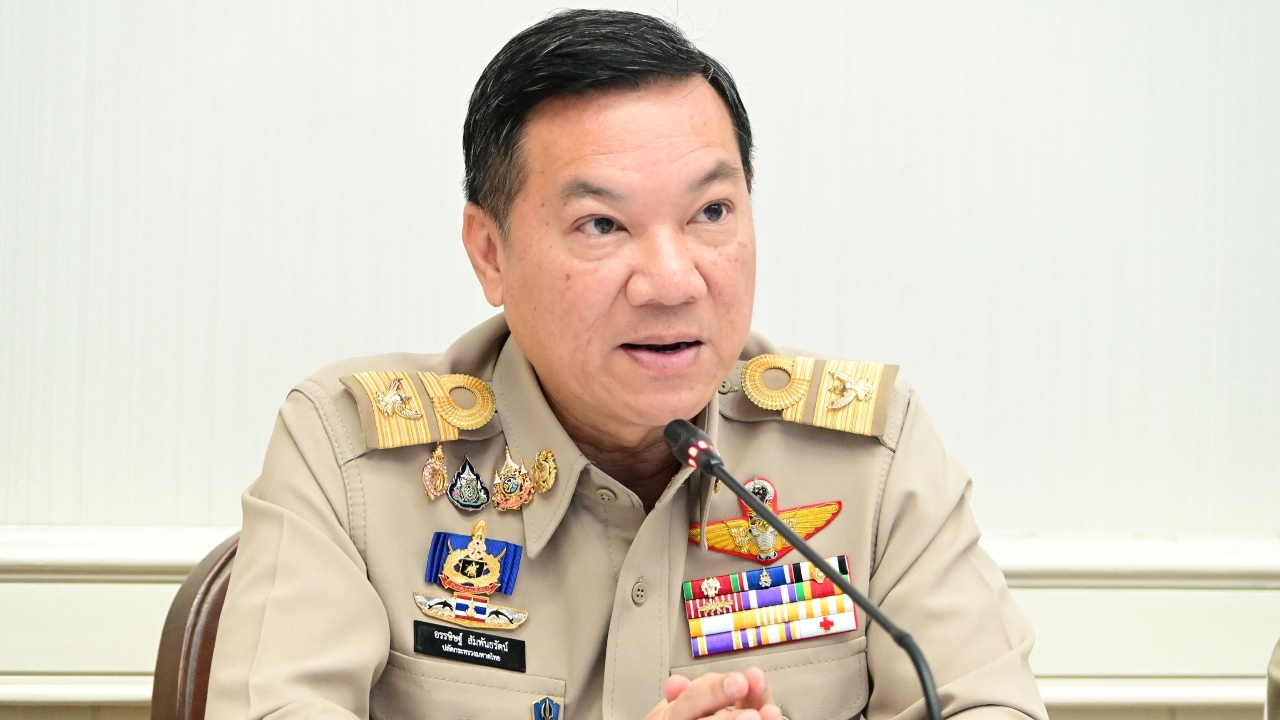
The Interior Ministry Secretary urgently instructed governors of 10 Thai-Myanmar border provinces to implement five measures to monitor and respond to impacts from the conflict, using the "Provincial Border Command Center for Neighboring Countries" mechanism.
At 19:30 on 9 Nov 2026 GMT+7, Mr. Assit Sampanrat, Secretary of the Ministry of Interior, disclosed that fighting in Myanmar, especially near the Thai border, continues. Recently, bullets and shrapnel from clashes between Myanmar government forces and opposition groups in Phalu (Milapan) area of Myanmar crossed into Thailand, damaging homes and property in Mae Sot district, Tak province.
Mr. Assit stated that the Ministry of Interior has instructed governors of the 10 Thai-Myanmar border provinces—Kanchanaburi, Chumphon, Chiang Rai, Chiang Mai, Prachuap Khiri Khan, Phetchaburi, Tak, Mae Hong Son, Ranong, and Ratchaburi—to use the Provincial Border Command Center mechanism to coordinate work among administrative agencies, military, police, and local government organizations. This aims to unify oversight of the area effectively, prioritize public safety, and prevent impacts on border area peace and order. Should violent incidents occur or significant changes arise, immediate reports must be sent to the Ministry for further directives and coordination of support from relevant agencies.
Additionally, governors of the 10 Thai-Myanmar border provinces have been instructed to implement five monitoring and preparedness measures to address safety impacts along the border and provide timely assistance to residents, including:
1. “Closely monitor and assess the conflict situation along the border” by integrating efforts with security agencies, military, police, administration, and local authorities; designate risk areas; prepare personnel, vehicles, shelters, safe zones/temporary refuge centers, food, drinking water, medical supplies, and essentials; and “issue timely alerts to inform the public.” If the situation threatens public safety or escalates, evacuate residents from risk areas to safe zones promptly, prioritizing children, elderly, disabled, patients, and vulnerable groups first.
2. “Strengthen border area control measures” by intensifying surveillance of risk zones and border crossings, monitoring illegal immigration, movement of individuals, smuggling of narcotics, and other illegal goods.
3. “Accelerate surveying and assessing damage to life, property, and livelihoods of affected residents,” and provide assistance and relief according to applicable regulations, criteria, and laws to alleviate hardship and enable residents to resume normal life.
4. Strictly follow management guidelines for Myanmar conflict refugees, continuously monitor and evaluate the situation, and coordinate with relevant agencies to prepare temporary safe areas to efficiently respond to potential cross-border displacement.
5. If fighting in Myanmar near the Thai border severely threatens the safety of Thai residents living along the border, “provincial governors may declare emergency disaster aid zones (due to conflict or border incidents)” and implement assistance and relief measures according to regulations, criteria, and laws to ease hardship and allow residents to return to normal life.