

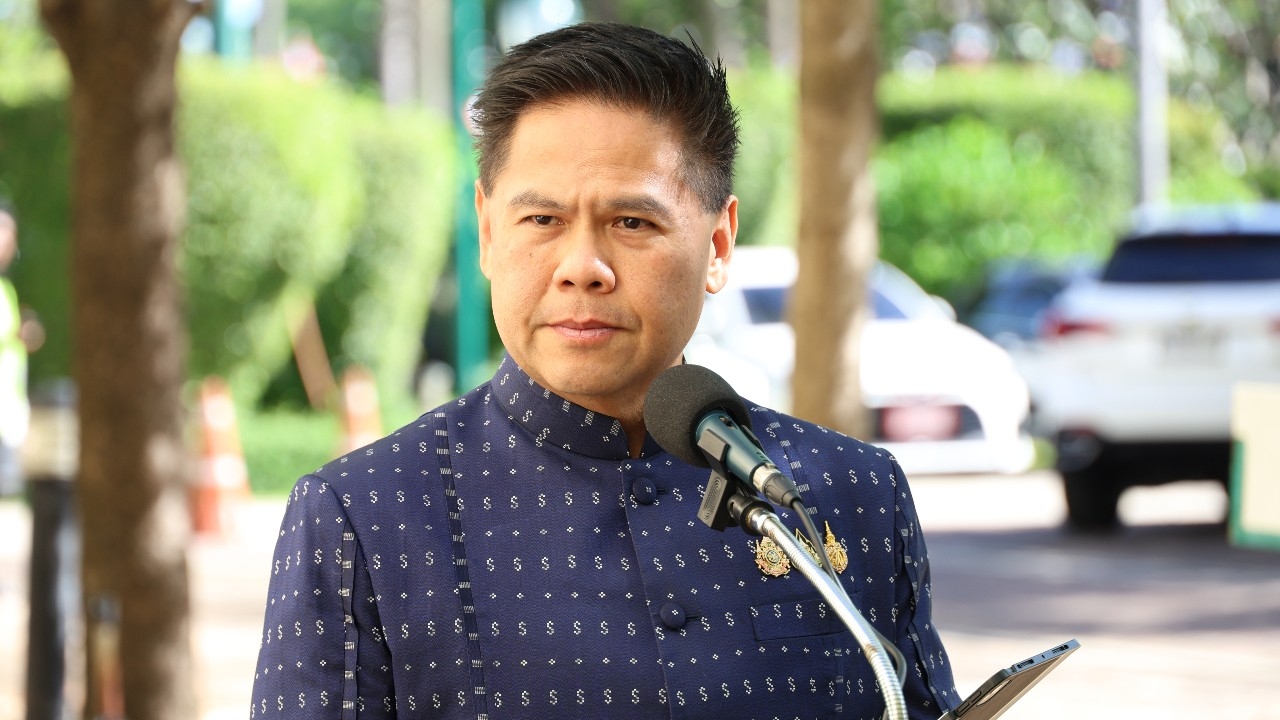
Warawut ordered a special task force to inspect 3,049 industrial waste disposal factories nationwide, revealing violations at 375 factories. Nine were ordered closed or suspended after secret wastewater discharges were found, with threats of asset seizure and blacklisting.
On 10 Nov 2026 at the Government House, Warawut Silpa-archa, Minister of Industry, announced that the Ministry of Industry is stepping up inspections, oversight, and law enforcement on factories classified as numbers 105 and 106, related to waste or unused materials management and reuse of industrial products. The goal is to inspect 3,049 factories nationwide out of over 70,000 factories, focusing on sectors with complaints about illegal activities that may harm citizens’ quality of life and the environment.
From 2-9 Nov 2026, inspections covered 752 factories, 25% of the target, leaving 2,297 remaining. Violations of the Factory Act were found in 375 factories, with 470 administrative orders issued: 110 under Section 35(4), 338 under Section 37, and 9 under Section 39.
In five pilot provinces—Prachinburi, Chonburi, Chachoengsao, Rayong, and Samut Prakan—380 factories were inspected of a 1,494 target, with 296 violations and 376 administrative orders. In the other 71 provinces and Bangkok, 372 factories were inspected from 1,555 targets, with 79 violations and 94 administrative orders.
Additionally, inspections targeted E-waste factories, with a nationwide goal of 350 factories. So far, 42 have been inspected (12%): 33 in the five pilot provinces with 24 orders under Section 37, and 9 in the other provinces and Bangkok with 1 order under Section 37.
This inspection focuses on managing problematic and high-risk factories, not just collecting data but enforcing laws seriously. Reports from Permanent Secretary Pasakorn Chairat, Director-General Pornyos Klankrong of the Department of Industrial Works, and Chief Inspector Decha Jatuthananan, head of the task force, show 9 factories require action under Section 39 of the Factory Act, including one factory ordered closed and recommended for license revocation and 8 ordered to suspend operations, as follows.
The factory ordered closed and recommended for license revocation is Factory No. 1 in Chachoengsao province, an aluminum smelting factory. Despite a suspension under Section 39, signs show it secretly operated the smelting furnace and destroyed equipment used by officials to lock machinery, including official closure notices under Sections 39 and 40. License revocation under Factory License Ror Ngor 4 is proposed due to serious defiance of official orders.
The eight factories ordered to suspend operations include Factory No. 2 in Prachinburi province, a waste management and recycling factory found to have illegally accepted hazardous waste such as electronic parts and metal slag without permission. It was ordered to temporarily suspend operations, undergo water quality tests, and move waste materials indoors.
Factory No. 3 in Prachinburi (Factory No. 53(1)) was found operating a 350-horsepower plastic washing and sorting machine without permission, discharging untreated wastewater. Its air treatment system was broken and it lacked a fire alarm system, leading to a temporary suspension order.
Factory No. 4 in Prachinburi, operated by an individual who ceased business since 2010 with no machinery or workers found, still reported industrial waste transport through the Gaw Or 2 system since November 2023. It was ordered suspended and reported to Kabinburi Police Station for false reporting.
Factory No. 5 in Rayong province, a waste management factory, was found storing full 200-liter chemical drums and having a broken 268-horsepower machine, yet reported receiving hazardous waste 112 times totaling 321.77 tons via the Gaw Or 2 system. It was ordered to suspend operations and halt waste acceptance electronically.
Factory No. 6 in Rayong, a slag storage factory, had slag piles on dirt ground without contamination prevention, dug unauthorized rainwater ponds, and released polluted rainwater overflow to adjacent areas. It was ordered suspended and waste acceptance halted electronically.
Factory No. 7 in Samut Prakan province, a plastic product manufacturer, operated beyond license scope, lacked wastewater and air treatment systems, had no fire prevention, and submitted inaccurate Gaw Or 6 reports. It was ordered suspended.
Factory No. 8 in Samut Prakan, a metal and electronic equipment recycling factory, had a broken air treatment system, added machinery without reporting under Section 19, violated hazardous waste storage conditions, lacked electrical system certification, and had unsafe buildings, resulting in a suspension order.
Factory No. 9 in Samut Prakan, a recycling factory, secretly discharged untreated production wastewater outside the factory, lacked wastewater treatment, stored chemicals and waste outdoors without earthen embankments to prevent leakage, and was ordered suspended.
Warawut stated the task force will continue monitoring factories ordered to comply with laws or suspend operations and oversee improvements. Seized items will be legally handled—locked, marked as prohibited, seized or confiscated. Factories will be ordered to properly treat or dispose of waste. Inspection results will be analyzed to improve enforcement efficiency.
The next inspection phase will expand to five additional pilot provinces—Nakhon Pathom, Pathum Thani, Samut Sakhon, Saraburi, and Ayutthaya—focusing on targeted provincial inspections. Fifty task force teams will coordinate for faster, wider coverage. Public cooperation is requested to report suspicious or illegal factory activities to the Ministry of Industry hotline 1564, available 24/7.
Warawut warned potential offenders that previously they might have thought penalties would be limited to Factory Department fines or suspensions. Now, under Prime Minister Anutin Charnvirakul and the Ministry of Interior’s integrated approach, offenders face factory department penalties plus Ministry of Interior investigations into shareholder accounts, Anti-Money Laundering Office financial tracing, asset seizures, and Ministry of Commerce blacklisting. Those who hold shares in companies violating laws will be barred from holding shares in Thai companies. He urged offenders to stop illegal acts and encouraged compliant factories.
Asked about concerns that including Prachinburi in the Eastern Economic Corridor (EEC) might face opposition due to toxic waste worries, Warawut said discussions with the EEC Secretary-General would determine next steps. He expressed confidence that with unified task force efforts, including recent orders from the Prime Minister as Minister of Interior directing all provinces to form special task forces, work is coordinated with all provincial governors.
Warawut added confidence that once the task force’s framework is completed by late this year or early next year, these issues and EEC operations will proceed more smoothly, reassuring the public.
When asked about relocating factories and waste sites per local demands, Warawut said legal provisions must be reviewed regarding factory establishment procedures. "While orders can be issued, whether they are lawful depends on the details, including whether public hearings were conducted or if the factory was established before such requirements existed. I need to examine these specifics first," he said.