

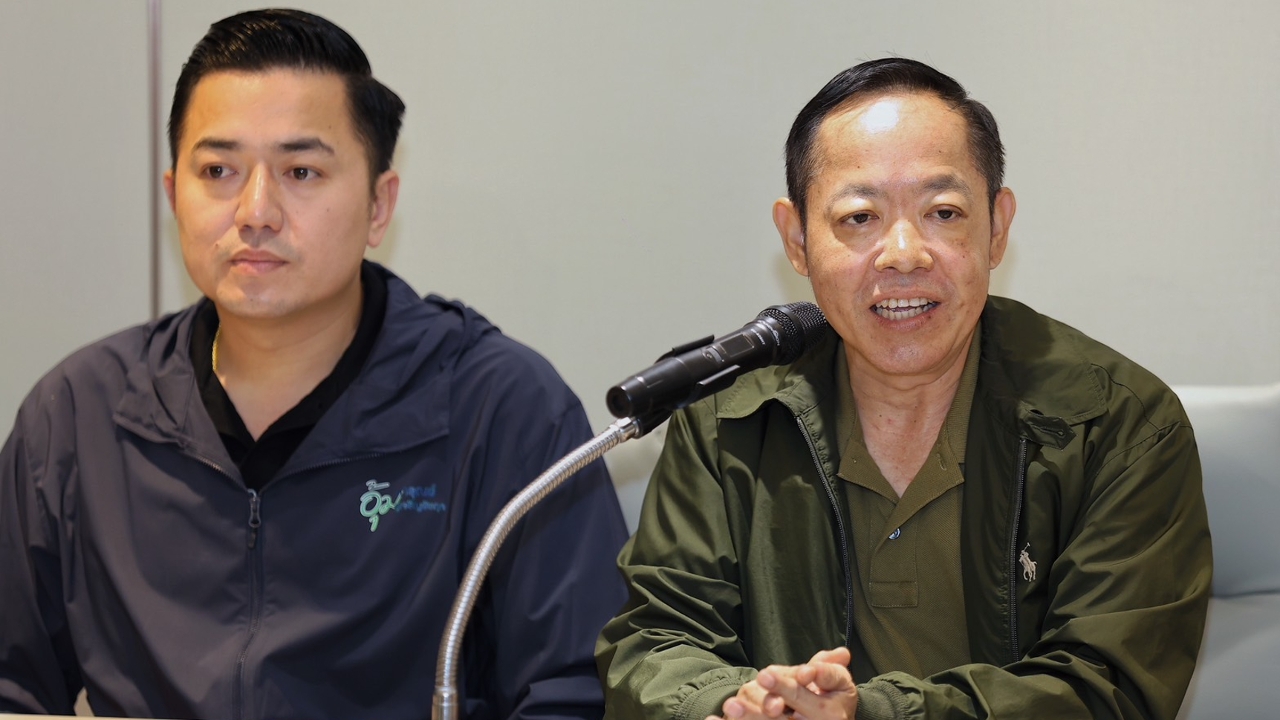
Kalatham Party MPs urge the government to swiftly resolve the transboundary water pollution crisis, fearing toxic contamination of the Mekong River replicating the Kok and Sai River incidents. They plan to submit a motion to establish a parliamentary committee to study solutions to the problem.
At 17:20 on 10 Nov 2026 GMT+7, Northern MPs from the Kalatham Party, led by Mr. Sutheeraphong Wanchai Thanawong, Chiang Rai MP for Constituency 7, along with Ms. Monthicha Chaibaan and Mr. Surasit Jiamwijak, held a press conference on the transboundary water pollution crisis in the northern region. They expressed concern about mining activities in neighboring countries that may affect water quality in the Mekong River and other key water sources used by the public for consumption and agriculture. They called on government agencies to urgently investigate and implement concrete preventive measures.
Mr. Sutheeraphong said, as the Chiang Rai MP for Constituency 7 along the Mekong River, he has heard residents' concerns over the past 2-3 days regarding mining activities near Chiang Khong town in the neighboring country. Especially as the dry season lowers Mekong water levels, exposing sandbanks where machinery has been used to excavate and sift soil for gold production, possibly involving chemicals in the process.
The public's main worry is that chemicals and toxins could contaminate the Mekong River, repeating the pollution problems seen in the Sai and Kok Rivers caused by mining activities in Myanmar, which have seriously impacted local communities.
Mr. Sutheeraphong stated he is not ignoring the issue. This Friday, he will meet with the Chiang Khong Conservation Club president, who has expertise on the Mekong River, to gather data, inspect the area, and clarify facts before proposing targeted solutions.
He has also consulted with MPs from Chiang Rai and Chiang Mai to collect information and prepare a motion to the House of Representatives, requesting the formation of a committee to seriously study the problem and develop effective measures to prevent and resolve transboundary pollution impacts.

Ms. Monthicha said residents are highly concerned after toxic contamination was found at critical levels in the Sai River, affecting water use for consumption. There have been reports of toxins detected in the urine of several residents, indicating the problem extends beyond water quality to potential health effects.
She has been monitoring the toxic contamination issue continuously and plans to meet tomorrow with relevant agencies and ministries—especially the Ministries of Agriculture and Cooperatives, Foreign Affairs, and Natural Resources and Environment—to coordinate problem-solving measures at both national and international levels.
"We want Thailand to engage in negotiations with Myanmar alongside securing alternative water sources for tap water, drinking, and agricultural use, because the people are truly suffering. We must push for urgent solutions," said Ms. Monthicha. . (This part contains only a speaker attribution and is included in the previous part's translation.)
Mr. Surasit said toxic contamination in the Kok River is affecting water security, especially the Chiang Rai Municipality’s tap water production, which must source water elsewhere because the Kok River can no longer be fully relied upon.
Initially, the problem has been addressed by drawing raw water from the Mae Lao River to produce tap water for Chiang Rai Municipality and nearby areas. Efforts are ongoing to find a long-term alternative water source. If the contamination in the Kok River is resolved, the water source may be reconsidered for tap water production.
Kalatham Party MPs affirmed they will closely monitor the transboundary pollution issue through fact-finding, liaising with relevant agencies, and pushing parliamentary mechanisms to urge the government to address the root causes, protect vital northern water sources, and sustainably reduce health and quality of life risks for local residents.