

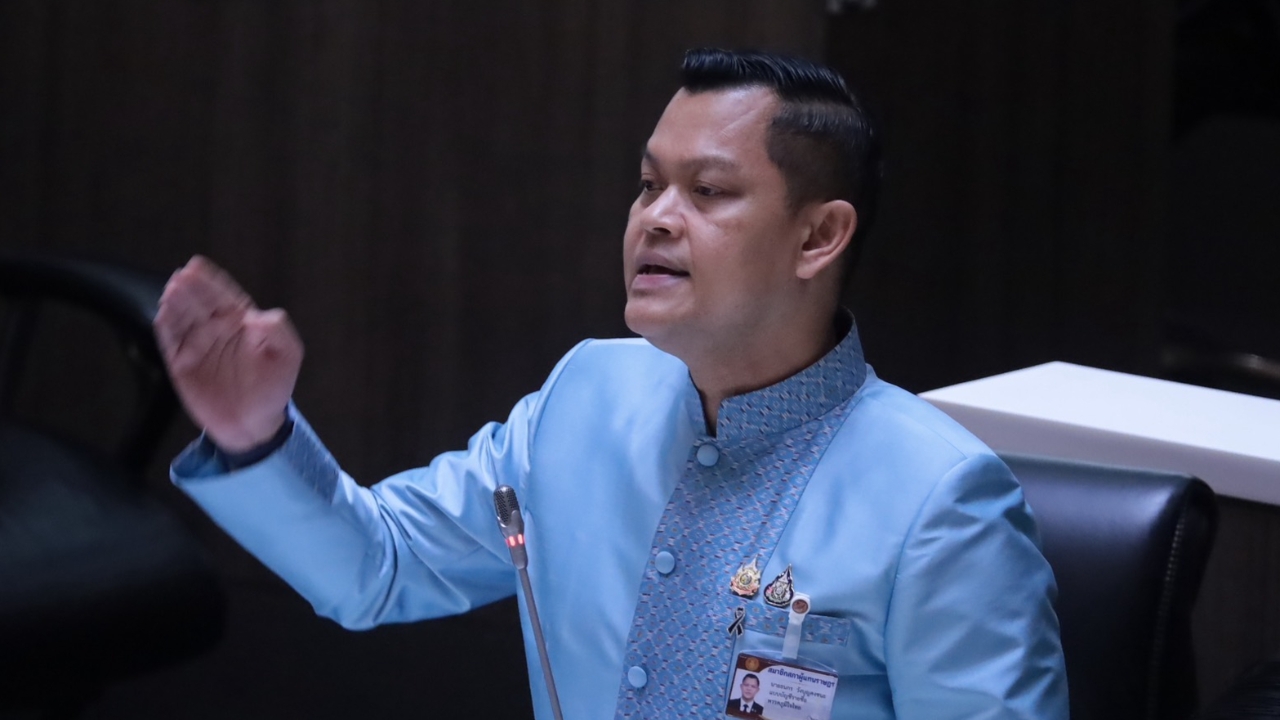
Thanakorn debated the bill to restructure ministries and agencies, recommending the integration of culture with tourism under clear leadership and seamless coordination to ensure every baht invested truly benefits local communities.
11 Nov 2026 GMT+7 Mr. Thanakorn Wangboonkongchana Thanakorn Wangboonkongchana, a party-list Member of Parliament from the Bhumjaithai Party, debated the draft bill to restructure ministries and agencies, describing it as a new national strategic alignment to harness Thailand’s strongest potentials in sports, tourism, and culture. He said this would elevate these sectors into a new economic engine to generate income, create jobs, and improve citizens’ quality of life. He noted that separating the Ministry of Sports from the Ministry of Culture and Tourism would allow for more targeted budget allocation and policy implementation.
However, he suggested that to achieve concrete results, the previously fragmented management of tourism, sports, and culture must be unified under clear leadership that coordinates seamlessly from central policies to provinces, localities, and private sectors. He emphasized integrating culture with tourism to design a comprehensive ecosystem—from conservation (upstream), product and service development (midstream), to marketing (downstream)—so that every baht invested reaches local people genuinely.
“Today, sports are no longer just about health or recreation but represent soft power and a major industry. A clear example is the MotoGP event in Buriram from February to March 2026, which attracted over 228,000 people in just three days, generating more than 5.139 billion baht in circulation. This money filtered down to hotels, restaurants, transport services, and local vendors. This illustrates the power of sports tourism. Going forward, no state sports facility should be abandoned as a monument; they need maintenance budgets, responsible parties, accessibility for schools and local communities, and systematic, merit-based athlete development from grassroots to global stages.”
Thanakorn added that Thailand has immense cultural assets—history, arts, cuisine, and community lifestyles—that connect the nation’s spirit with a broad window to tourism. He hopes the restructuring will unify management. The Ministry of Sports should evolve from merely organizing competitions to fully developing the sports industry. The Ministry of Culture and Tourism must convert heritage into value to distribute income by shifting from selling cheap tourism to offering experiences linked to history and lifestyles, encouraging tourists to stay longer and spend more. Additionally, development should spread to secondary cities, using cultural routes to attract visitors, channeling funds from major cities to communities, enabling local accommodations, guides, and artisans to thrive, fostering creative economies, raising traditional wisdom to international standards, protecting community copyrights, and motivating youth to return home to build businesses.
“I urge the government to facilitate diplomatic passports for globally renowned artists and athletes such as Lisa from BLACKPINK, Nong Nene, and Nong Ten Tatsanapol Inthraphuvasak, a racing driver who debuted in F2 this year and already achieved a second-place podium in Belgium, proudly flying the Thai flag. This will ease their travel in recognition of their contributions to the country’s reputation. Moreover, the government should create area-based cultural tourism plans centered on communities with strict capacity limits to ensure income generation and conservation go hand in hand sustainably, with clear responsibilities and timelines. Importantly, within one year, a report must compare results against pre-restructuring levels—measuring increased community income, improved heritage site management, and broader public sports access—to truly benefit the people.”