

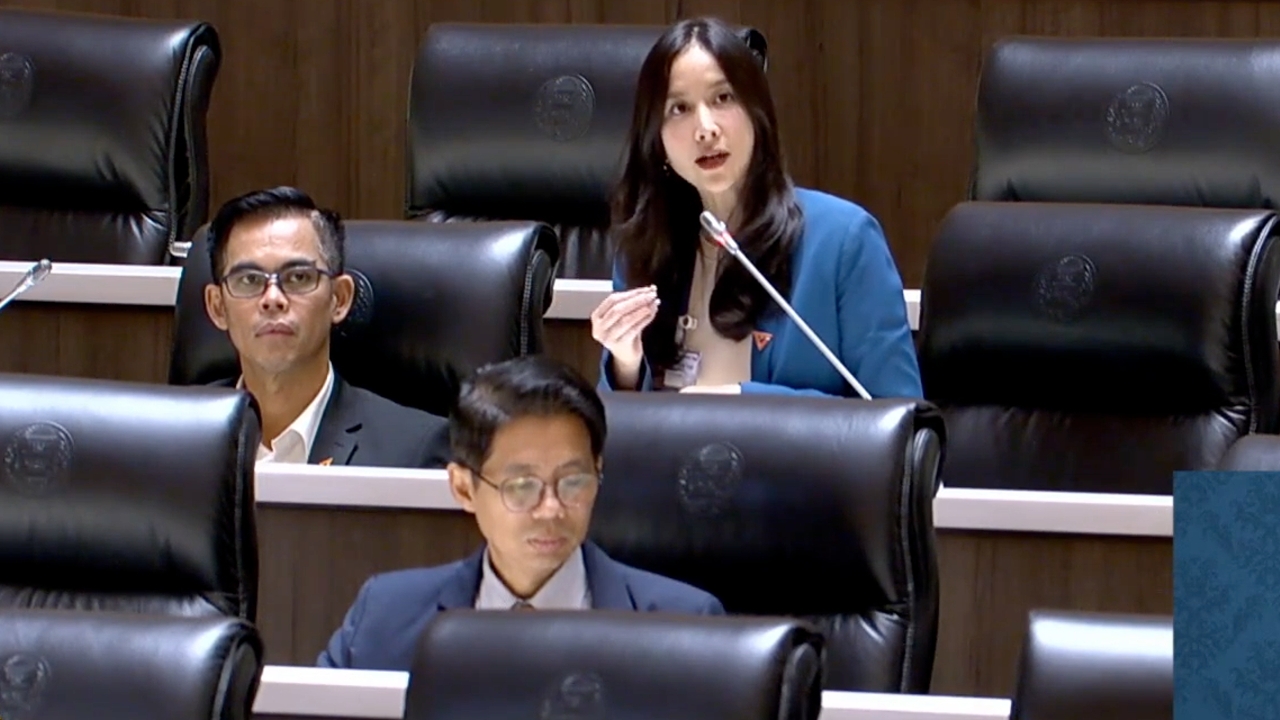
Cholnat highlights that establishing a new 'Ministry of Sports' requires more than just changing the ministry's name; the management system must also be transformed. She calls for a purge of corruption and a budget system overhaul, proposing three reform measures for Thailand's sports sector to improve governance and effectiveness.
On 11 Nov 2026 GMT+7, during a parliamentary session considering the bill to restructure ministries, bureaus, and departments regarding the establishment of a Ministry of Sports, Cholnat Koykul, a Bangkok MP from the Prachachon Party, strongly expressed support for seriously developing Thailand's sports sector from youth to professional levels, and stressed the need to eradicate long-standing corruption within the sports industry.
Cholnat stated that although the Cabinet proposed separating sports affairs into a new ministry citing greater agility and efficiency, the core agencies and responsibilities remain unchanged. If the structure, budget system, and performance indicators stay the same, the result will be merely a 'new ministry name' without substantive change. The root problems in Thailand's sports sector are not from a lack of overseeing bodies—there are currently the Physical Education Department, the National Sports University, the Sports Authority of Thailand, and the National Sports Development Fund—but persistent issues remain. Some areas have sports stadiums but no management; youth lack equipment and coaches; aspiring professional athletes lack ongoing support, compounded by entrenched corruption.
She cited examples of problematic projects, including:
• The sports stadium construction project in Narathiwat Province, with a budget exceeding 177 million baht, initiated in 2012, which after more than 10 years remains incomplete.
• The sports stadium construction project in Lampang Province, with a budget over 107 million baht, also unfinished under similar circumstances.
• The case of the Thailand Disabled Sports Association, which recently submitted complaints about irregularities in financial transactions.
• The case of the Thailand Esports Association, which filed a complaint with the National Anti-Corruption Commission to investigate discrepancies in national team allowances, accommodation fees, and incomplete compensation for coaches during the SEA Games.
She proposed three reform directions.
To prevent the establishment of a new Ministry of Sports from repeating past problems, Cholnat proposed three main reform points:
1. Adjust the budget allocation system to align with local needs by integrating budget planning across agencies, focusing on each area's issues and shortages to avoid wasteful spending.
2. Disclose information and close corruption loopholes from the outset by creating a transparent budget usage system that the public can audit—from approval and allocation through to outcomes—especially for funds allocated to sports associations, ensuring money actually reaches athletes and is used as intended.
3. Shift performance indicators (KPIs) toward tangible outcomes: replace measurement based on budget disbursement or project count with concrete results, such as the population's access to sports activities, the number of youth genuinely developed, and the utilization rate of government-invested sports facilities.
Cholnat concluded by saying that expecting different results from the same old methods is impossible. She hopes the establishment of the new Ministry of Sports will not just rename the entity but will transform mindsets and operational systems to ensure taxpayers’ money is used to maximum benefit.