

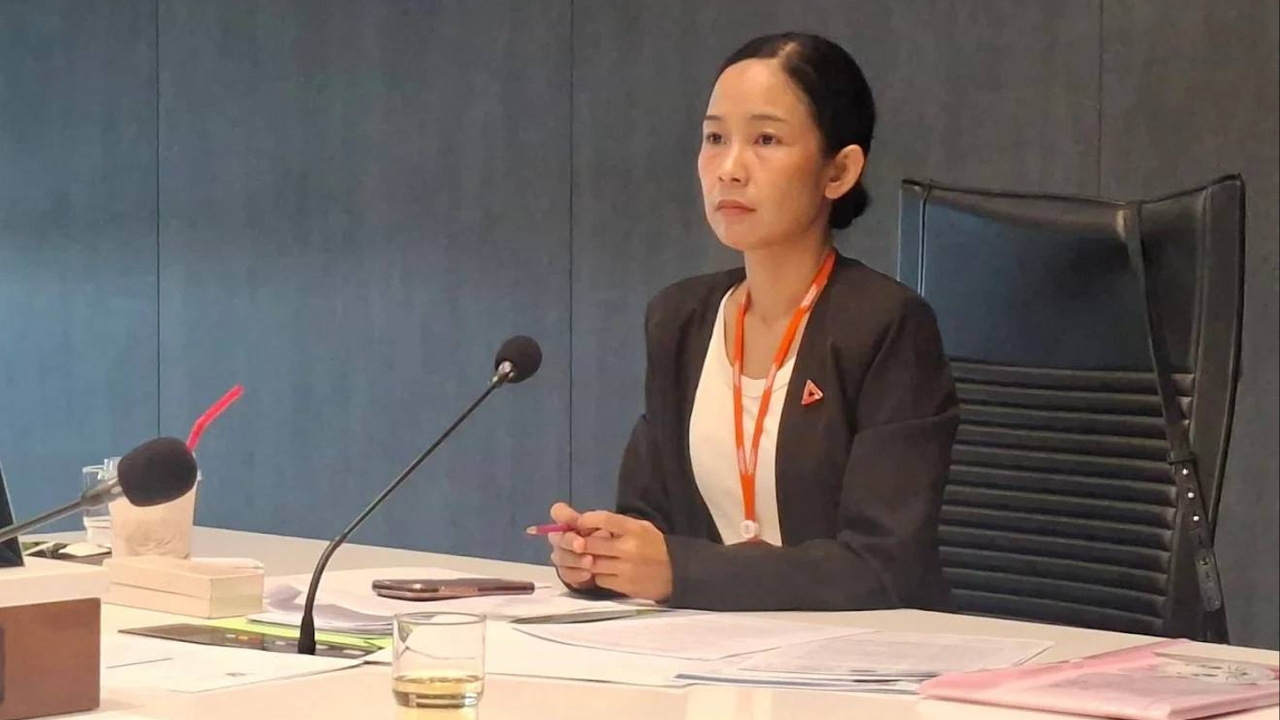
Sasinan highlights that 106 countries at the UN have recommended Thailand address human rights issues, proposing three immediate government measures: erase the legacy of the 6 October massacre, move forward with amnesty without leaving anyone behind, and restore bail rights.
On 11 November 2026, Ms. Sasinan Thammanithinan, a Bangkok MP from the Prachachon Party, spoke about the fourth cycle Universal Periodic Review (UPR) of Thailand’s human rights situation before the UN Human Rights Council in Geneva, Switzerland, on 9 November. Thailand received as many as 297 human rights recommendations from 106 countries worldwide.
Ms. Sasinan stated this reflects Thailand’s human rights image and situation clearly in the eyes of the international community. One key issue repeatedly raised by many countries was Article 112 of the Criminal Code. Sweden proposed abolishing the minimum prison sentence and exempting criminal liability for children and youth. Finland, Germany, Denmark, Canada, and several others also urged review of this law. However, the Thai government representative initially maintained that Article 112 exists to protect national security.
Ms. Sasinan added that on Friday, 13 November, the Thai government must officially state whether it will “accept” or merely “acknowledge” these recommendations. Yet society should not wait only for the government’s formal response that day, as genuine human rights commitment is measured not by diplomatic words but by real actions within the country. There are at least three important issues the government can start addressing immediately:
1. Erase the legacy of the 1976 coup: The minimum prison sentence under Article 112, which international parties suggest abolishing, was not originally in the statute but originated from the 21 October 1976 Administrative Reform Order No. 41 issued by the military government, increasing penalties to 3-15 years. Currently, 59,503 citizens have jointly petitioned to repeal this military order, but the Speaker of the House rejected the bill, claiming it is unrelated to rights and freedoms. The people’s network has appealed this decision. Ms. Sasinan sees reconsidering this ruling and allowing the bill to be reviewed by Parliament as a key opportunity to affirm that nearly 60,000 citizens’ voices matter and that the Thai legislature is ready to erase this coup-era legal legacy.
2. Advance comprehensive amnesty without leaving anyone behind: Although the Peaceful Society Promotion Act of 2026 is in effect, it does not automatically grant amnesty to all. Eligible individuals must submit applications by 31 January 2027. Those affected should promptly verify their eligibility and apply on time. Related government agencies must expedite the process fairly to prevent indefinite waiting. Crucially, the government must not forget the 33 prisoners charged under Article 112 not yet covered by current law. Genuine reconciliation cannot occur if the state ignores the suffering of some groups in society.
3. Restore bail rights because no one should be punished before final judgment: Data from the Lawyers’ Rights Center for Human Rights in the first half of 2026 reveal courts denied bail in 99 of 108 requests and appeals, a rate of 91.67%. The case of lawyer Anon Nampa starkly illustrates the bail rights crisis. Between September 2023 and February 2026, bail was requested 93 times and appeals filed 43 times but never granted, resulting in over three years of continuous detention. Although the presumption of innocence is guaranteed by the Constitution’s Article 29, practical protection is lacking. Bail should be the rule; pre-trial detention the exception—not a means to deprive freedom simply because legal proceedings are ongoing.
Ms. Sasinan concluded that these three recommendations are neither beyond capability nor illegal but depend on the government’s sincerity and political will—listening to the people to erase the coup legacy, ensuring amnesty covers all affected equally, and restoring fundamental rights for those with unresolved cases. During the previous UPR cycle, Thailand rejected all four recommendations regarding unlawful detention. This time, the government should not let history repeat itself.
“Accepting international recommendations is only the beginning; truly granting people their rights and freedoms is the government’s true test. Human rights are measured by actions, not promises on the global stage.” Ms. Sasinan stated.