

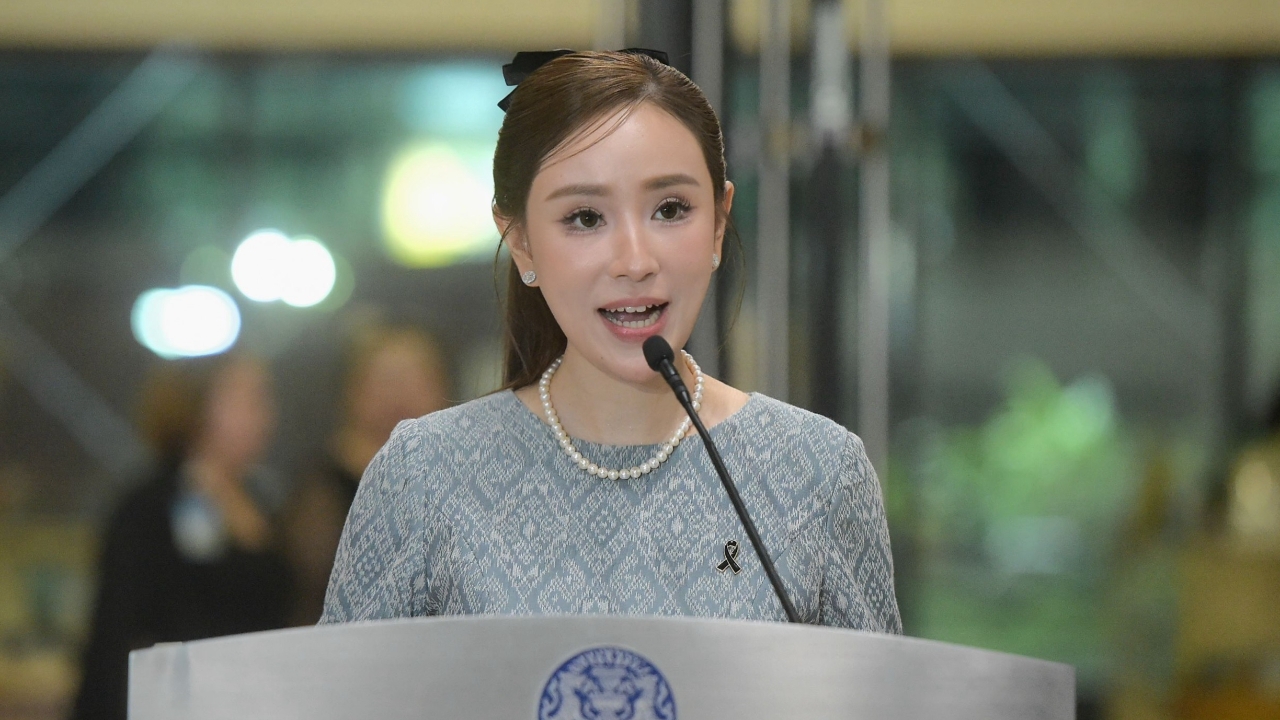
The Deputy Government Spokesperson rebutted Sahasawat’s criticism of the Social Security Bill draft, explaining that the oversight mechanism is not an executive authority over the elected board. He advised reading all legal sections thoroughly before making accusations, and emphasized that the government has expanded various rights for insured persons.
On 12 Nov 2026 GMT+7, Major Phatdarasmi Thongsaluaykorn, Deputy Spokesperson of the Office of the Prime Minister, clarified remarks made by Sahasawat Khumkhong, Chonburi MP from the People’s Party, who criticized the Social Security Bill draft (No. …) B.E. …, which the Cabinet approved on 3 Nov 2026 GMT+7, and called for the government to withdraw and reconsider the draft.
The Deputy Government Spokesperson said the government respects MPs’ rights to review and comment on draft laws, especially social security legislation affecting many insured persons’ benefits. However, such critiques should be based on comprehensive legal facts and clearly distinguish between flaws in provisions and allegations of political intent.
“Government oversight is appropriate, but legal observations and accusations of political motives are different matters. If any section has issues, it should be clearly identified and suggestions made for corrections. It is premature to conclude the entire bill is a political tool without sufficient supporting evidence.”
Point 1: The fund oversight mechanism does not mean usurping authority from the elected board. The Deputy Spokesperson explained that good governance of large funds requires oversight mechanisms to ensure transparency and protect insured persons’ interests, clearly separating policy-setting, management, and auditing roles.
This draft bill proposes an audit committee responsible for reviewing internal controls, risk management, and internal audits. Having such a mechanism does not mean the audit committee automatically holds executive power over the Social Security Committee in all matters.
The bill requires the audit committee’s charter to be approved by the Social Security Committee. Issues regarding the audit committee’s powers, ministerial appointment procedures, and independence remain open for adjustment to prevent overlapping authority or interference in fund management. Current law already addresses audit committee roles, but this draft clarifies and aligns their duties with Ministry of Finance auditing standards.
“Being elected grants legitimacy as representatives of insured persons, but does not place committee members above oversight. At the same time, auditors must not overreach into management without limits. Both principles must coexist.”
Point 2: The three-year committee term can be criticized, but it’s premature to allege intent to block any party. The Deputy Spokesperson said the proposal to limit committee terms to a single three-year period warrants careful consideration—balancing continuity of fund management, opportunities for new representatives, and insured persons’ rights to choose trusted delegates.
The government acknowledges concerns that a single term limit could affect policy continuity and representatives’ duties, an issue open for improvement.
However, allegations that this proposal is intended to block certain individuals or groups must be supported by facts and evidence. Political impacts should not be immediately taken as proof of the bill sponsors’ intent.
“Potential political consequences do not always prove political intent. If one opposes term limits, better criteria should be proposed and considered jointly through parliamentary processes.”
Point 3: The Social Security draft is not only about board structure but also proposes expanded benefits for insured persons. The Deputy Spokesperson said bill consideration should cover all key aspects, as besides fund management structure, this draft also suggests improving insured persons’ benefits including:
1. Maternity benefits: Proposes increasing paid maternity leave from 90 to 98 days at 50% wage compensation, aligning with labor protection laws.
2. Disability benefits: Proposes raising income replacement for non-work-related disability from 50% to up to 70% of wages.
3. Child support: Proposes extending coverage by six months after insured status ends.
4. Unemployment benefits: Proposes allowing insured persons up to age 60 who meet contribution conditions but have not received old-age benefits to qualify for unemployment rights as defined by law.
5. Elderly insured persons: Proposes extending Social Security coverage under Section 33 up to age 65 and improving options for old-age benefits.
These benefits remain proposals in the draft bill, subject to parliamentary approval and legal promulgation before taking effect under specified conditions.
“Social Security reform should not be confined to debates about who will be on the board. It must also consider what additional protections insured persons gain and what aspects need further improvement. The law’s core focus is the insured persons’ quality of life, not political competition.”
Point 4: The 120-day maternity leave right is not reduced, but welfare payments should be adjusted accordingly. The Deputy Spokesperson clarified the difference between the Labor Protection Act and the Social Security Act, as each has distinct purposes and entitlement mechanisms.
Currently, the Labor Protection Act grants female employees up to 120 days maternity leave, with employers paying wages during leave as mandated. The Social Security Act covers welfare payments from the fund under specified criteria. Thus, the draft’s proposal to pay 98 days’ maternity leave compensation does not reduce or cancel the 120-day leave entitlement.
However, the government acknowledges proposals to align Social Security fund payments with the 120-day maternity leave entitlement, a matter warranting serious consideration during legal amendments.
“It is important to distinguish between the right to leave and the right to welfare payments during leave, as they are governed by separate legal mechanisms. Nevertheless, if labor law advances maternity leave to 120 days, the Social Security law should be appropriately updated to reflect this.”
Point 5: Finding flaws does not mean withdrawing the entire draft; parliamentary amendments are the constitutional mechanism. The Deputy Spokesperson said this Social Security Bill draft has undergone extensive development and review. Identifying areas for improvement does not necessitate halting the entire legislative process in every case.
Parliamentary and committee review processes provide opportunities for representatives to examine, comment, and amend provisions appropriately within constitutional and legal frameworks.
Issues needing further consideration include the audit committee’s independence, committee terms, maternity leave compensation, and eligibility conditions for various insured groups, all requiring thorough discussion.
“If any section is problematic, it should be seriously revised, not dismissed as useless along with the entire draft. Withdrawal is one option but not the only way to improve the law. Many insured persons await these improvements to receive maximum benefits.”
The Deputy Spokesperson added that the government does not reject opposition criticism nor sees proposed amendments as wrong. On the contrary, reasoned, fact-based suggestions benefit the law’s quality. However, scrutiny should focus on the law’s content, its impact on insured persons, and concrete solutions rather than unsupported accusations of political motives.
“I emphasize the government does not reject oversight or legal amendments but urges clear separation between facts and accusations.
If any provision is unsuitable, we should collaborate to improve it, rather than lead the public to believe the entire draft is useless just because some sections are debatable.”
“Political views may differ, but insured persons’ rights must not become tools of conflict. The key goal is not which side wins the debate but that insured persons gain improved benefits, participate appropriately in fund management, and have confidence that funds are managed transparently, fairly, and are accountable,” concluded the Deputy Spokesperson of the Office of the Prime Minister.