

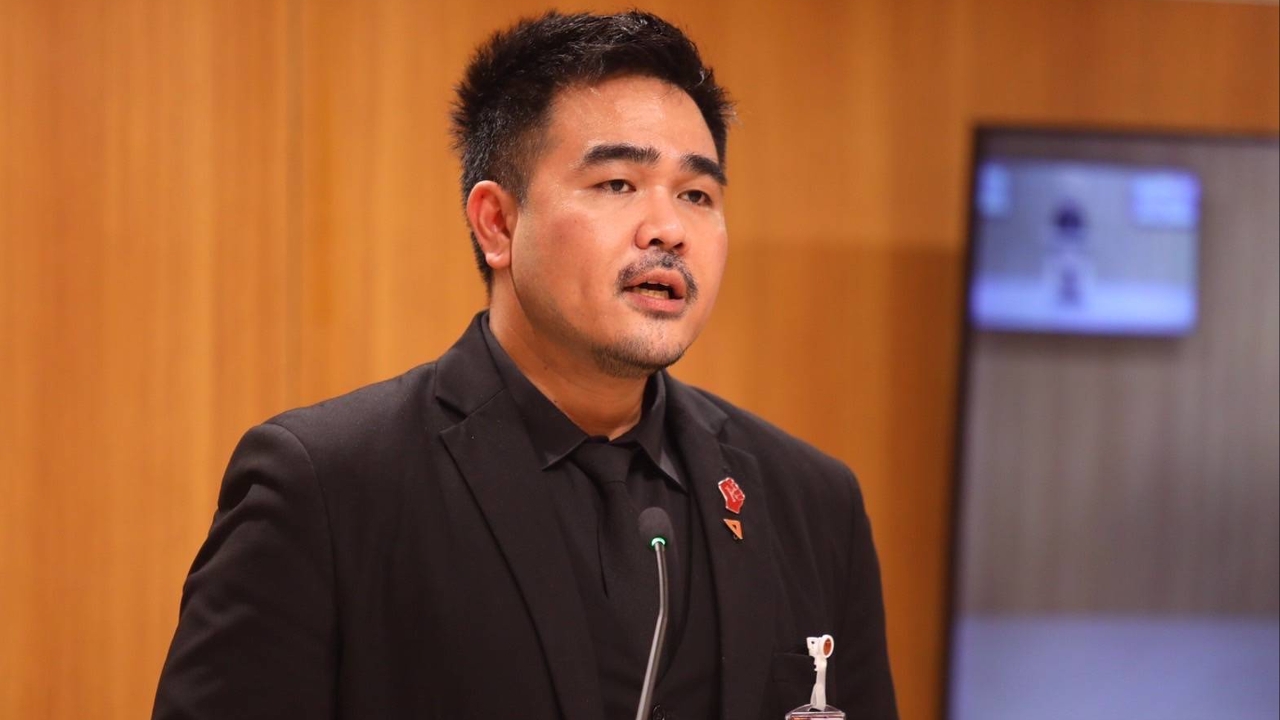
Sahasawat, deputy government spokesperson, urges not to use the phrase "premature accusation" to avoid addressing issues in the Social Security Act, pointing out that term limits on the board and the insertion of appointed boards are real in the Cabinet draft.
On 12 Nov 2026 GMT+7, Sahasawat Koomkong, MP for Chonburi from the People’s Party, commented on the advisor to the Minister of Labor and the deputy government spokesperson's explanations responding to the People’s Party's criticisms of the Cabinet draft of the Social Security Act. After reading both sides’ statements, he frankly said the government is using the term “premature accusation” to evade answering key questions embedded in the legal text. The issue is not about reading minds but about who the draft law gives power to, who appoints those individuals, and what real benefits insured persons receive. He raised five key points back to the government.
The first point is that critiquing the law’s impact does not require proving the author’s secret intent. He does not claim secret documents but says society can verify from the provisions who appoints which board members, their powers, and whether insured persons are restricted in electing their representatives. The government might claim no evidence exists of obstruction, but it must explain why the social security board’s term is limited to three years with only one term, and why the minister-appointed audit committee’s role is significantly increased in this draft.
Importantly, the deputy government spokesperson himself admitted that board term limits and the audit committee’s independence are issues that can be improved. If there are concerns, the government should promptly clarify and amend them rather than dismissing them as mere political accusations.
The second point is not to promote benefits already included in the 2022 draft as if newly conceived today. Many benefits the government publicizes, including the "3 Requests" measure, were already in the 2022 Cabinet draft, which the minister’s advisor also acknowledged in news reports. He does not deny the increased benefits are useful or that insured persons deserve them. However, highlighting benefits cannot overshadow questions about power structures and does not resolve concerns about interference in the management board. If the government is truly working for insured persons, it must explain why issues affecting representative elections and fund oversight are designed this way.
The third point concerns the “Audit Committee.” He does not say this committee has full administrative power over the main board but notes that it is appointed by the minister. The draft clearly defines its roles in internal control, risk management, and governance. Although approval of its charter requires the social security board’s consent, the fact remains that the minister appoints its members. While fund oversight is necessary, the mechanism must be independent, with well-defined authority, and not allow political interference in overseeing representatives elected by the public. Since the government admits the committee’s composition and authority can be improved, it should clarify how it is politically independent rather than merely stating the committee exists as if questions about its origin and powers are irrelevant.
The fourth point is that the three-year single term limit has real effects, which the government also admits should be reviewed. Cabinet documents explicitly state that social security board members, advisors, and medical committee members serve one three-year term only. Such restrictions deprive insured persons and employers of the right to re-elect effective representatives for continued service. The government must explain why it limits citizens’ rights to re-elect representatives while appointed board members remain within the same structure. The deputy government spokesperson also acknowledged this as an issue for reconsideration.
The fifth point concerns the 98-day maternity leave benefit figure, which is a government error, yet officials try to excuse the mistake through procedural arguments. He knows the 120-day maternity leave under the Labor Protection Act remains valid and this draft does not reduce leave rights. The government’s responsibility is why the Ministry of Labor’s draft submitted to Cabinet still states 98 days, despite the law extending leave to 120 days since December 2025. The ministry had time to check and correct this but allowed the outdated figure to pass Cabinet, then later claimed they knew and deferred correction to parliamentary committees. Arguing that correcting now would delay the process only underscores the ministry’s failure to review carefully from the start. They should not pass responsibility to committees and parliament to fix their oversight. Nor should they use the fact that leave rights weren’t reduced to cover the error in the benefit amount stated.
For accuracy, he clarified he did not accuse the 2026 draft of abolishing board elections because the draft still references representative selection criteria under the old law, unlike the 2022 draft which allowed the minister to set criteria unilaterally. Thus, debates must be based on each draft’s actual provisions. However, this fact does not negate problems of limiting terms to one and expanding the audit committee’s appointed role.
Increasing benefits is positive but does not license the government to write power structures arbitrarily and forbid society from questioning. If the government truly acts for the people, it must fully disclose the draft, guarantee correcting maternity benefits to 120 days, and review the audit committee’s origin and board term limits to align with insured persons. It must stop using “premature accusation” as an excuse to hide behind claims of acting for the people, Sahasawat concluded.