

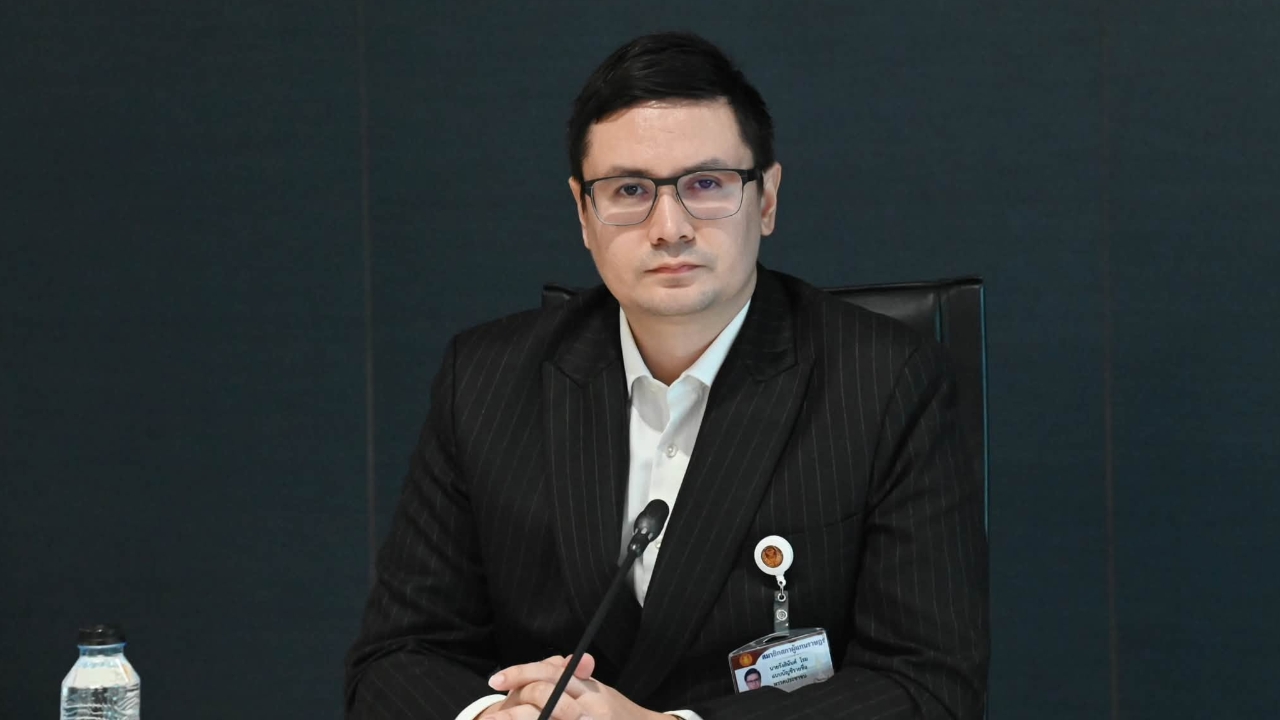
Rangsit Rom affirms he will not back down on summoning the Interior Minister to explain to Parliament, stating that the action follows the Summoning Powers Act after no punishment was issued to Narucha for failing to appear before the committee regarding the local exam fraud case.
On 13 November, Rangsit Rom, party-list MP from the Prachachon Party and chairman of the Parliamentary Committee on Law, Justice, and Human Rights, explained the decision to summon Anutin Charnvirakul, Interior Minister, to clarify before the House of Representatives under the Summoning Powers Act. He said the committee’s decisions can be divided into three main issues: first, the 40-million-baht bribery case where the committee summoned Chaiyachon Chidchob, Minister of Digital Economy and Society, and Worasit Liangprasit, Deputy Interior Minister, both of whom attended, so that matter is concluded.
Rangsit continued that the second issue is the local exam fraud case, where both Anutin and Narucha Kosasivilai, Director-General of the Department of Provincial Administration, were required to appear on 8 October under the summoning authority but failed to attend. The third issue involves summoning relevant provincial governors concerning the attempted shooting of MP Kamonsak Leewamo of the Narathiwat Prachachat Party. Regarding Anutin’s failure to appear, the Summoning Powers Act states that if no order was given to the official to appear, procedures apply. Narucha, under Anutin’s command, did not come and cited flooding as a reason, but the law does not accept such excuses without proper exceptions: either sending a representative or requesting a postponement with committee approval. Narucha did neither and only sent a letter stating his absence.
Rangsit added that the committee subsequently sent a letter asking the Interior Minister whether he ordered Narucha to appear before the committee. They received no response by the deadline. Later, a circulated letter within the ministry suggested an order had been given. However, upon review, Rangsit found no directive; Anutin merely acknowledged receipt without any command. If that were a true order, he asked what disciplinary action had been taken against Narucha to date.
Rangsit further explained that if the minister truly ordered Narucha and Narucha disobeyed, that would be a disciplinary offense. Therefore, the Summoning Powers Act requires the committee chairman to send a letter to the Parliament Speaker to order the Interior Minister to explain why no directive was issued to Narucha. He must also send a letter to the Interior Minister as Narucha’s superior to consider disciplinary punishment. Rangsit has already signed both letters after committee approval, particularly the disciplinary one, on 5 November.
"Some misunderstand and think that on 5 November we issued another summoning order. That is incorrect. On 5 November, we only obtained committee approval to proceed with sending the letters to Interior Minister Anutin to punish Narucha for ignoring the summons. So, the claim that I have retreated is false. This is strictly legal action under the Summoning Powers Act. Everything has been done, and whether anyone complies now is a matter for the law. I confirm I have followed the law," Rangsit said.
Rangsit added that if the Parliament Speaker believes Anutin did order Narucha, he should provide a written rebuttal. "No problem. Provide it so that Anutin doesn’t need to come to Parliament. We will then address the matter legally. But if an order was given, then what disciplinary action has been taken against Narucha for disobedience? If none, that shows no order was made."
"We have not exceeded legal authority. Criticisms claiming the legal committee is above the law are untrue. Those critics simply do not understand the law. They should admit that rather than falsely accuse us of being above the law. The committee has tried to summon both Anutin and Narucha many times, showing respect, but they did not attend. Meanwhile, a large local exam fraud has occurred. Should we do nothing and remain silent? If so, we should not be representatives of the people," Rangsit said.
When asked again how Interior Minister Anutin is required to explain in Parliament under the Summoning Powers Act, Rangsit said the minister must clarify because he did not order Narucha, Director-General of the Department of Provincial Administration, to appear and did not discipline him for failing to comply with the law under the Summoning Powers Act.