

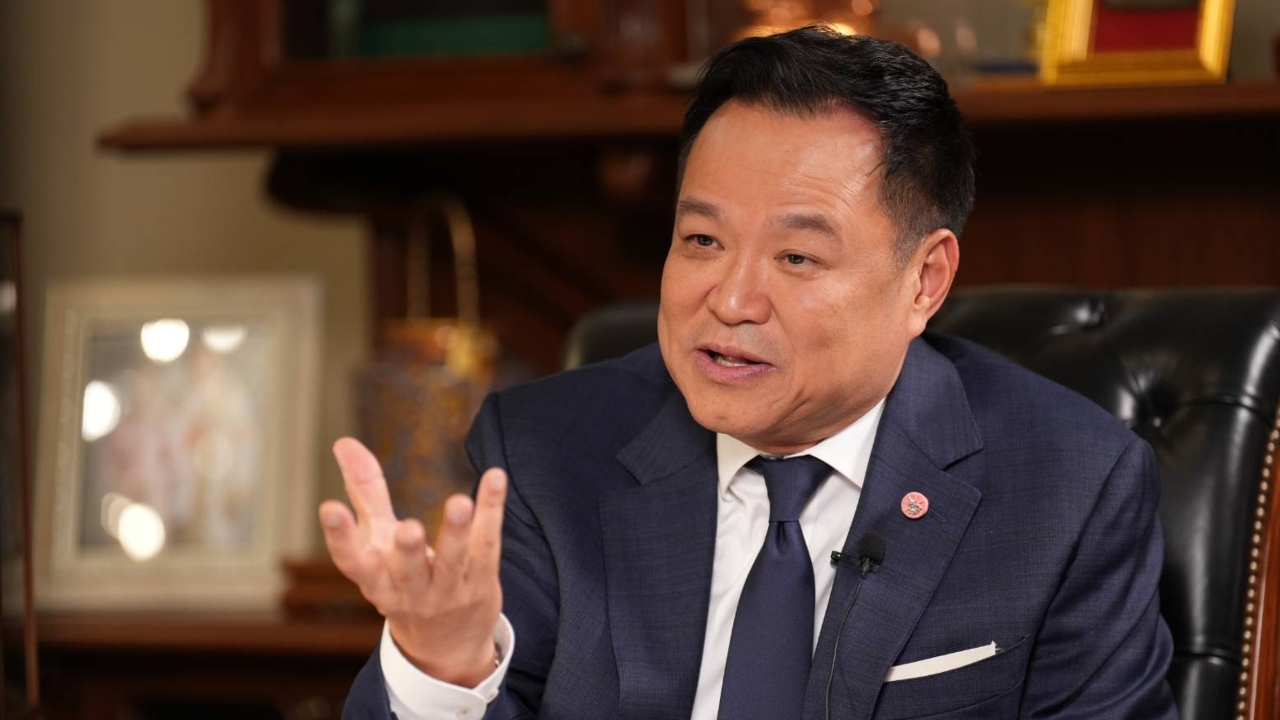
The Prime Minister unveils an energy plan ahead of ASEAN and APEC forums, pushing B20-E20 biofuels to reduce oil costs, support farmer incomes, advance solar rooftop programs, accelerate US trade deals, attract foreign investment, and hints at reducing gasoline 91 pumps while increasing E20 availability.
14 Nov 2026 GMT+7 Anutin Charnvirakul, Prime Minister and Minister of Interior, revealed on the program “Talk with Prime Minister Anutin” the economic direction and topics Thailand will bring to discussions at the ASEAN and APEC Leaders' Summits from 14 to 19 Nov 2026, stating that the government is accelerating bioenergy policies with both B20 and E20 to reduce oil costs, decrease reliance on imported energy, and increase agricultural income alongside expanding Solar Rooftop initiatives and attracting foreign investment.
The Prime Minister added that the government aims to provide the public with the lowest possible energy costs, whether gas, oil, or renewable energy, by incentivizing greater use of biofuels, which not only lowers energy prices but also reduces capital outflow and creates markets for Thai energy crops.
Currently, B20 is priced about 10 baht per liter cheaper than regular diesel, with daily usage increasing from about 6 million liters to 10-11 million liters, while E20 use rose from approximately 4 million liters to 6-7 million liters daily following excise tax reductions supporting its use.
“The benefits are not just cheaper fuel prices but also reduced fossil oil imports, decreased capital outflow, and increased demand for energy crops such as palm oil, sugarcane, and cassava,”

Anutin revealed further that in the long term, the government is considering adjusting fuel pump ratios, potentially reducing gasoline 91 pumps and increasing E20 pumps as public confidence grows. The rising demand for ethanol will directly benefit sugarcane and cassava farmers. This approach also helps reduce agricultural waste that would otherwise be burned, as sugarcane bagasse and cassava residues can be used to produce ethanol or bioenergy, linking energy cost reduction with farmer income and reduced import dependence simultaneously.
Another topic the government plans to raise internationally is Solar Rooftop, which the Prime Minister said has attracted foreign interest because the policy not only encourages installing panels to cut electricity bills but also allows households to sell excess power back to the grid with subsidies of 50,000 baht per household.
“We want people to generate and use their own energy first; if there is a surplus, they can sell it back to the grid. Over the long term, this will reduce electricity production from oil and gas and turn rooftops into national energy sources.”
At ASEAN and APEC forums, Thailand will present issues on energy transition alongside combating technology crimes, gray market businesses, money laundering, and drug trafficking, topics Thailand seeks to promote international cooperation on.
Regarding ASEAN cooperation expansion, Thailand does not expect all countries to proceed simultaneously but encourages subgroup partnerships based on each country's strengths, such as hydropower cooperation with Laos, logistics and exports with Vietnam, or connecting the capabilities of Thailand, Malaysia, and Singapore. Moreover, Thailand must think beyond its domestic market since investors establishing bases in Thailand can access ASEAN's approximately 700 million consumers and extend beyond the region, known as ASEAN and Beyond.

Anutin added that the APEC forum will be a key platform for discussions with major economies. Regarding progress in trade talks with the United States, the crucial point is not just meeting the US President but advancing the Agreement on Reciprocal Tariffs (ART), which is in the process of reaching a resolution.
“Sometimes we have to take two steps back to move forward seven steps, but we will not retreat three steps only to gain one step forward. Negotiations must benefit Thailand and ensure mutual benefits for partners.”
In closing, the Prime Minister said that recently, global investors have continuously discussed expanding their business bases in Thailand, involving projects worth billions of dollars. Investors prioritize the stability of the power system, infrastructure, transportation, and Thailand’s location, which can serve as a distribution base to regional markets. The ASEAN and APEC forums thus offer opportunities for Thailand to showcase strengths in energy, investment, infrastructure, and economic security cooperation to expand markets and attract investment into the country.