

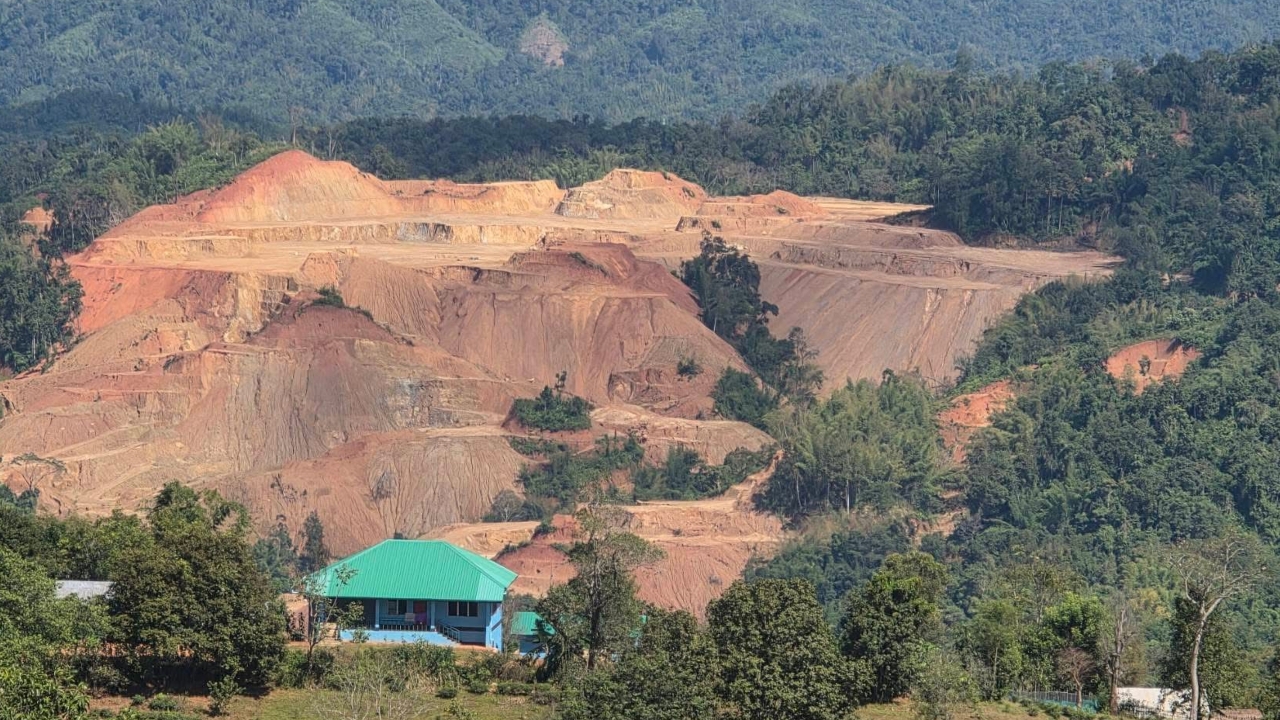
Jeset Thaiset visited the border area of Mae Fah Luang district, Chiang Rai, to collect data on Myanmar mines. He found three sites located along mountain valleys and headwater areas, with tributaries flowing into the Mae Sai River. He is set to join the Prime Minister’s delegation for talks with China.
At 11:40 a.m. on 14 Nov 2026 GMT+7. Jeset Thaiset, Deputy Minister of Interior (MoI 3). He visited the mining sites near the Myanmar border at Ban Phaya Phrai, Thoet Thai subdistrict, Mae Fah Luang district, Chiang Rai, accompanied by Lt. Col. Singhanat Losuya, Deputy Director of Internal Security Operations Command, Chiang Rai. They gathered information from academics and civil society networks to guide water resource and environmental management plans for the transboundary watershed.
The information presented revealed that three key mining areas opposite Mae Fah Luang district—Doi Ko Wan, Mueang Kan, and Mae Jok—are located along mountain valleys and headwater zones, with tributaries flowing into the Mae Sai River. Currently, infrastructure development and preparations of machinery and personnel in these areas are ongoing. Continuous monitoring of environmental impacts, especially water quality in waterways connected to Thailand, is necessary for effective water resource management and preventive planning.
Meanwhile, data from civil society networks indicate that there are 20 mining companies licensed by the Myanmar government operating in the area: 12 gold mines, 6 manganese mines, and 2 lead mines, as well as active tin and tungsten mining operations. This data correlates with import-export statistics of minerals through Chiang Saen and Mae Sai customs checkpoints and transport routes along the Mekong River to China. It is vital for studying the regional mineral production and trade chain.


Jeset said the Prime Minister prioritizes solving environmental problems and protecting people, instructing comprehensive data collection on the number of mines and ore processing plants, companies involved in mineral import-export, production processes, and chemicals used in mining. The goal is to study related business links and use this information to establish appropriate management policies and measures based on facts, science, law, and international cooperation.
. From 16-18 Nov 2026 GMT+7, he will join the Prime Minister’s delegation to present local situation reports and proposals in discussions with Chinese counterparts. He will also coordinate with countries in the river basin to share information and seek cooperative approaches for joint water resource and environmental management. Because environmental issues in the basin cross national borders, continuous cooperation, data exchange, and coordination are essential for mutually beneficial solutions.
Regarding public welfare in Chiang Rai, Jeset said the government prioritizes providing clean water for consumption and agriculture, especially in Mae Sai district. The area has faced problems with turbidity and raw water quality, temporarily requiring adjustments in water treatment processes and supplementing supply from Koh Chang area. Plans include developing long-term backup water sources by exploring water diversion from the Mekong near Chiang Saen and the Lao River, expanding village water systems, and installing additional water quality monitoring stations to ensure water security and public confidence.


Dr. Suebsakul Kittanukorn, an academic monitoring water and contamination from mining, said this visit was an important opportunity to present data on the three mines—Doi Ko Wan, Mueang Kan, and Mae Jok—characterized by mountainous terrain and headwater zones feeding into the Mae Sai River. The expansion of mining activities and local water quality conditions are issues requiring ongoing joint study and monitoring.
Furthermore, data on the number of mining operators and mineral import-export statistics provide key insights into the area's economic activities and support comprehensive environmental policy development. He emphasized the need to establish cooperative mechanisms among relevant agencies at local and national levels to exchange scientific data, monitor water quality, and seek sustainable natural resource management solutions together.
This visit marks another significant step by the government to proactively monitor the situation, gather input from all sectors, and promote international cooperation to protect water resources and the environment while ensuring water security and quality of life for people in Chiang Rai province and the associated watershed areas.