

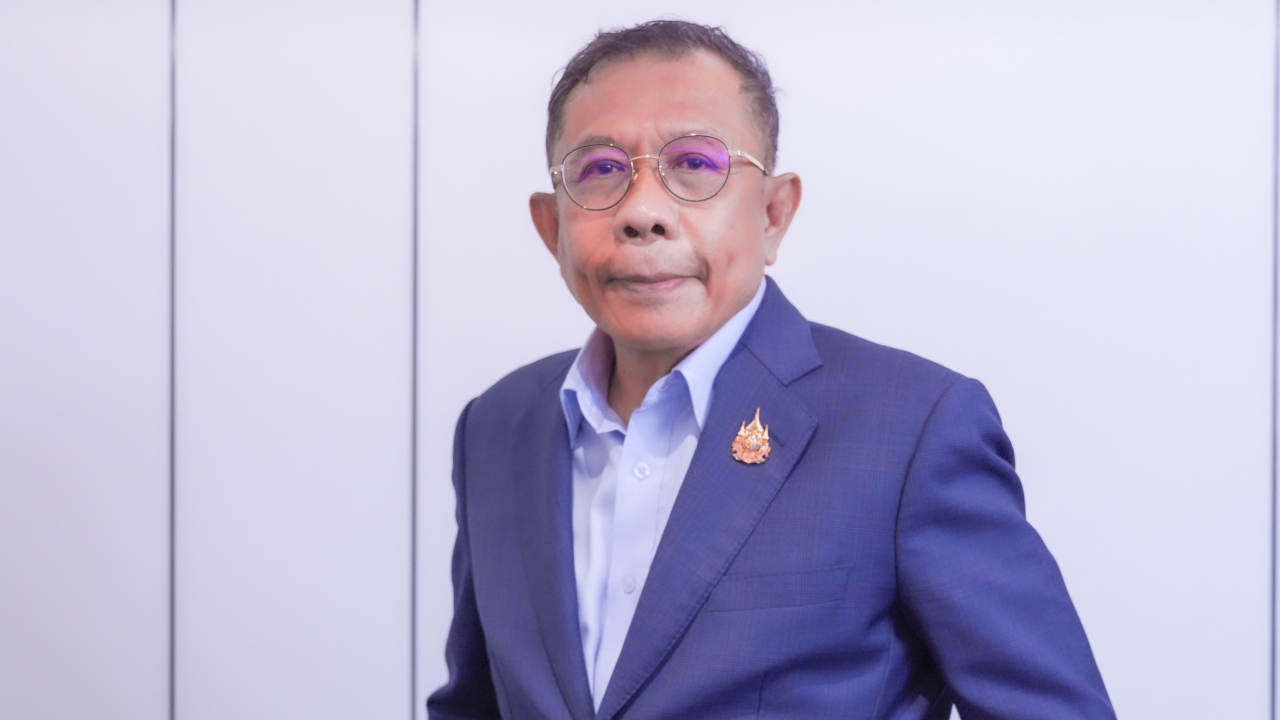
Supachai points out that the "Blue Regime" rhetoric must be verified with facts, not woven into accusations. He urges media to disclose their own conflicts of interest and stresses that press freedom must come with responsibility.
On 15 Nov 2026 GMT+7, Supachai Jaisamut, Member of Parliament from the Bhumjaithai Party, raised concerns about the use of the term "Blue Regime" accusing Bhumjaithai of dominating power structures. He demanded presentation of related evidence and legal grounds, while calling on media to reveal any related relationships and conflicts of interest. He emphasized that accusers must take responsibility for their claims, avoid spreading rumors that cause harm, and that all media outlets must adhere to the same standards of scrutiny across all parties. He stated:
"The 'Blue Regime'—is it fact or a constructed rhetoric to destroy political credibility? The media's role is to scrutinize power, but who oversees media that may wield their own power irresponsibly?"
As politics enters the atmosphere of the upcoming no-confidence debate, we see the term “Blue Regime” being used to allege that Bhumjaithai is expanding its influence to dominate the country's power structures—executive, legislative, judiciary, and independent agencies.
I do not deny anyone's right to raise suspicions, but I ask straightforwardly: Where is the evidence? Who committed it? How? Under which law? Or is this merely stitching together events to appear as a plot to dominate the country? Having individuals formerly linked to political parties in state organizations is not, by itself, proof of interference or control. Investigating connections is possible and appropriate, but jumping from connection to concluding conspiracy or abuse of power without sufficient evidence is a matter that must be seriously questioned. Especially before the no-confidence debate, we must distinguish between reporting to inform the public truthfully and presenting accusations aligned with one political side's strategy.
"So I want to seriously ask the media using the term 'Blue Regime': Are you fact-checking or helping to amplify political rhetoric? The media have the full right to criticize the government, but press freedom is not a privilege to accuse without responsibility for accuracy. When media demand transparency from politicians, media must also be ready to disclose their own conflicts of interest."
If any media outlet has shareholders or executives closely linked to key figures in political parties, or has legal disputes with parties targeted by their reporting, the public has the right to ask whether those relationships or conflicts influence news direction."
Supachai said this question does not mean those relationships prove bias, but that media should disclose such information and provide comprehensive evidence to support their accusations.
Regarding claims that media are used as tools to pressure for benefits, he said these are serious accusations. Anyone with evidence should present it for examination and legal action, rather than letting rumors destroy reputations without proof. Those who scrutinize others must not think they have special rights to avoid being scrutinized themselves.
"I affirm that the government, Bhumjaithai Party, and all politicians must be subject to scrutiny; no one is above the law or exempt from criticism. Conversely, accusers must also take responsibility for their allegations. If there is interference in justice, present evidence. If independent agencies are dominated, show behaviors and facts."
If state power is abused, specify the individuals, actions, and relevant laws. Do not just use the word 'regime' and expect the public to accept all accusations as truth."
Today we have the term 'Blue Regime,' tomorrow might be 'Orange Regime' or 'Light Blue Regime,' similar to past political labels like 'Thaksin Regime.' These terms are political rhetoric used to critique power, but none can replace evidence of wrongdoing. Creating harsh-sounding terms is easy, but proving allegations true requires responsibility.
Therefore, I call for the no-confidence debate to be a forum of facts, not a competition to create rhetoric. I urge all media to apply consistent standards when scrutinizing all sides—government, opposition, or political actors connected to media organizations themselves.
Do not use the word 'regime' as evidence. Do not use connections as proof. Do not treat press freedom as an excuse to evade responsibility for truth. And remember, the public's role is not just to receive media content but to ask: Who accuses? What evidence? What interests or conflicts lie behind the coverage? Democracy cannot be strong by scrutinizing state power only one way; it requires responsible standards applied to all, including the media.