

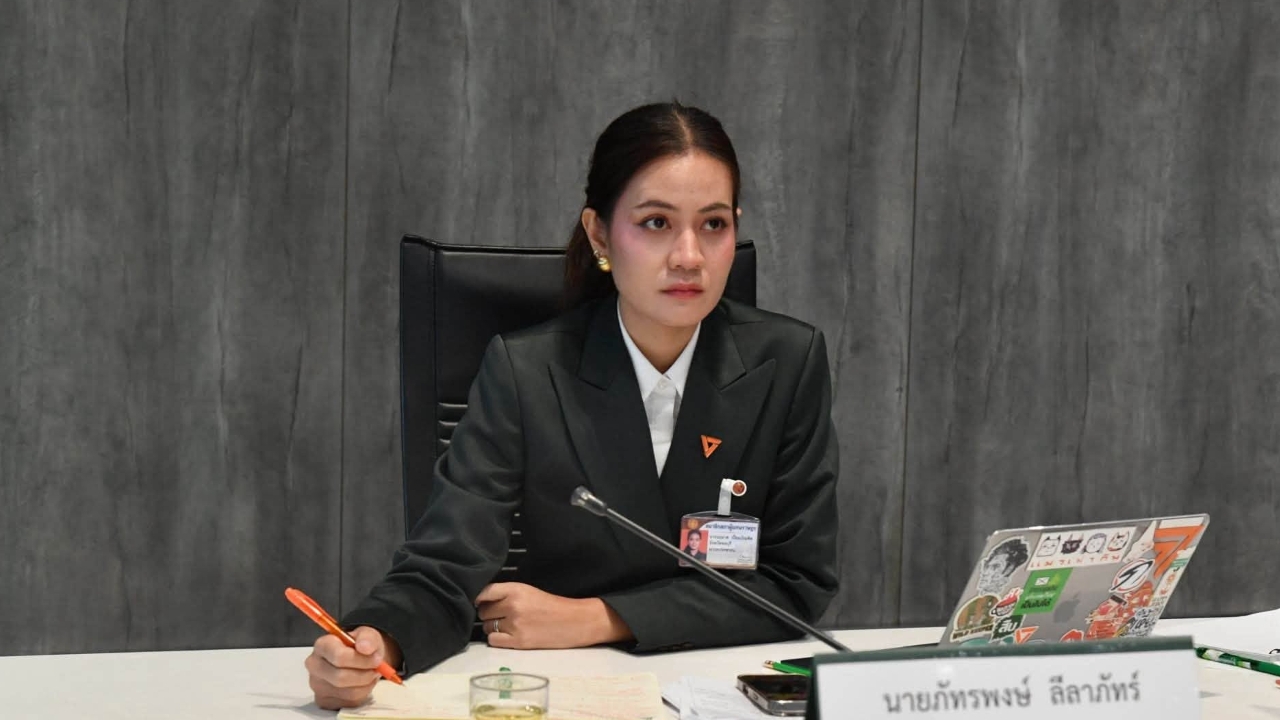
MP Narumart points out that the 2017 Constitution under the NCPO government removed environmental rights, causing the Eastern region to be overwhelmed by toxic waste and turning Laem Chabang into a global dumping ground. She suggests amending the constitution to restore citizens' rights to sue the state and proposes adopting the polluter pays principle.
On 15 Nov 2026 GMT+7, Ms. Narumart Piambandit, MP for Chonburi District 6 from the Prachachon Party, addressed the pollution crisis and illegal industrial waste dumping in the Eastern region. Throughout 2026, residents faced ongoing pollution problems almost every month. Recently, Customs seized over 48 tons of electronic waste containers at Laem Chabang Port, falsely declared as 'scrap metal' but containing electronic circuit boards. In the first 11 months of the 2026 fiscal year, there were 187 cases of illegal waste import under the Basel Convention, with over 9.67 million kilograms seized. Meanwhile, the Ministry of Natural Resources and Environment found 61 illegal industrial waste dumping sites in the Eastern region. The Ministry of Industry admitted that illegal dumping in the EEC and Prachinburi province operates through networked syndicates. Furthermore, a warehouse fire in Ban Bueng district, Chonburi, forced over 1,400 residents to evacuate amid risks of dioxin contamination in air and water sources.
Ms. Narumart stated these incidents are not coincidences but direct consequences of the public being deprived of legal rights. Looking back, the 1997 Constitution (Section 56) and the 2007 Constitution (Section 67) guaranteed citizens' rights to live in a healthy environment, participate in development projects, and sue negligent state agencies. They also established independent environmental and health bodies to review risky projects, which served as critical legal bases for communities to protect the environment. However, the 2017 Constitution removed the “right to a safe environment” from the rights and freedoms section. Article 43 only preserves the right to conserve and manage natural resources, which differs from the right not to be burdened with pollution. Public participation was reduced to a state duty under Article 58, limiting public hearings to projects deemed severely impactful by the state, and all independent agencies were abolished.
Ms. Narumart continued that when what used to be citizens' rights are converted into state duties, the state itself judges whether it has fulfilled its responsibilities. This is worsened by NCPO Order No. 44, which exempts certain businesses from urban planning, and the 2019 Factory Act amendment that deregulated many small businesses. These measures have turned government efforts to combat toxic waste into reactive fixes after damage has occurred, dependent on sporadic government enthusiasm. Citizens lack rights to pollution data access, to oppose projects, or to compel the state to restore contaminated areas. Consequently, the safety of Eastern residents depends on government goodwill rather than being a fundamental right.
“As an Eastern MP, I believe drafting a new constitution must go beyond merely restoring rights from the 1997 or 2007 charters, because today's structural problems are much more complex. The new constitution must explicitly guarantee the 'right to a clean, safe, and healthy environment' within the rights and freedoms section, aligning with the 2022 United Nations General Assembly resolution. It should cover four key pillars: recognizing the right to access pollution release and transfer registers (PRTR); community participation in all impactful projects; reestablishing independent environmental and health agencies; and establishing the 'Polluter Pays Principle.' It must also guarantee citizens' rights to sue both state and private polluters for compensation and restoration,” she said.
“As long as the supreme law does not recognize that citizens own environmental rights, the Eastern seas and lands will continue to be used as dumping grounds for toxic waste by global interests and capital groups. Drafting a new constitution is thus the most crucial milestone to reclaim these rights, making safe air, water, and soil conditions something all Thai people can legally demand—not merely receive as government charity,” Narumart concluded.