

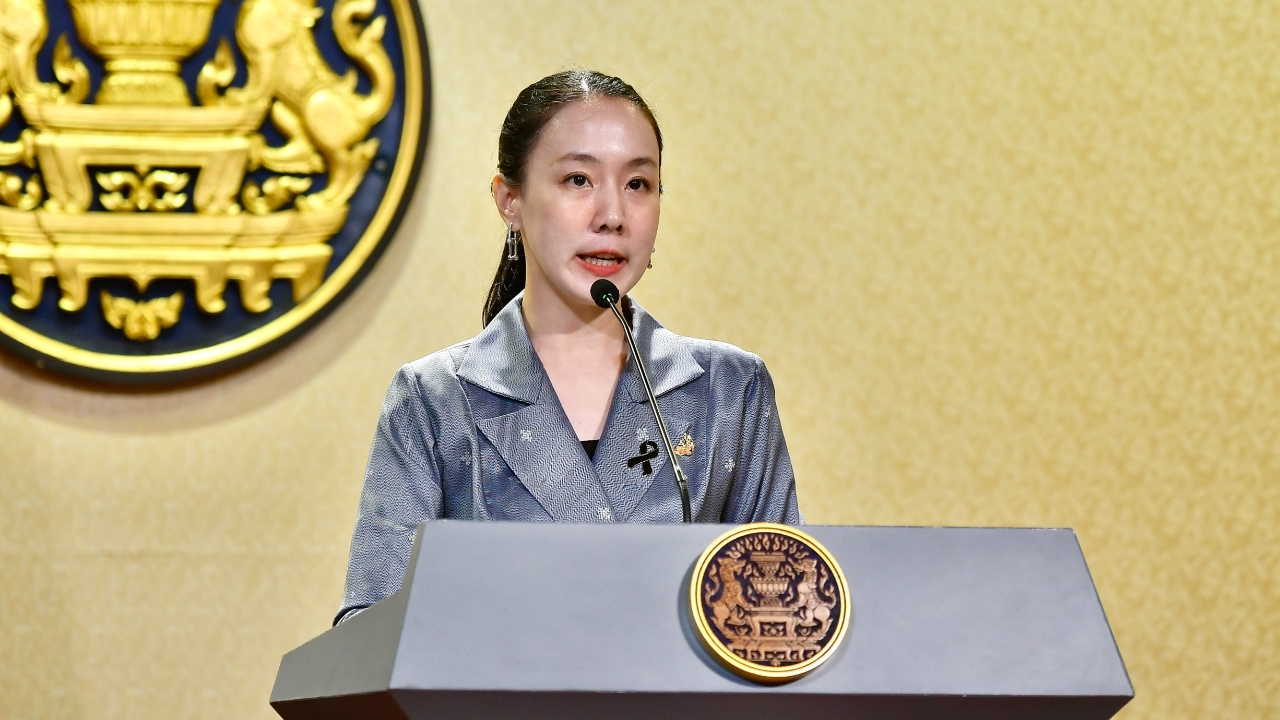
The Deputy Government Spokesperson refuted false reports, affirming the Cabinet has never approved Chinese waste imports into Thailand. She emphasized that the Mekong-Lan Chang cooperation aims to develop knowledge in recycling, not to open the country to foreign waste.
On 16 Nov 2026, Ms. Lalida Pertwiwatana, Deputy Spokesperson of the Prime Minister's Office, clarified the spread of information on social media claiming the government cooperates with China to turn Thailand into a global industrial waste disposal site is untrue. She said this is a misunderstanding caused by linking partial information. She confirmed the Cabinet has not approved importing waste from China or any other country for disposal in Thailand.
Ms. Lalida stated that on 27 Oct 2026, the Cabinet approved a draft agreement under the special fund of the Mekong-Lan Chang cooperation framework. One project focuses on developing recycling industry capacity to support the circular economy and green industry, managed by the Office of Industrial Economics. The 18-month project aims to develop knowledge in managing and recycling car batteries, solar panels, and electronic waste, as well as establishing appropriate regulatory measures. It is not a project to import waste from abroad.
“I reiterate that developing recycling knowledge is not permission to import foreign waste, which is an entirely different matter. The draft agreement does not require Thailand to accept waste from China or any country for disposal, and this Cabinet resolution did not approve Thailand as a global industrial waste repository,” she said.
The Deputy Spokesperson added that Thailand currently has laws prohibiting the import of specified electronic waste. Smuggling prohibited goods is illegal. The government, led by Prime Minister Anutin Charnvirakul, takes electronic waste issues seriously, enhancing control and crackdowns on illegal imports through inspections of imports and exports, monitoring high-risk factories, and reviewing legal measures to improve enforcement, including civil liabilities and criminal penalties. Polluters are held responsible for damages caused.
Ms. Lalida said the government understands public concerns about electronic waste impacts. However, developing recycling knowledge is essential to prepare for handling expired batteries and electronic devices in the future, enabling Thailand to manage waste efficiently and environmentally safely. It does not open the door for foreign waste dumping in the country.
“Government scrutiny is acceptable, and we welcome all concerns. However, news coverage must be based on accurate and complete facts. Partial information should not be distorted to create public alarm just to gain views or likes, because accuracy and social responsibility are more important than online trends,” Ms. Lalida stated.
The Deputy Spokesperson reiterated that the government has no policy to turn Thailand into the world’s waste dumping ground but is advancing knowledge development in waste management alongside strengthening measures against illegal waste imports to protect public health, the environment, and national interests. She urged all parties to verify facts before disseminating information to avoid misunderstandings and unnecessary public anxiety.