

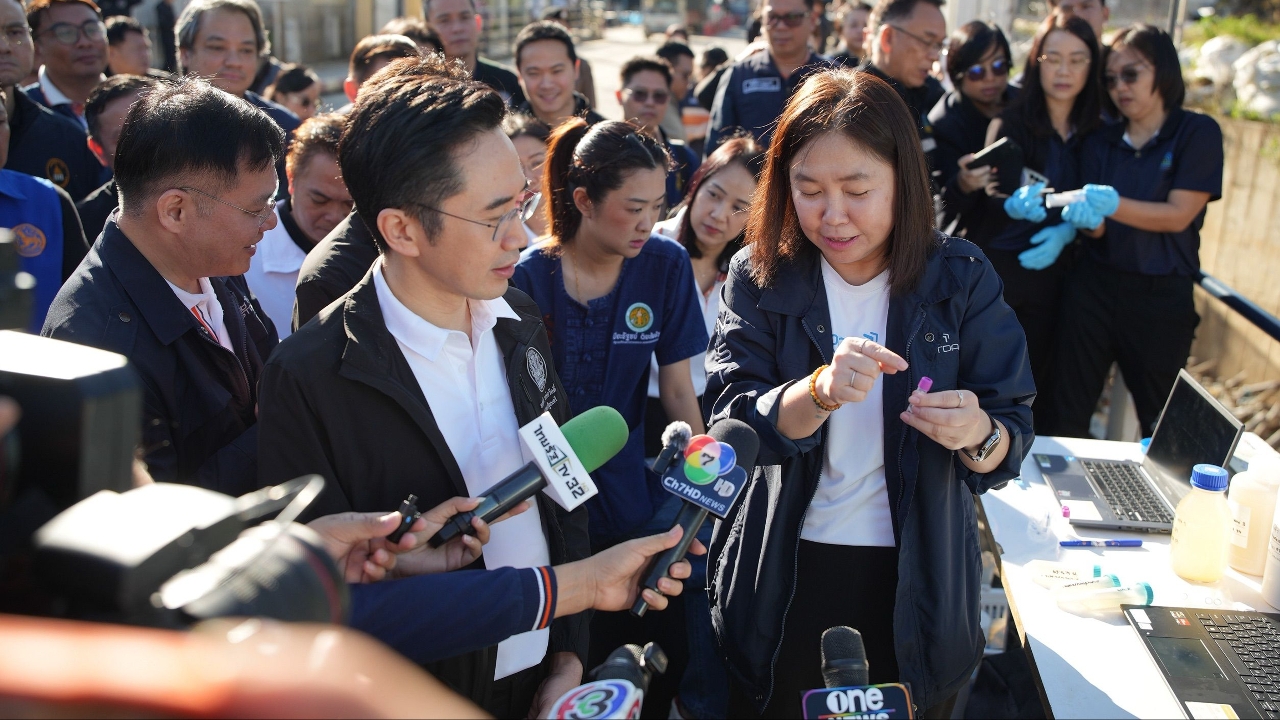
Yotsanan has ordered preparations for an urgent meeting to accelerate resolution of the water quality crisis in the Kok and Sai Rivers after a site visit found impacts on residents’ lives. Six measures will be proposed to expedite inspection, control, restoration, and restrict mineral imports.
On 16 Nov 2026 GMT+7, Deputy Prime Minister and Minister of Higher Education, Science, Research and Innovation Yotsanan Wongsawat issued an urgent letter requesting readiness for the 2/2569 meeting of the Disaster Prevention and Mitigation Committee for Northern Thailand. Serving as chairman, Yotsanan visited the Sai River area on 14-15 Nov to monitor the situation and learned of water quality problems in the Kok and Sai Rivers that affect residents’ livelihoods, raising concerns about health, daily safety, and the surrounding environment.
Accordingly, the chairman directed an urgent meeting of related agencies to discuss key issues and propose measures at the meeting as follows.
1. Inspect and control pollution sources. Expedite investigation of sources and causes of heavy metal contamination in headwater areas. Consider regulatory measures and restrictions on mineral imports from abroad with environmental concerns. Coordinate with relevant countries and security agencies to negotiate and resolve the root problems concretely.
2. Control contamination spread and restore water sources. Study feasibility of building sediment dams, thoroughly assess environmental impacts, disposal methods, and define restoration measures for water quality and affected ecosystems.
3. Monitor environmental quality and food safety. Establish continuous water and sediment quality monitoring systems. Accelerate assessment of aquatic life, soil, and agricultural products in risk areas. Implement safety controls on agricultural and fishery products to build public confidence.
4. Protect public health and safety. Develop health screening and monitoring guidelines for populations in risk areas. Set safety standards and recommendations for water use in consumption. Implement risk communication and warning measures to inform the public widely to prevent and reduce health impacts.
5. Secure new raw water sources and strengthen water security. Expedite survey and sourcing of new raw water to replace affected supplies, including developing reserves, diverting water from other sources, and linking water distribution systems. Improve water production and distribution systems to meet long-term public demand efficiently.
6. Prepare urgent assistance for affected residents. Develop backup plans for clean water procurement, storage, and distribution for consumption in impacted areas. Establish emergency response plans and integrated aid mechanisms for scenarios where water sources are unsafe, ensuring residents have sufficient and continuous access to clean water.
Therefore, to ensure effective and tangible problem-solving, all parties are requested to prepare data and operational plans to advance implementation per the Disaster Prevention and Mitigation Committee’s directives for Northern Thailand. The meeting’s date, time, and location will be announced promptly.

