

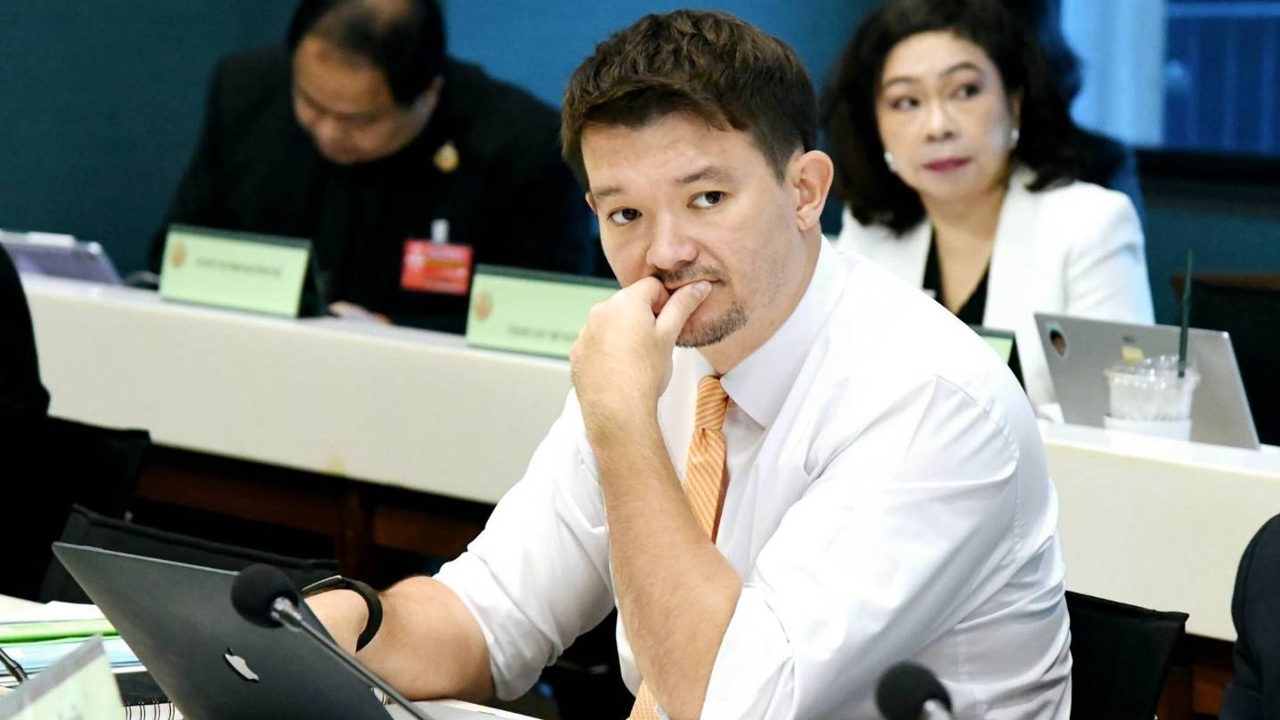
Phattharaphong points out that Thailand has become a "transit route" for mineral capital groups, with tung ore flooding in from Myanmar in 2025 reaching nearly 70,000 tons. He urges the government to urgently enact laws to control imports and implement full supply chain traceability.
On 16 Nov 2026, Mr. Phattharaphong Leelaphat, Member of Parliament for Chiang Mai Constituency 8 from the Prachachon Party and chairman of the subcommittee studying cross-border water pollution, spoke about progress in monitoring and resolving toxic contamination in major rivers. The subcommittee previously launched a website compiling and displaying chemical contamination data from water, sediment, plants, rice, and human samples, along with satellite photos pinpointing upstream mining areas. Recently, the team updated the system with key data sets titled 'Thailand's Mineral Import and Export Statistics' to clearly show society and government which minerals Thailand imports most and which minerals Thailand serves as merely a transit route for exporting to third countries.
Mr. Phattharaphong stated that statistics clearly show the top five minerals imported into Thailand are tung ore, tin, manganese, lead, and copper. There is also a rare earth group, which, although not imported from Myanmar and in smaller quantities, holds very high economic value. The mineral most linked to environmental crisis issues is 'tung ore.' According to Customs Department data, during 2017-2023, Thailand averaged about 2,000-6,000 tons of tung ore imports annually. However, the figures surged abnormally in 2024, with imports from Myanmar reaching 42,217 tons, worth over 2.865 billion baht. In 2025, the number continued rising to 68,923 tons, valued at 8.44 billion baht. This spike in tung ore imports coincides with severe toxic contamination in many Thai rivers receiving water from mining headwaters.
He continued that examining Thailand's tung ore export figures reveals a startling fact: 'Whatever is imported is exported.' In 2024, exports reached 40,349 tons, and in 2025, exports rose to 71,333 tons. This clearly shows Thailand is being used solely as a transit route by capital groups, while the Thai state lacks laws and mechanisms to verify the origin mines. Citizens and interested parties can directly check detailed statistics and satellite coordinates of mining sites through the website waterpollution.disaster-mp.org.
Mr. Phattharaphong emphasized that the government must urgently push legislation to control mineral imports and develop a traceability and supply chain tracking system. State databases should go beyond recording who imports or exports and in what quantities—they must detail the mine origins, waste and toxic management systems, transporters, storage locations, ore processing plants, points of further processing or distribution within the country, export forms, destination countries, and quantities.
“Building a detailed, accurate supply chain traceability system will be the most important tool and advantage in diplomatic negotiations to solve transboundary toxic problems with both Myanmar and China. These negotiations will be based on 'showing' concrete evidence. Importantly, this calls on Chinese authorities to comply with their existing laws and uphold the 'Green Supply Chain' policy China announced to the global community. Moreover, this database is crucial for responding to geopolitical pressures from major powers competing for these strategic minerals in the future.”
“Today, it’s like there is a large toxic pond right next to our front yard. Everyone wants to profit from the resources in this pond, but without good management systems, Thailand and its people will bear all the residual waste and pollution. Preparing to face this issue requires long-term structural vision—addressing current crises while simultaneously preventing the problem from expanding in the long run.” Mr. Phattharaphong concluded.