

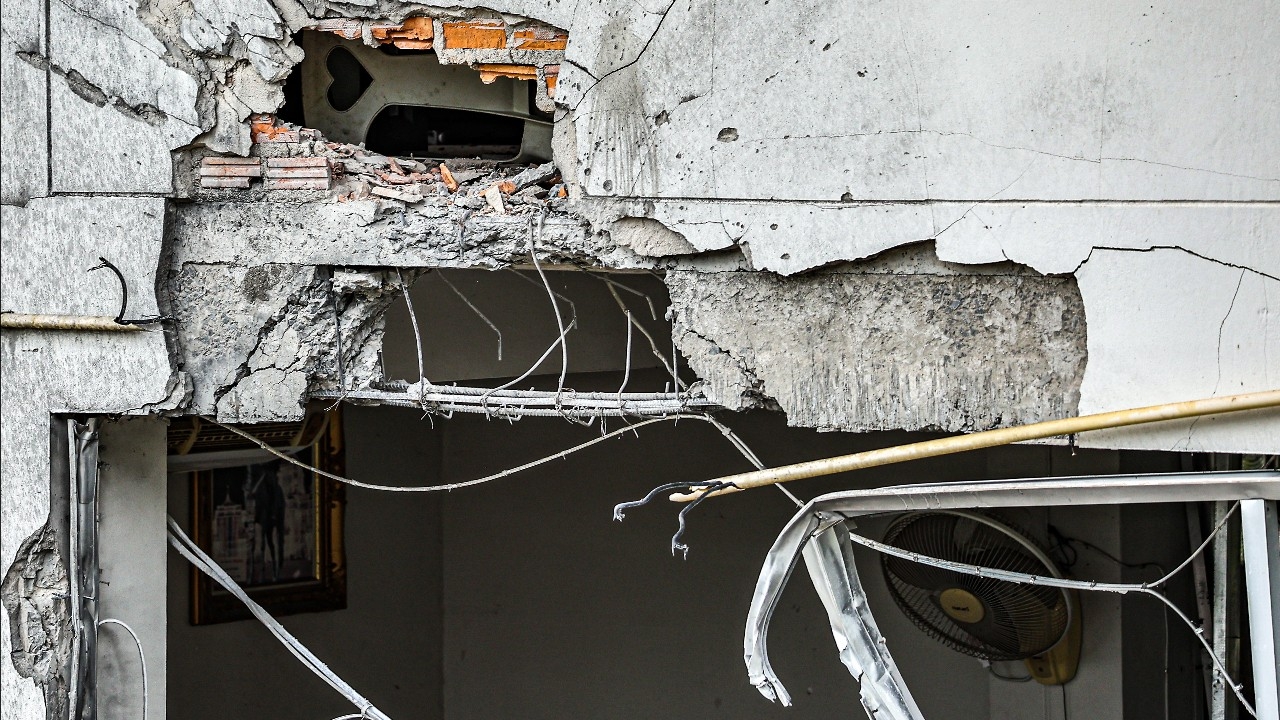
The government supports residents along the Thai-Cambodian border by introducing tax relief measures allowing deductions for home repairs up to 100,000 baht and vehicle repairs up to 30,000 baht, along with income tax exemptions on compensation payments.
On 17 Nov 2026 GMT+7, Ms. Lalida Pertviwatana, Deputy Spokesperson for the Office of the Prime Minister, announced that the Cabinet approved in principle two draft laws proposed by the Ministry of Finance to assist citizens and businesses affected by unrest along the Thai-Cambodian border. These measures include income tax exemptions on compensation payments and tax deductions for home repairs up to 100,000 baht and vehicle repairs up to 30,000 baht, aiming to ease financial burdens and help people return to normal life quickly.
Ms. Lalida stated that since clashes along the Thai-Cambodian border began on 24 July 2025 and recurred from 7 December 2025, the events have affected lives, property, and livelihoods in seven provinces: Ubon Ratchathani, Sisaket, Surin, Buriram, Sa Kaeo, Chanthaburi, and Trat. Under the leadership of Prime Minister Anutin Charnvirakul, the government is pushing additional tax measures beyond previous aid, focusing on three key points.
1. Income tax exemption for compensation payments, applicable to both individuals and legal entities, including government aid and other compensation up to the amount of damage incurred. Corporate income tax is also exempted on insurance claim payments qualifying under law to prevent recovery funds from becoming additional tax burdens.
2. Tax deductions for home repairs up to 100,000 baht for individuals who have incurred expenses repairing houses, buildings, condominiums, or fixtures damaged by border incidents. Deductible costs include repair labor, materials, and equipment actually paid, capped at 100,000 baht total. Eligible claimants must be owners, tenants, or those benefiting from the property under specified conditions.
3. Tax deductions for vehicle repairs up to 30,000 baht for individuals owning or leasing cars, motorcycles, or legally recognized vehicles damaged by the border situation. Actual repair costs and materials paid may be deducted, with a maximum of 30,000 baht across all vehicles.
The tax relief for home and vehicle repairs applies to assets damaged between 24 July 2025 and 31 December 2026 within areas officially declared disaster zones or emergency aid zones. Repair payments must be made during this period, and tax deductions are claimed in the 2026 tax year, with filings due in 2027. This is a deduction based on actual expenses, not a full compensation payment to all affected individuals.
Additionally, the Cabinet acknowledged the Ministry of Finance’s issuance of two announcements extending deadlines for tax filings and payments for affected residents in border areas. These cover corporate income tax, withholding tax, value-added tax, specific business tax on certain sectors, and stamp duties, aiming to ease tax compliance burdens and improve liquidity for citizens and businesses.
Ms. Lalida added that the Ministry of Finance estimates the tax deductions for home and vehicle repairs will reduce state revenue by approximately 360 million baht—280 million baht from home repairs and 80 million baht from vehicle repairs—but will alleviate citizens' burdens, encourage repair of damaged property, and support economic recovery in the border regions.
“The government understands the hardships faced by residents in border areas due to damage to homes, vehicles, and livelihoods. Therefore, it is committed to continuous assistance measures to ease financial burdens and help people return to normal life as quickly as possible. The Revenue Department will establish clear criteria and procedures for exercising these rights after the laws take effect,” Ms. Lalida said. Ms. Lalida concluded.