

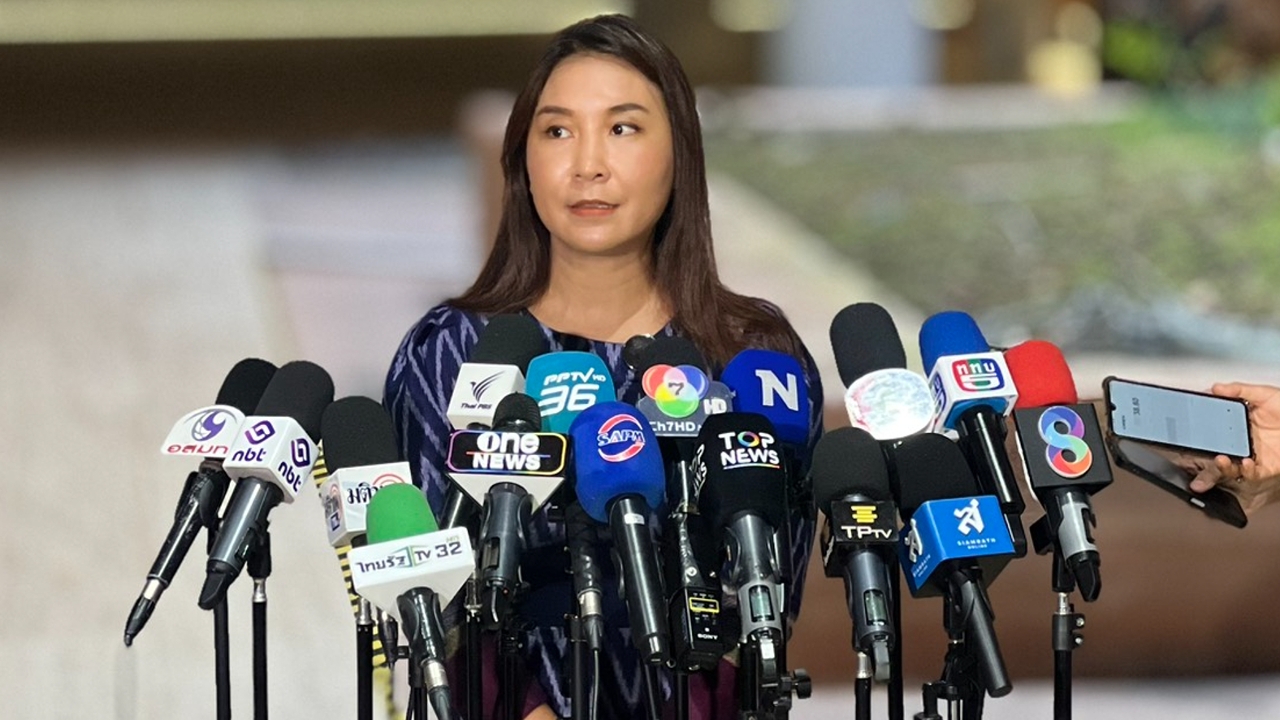
Sirikanya questions the transparency after the Prime Minister signed the Reciprocal Trade Agreement (ART) alongside Donald Trump, expressing fears it may affect prices of animal feed corn and pork imports.
On 18 Nov 2026 GMT+7, Ms. Sirikanya Tansakul, a party-list MP and deputy leader of the Prachachon Party, voiced concerns and questioned the transparency surrounding the signing of the ART trade agreement between Prime Minister Anutin Charnvirakul and U.S. President Donald Trump outside the 49th ASEAN Summit in Manila, Philippines. She noted the signing was unusual compared to previous agreements, as normally key details are publicly disclosed on official websites, as the U.S. has done with Malaysia and Bangladesh. However, this time no details appeared online, and Thai authorities revealed very little information.
Additionally, an information vacuum and confusion arose after Donald Trump stated Thailand would eliminate all tariffs on U.S. goods, while the Thai government later denied this claim. This left uncertainty about which information was reliable, especially compared to the prior negotiation framework last November under the IEPA law, which clearly detailed tariff reductions to zero on 99 items, a U.S. tariff proposal of 19%, and advance purchase commitments involving animal feed corn, soybean meal, LNG planes, and oil worth hundreds of billions of baht. This round of negotiations, however, has been unusually silent.
Sirikanya added that Thailand's bargaining power should now be stronger since the U.S. Supreme Court no longer grants the president excessive authority as before. Yet sensitive issues attracting public attention, such as pork imports with red meat accelerants and the digital industry, which had a framework to avoid digital service taxes, remain unclear in the full draft agreement about whether these provisions still apply.
Regarding agriculture, especially the import of animal feed corn valued at 2.6 billion U.S. dollars, this is expected to inevitably lower domestic corn prices. Currently, no clear compensation or relief measures have been disclosed for Thai farmers. She urged the government to promptly clarify and openly disclose key points to ensure the country benefits fully and that support measures for those affected are genuine before the agreement takes effect.
In response to the Prime Minister's remark that only the opposition agrees and that he must pour water (a Thai idiom implying a blessing or honoring) for Sirikanya, she said she was not demanding much nor criticizing maliciously. If the Prime Minister wishes to honor the normal parliamentary process of checks and balances, she suggests he consider whether the country understands the true nature of governance and the government's duty to transparently disclose factual information proportionately. There are many ways to disclose information without breaching NDAs; otherwise, Thailand would have already violated agreements dating back to when Pichai Chunhawanich was Deputy Prime Minister and Finance Minister.
Sirikanya said that the government might cite anonymous sources or other means to reassure the public, but noted the government does not have such strong political capital or public trust to act without disclosure. She urged the Prime Minister to urgently ensure transparency. Ultimately, a public hearing should be held to reveal measures and alleviate public concerns, rather than debating without sharing any information.