

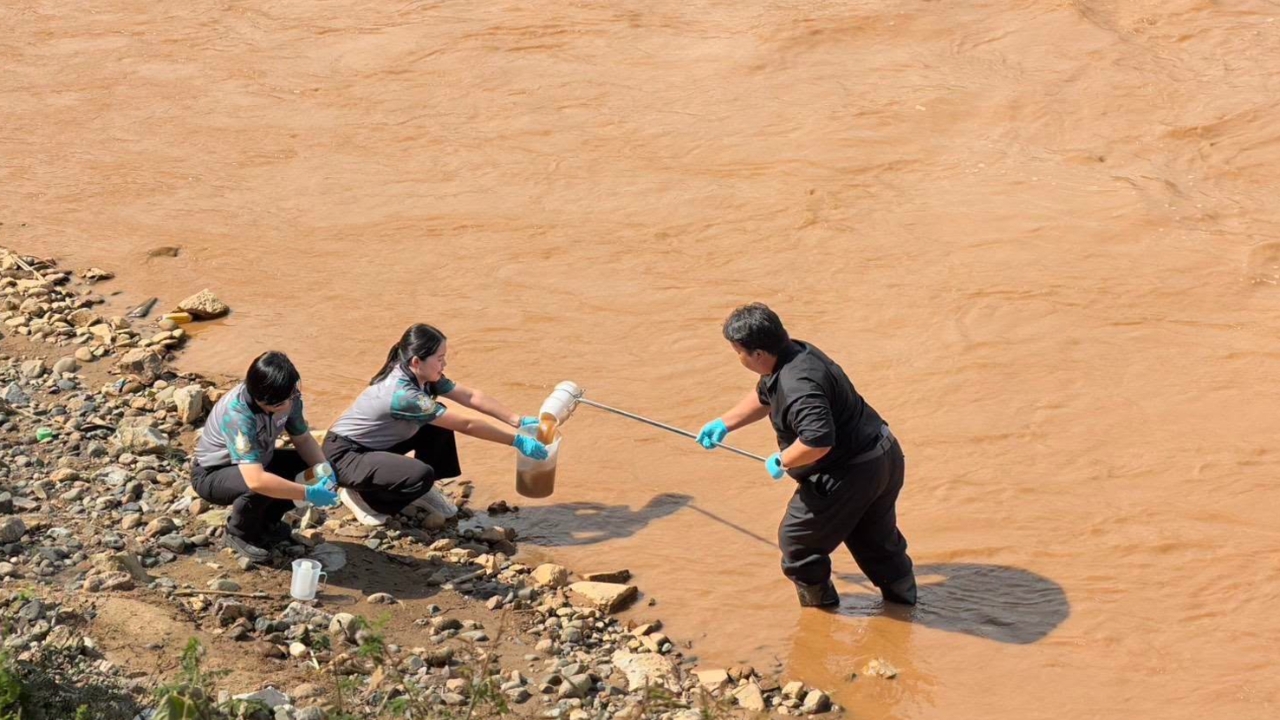
The government will carry out toxicity tests on the Kok and Sai Rivers at 333 sites from 23 to 25 November, deploying a three-color map system—green, yellow, and red—to strictly monitor high-risk zones.

On 18 November 2026, Second Lieutenant Phatdarasmit Thongsaluaykorn, Deputy Spokesperson for the Office of the Prime Minister, reported progress on addressing water quality in the Kok and Sai river basins. The Ministry of Agriculture and Cooperatives has urgently instructed affiliated agencies to coordinate comprehensive heavy metal contamination inspections from upstream to downstream, aiming to ensure food safety and protect agricultural production.
This proactive field operation is scheduled from 23 to 25 November 2026, assigning five main agencies to collect samples at 333 targeted locations. The Rice Department, Department of Agriculture, and Land Development Department will jointly gather 250 soil and water samples from farmers' fields. The Royal Irrigation Department will collect water samples from 83 irrigation sources, while the Department of Fisheries will inspect aquatic animal farming areas, and the Department of Livestock Development will analyze heavy metals in livestock raised in high-risk areas.
The deputy spokesperson stated that all samples will be sent immediately to laboratories of the Land Development Department, Department of Agriculture, and Rice Department by 27 November. Accurate analysis results are expected within one to two weeks. The Land Development Department will set GPS-based data collection standards to integrate the information into a Geographic Information System (GIS) via the Agri-Map application, producing a surveillance map with three risk levels: green, yellow, and red.
The three-color map data will serve as key indicators for targeted assistance measures to farmers. For any area reaching critical red-level status, the Ministry of Agriculture has prepared a three-stage response: an urgent phase focusing on strict product control, issuing safety certification to reassure consumers and support purchasing and sales decisions, and transparently sharing information with the public.
In the medium term, efforts will focus on resolving water source issues. If farmers cannot use original water sources, the Land Development Department is ready to support funding and equipment to create small water retention ponds on farms. Long-term plans encourage farmers to switch to alternative economic crops suited to local conditions and safety, such as rubber, ornamental plants, and other perennial economic trees, alongside technology transfer for soil restoration and maintenance.