

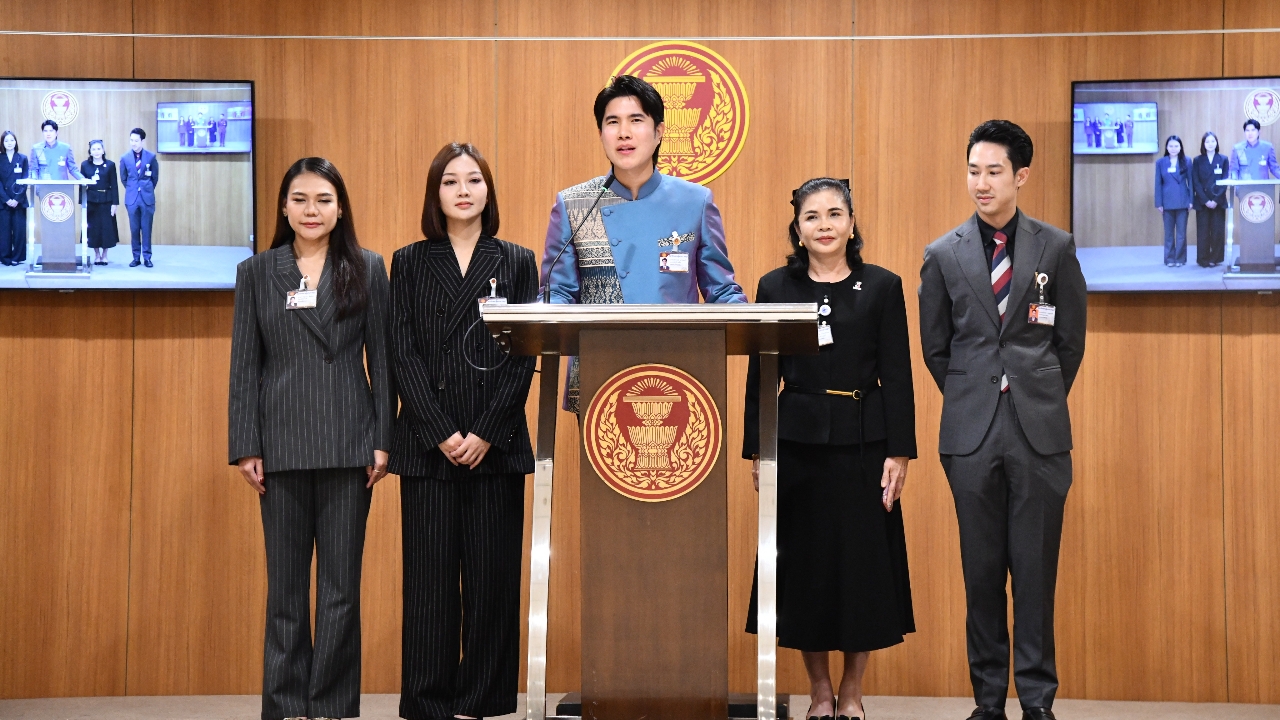
MP Wasawat "Kung Fu" Puangpornsri urged Prime Minister Anutin to explain the issue of signing the Thai-US trade deal with Donald Trump, questioning whether Thailand can keep up with the US trade game. He expressed concern about Thai farmers bearing the brunt and asked who would be responsible for lost government revenue.
18NovemberOn 18 November 2026, MP Wasawat Puangpornsri, known as "MP Kung Fu," a member of the Foreign Affairs Committee, questioned the government following the signing on 17 November 2026 of a Joint Statement on an Agreement on Reciprocal Trade (ART) between the US and Thailand by Prime Minister Anutin Charnvirakul and US President Donald Trump in Manila, Philippines, during the ASEAN-US special summit. Subsequently, Deputy Prime Minister and Minister of Commerce Supachai Sutthumpan, head of the Thai negotiating team, clarified that the document was only a preliminary agreement on principles, not a complete contract, and Thailand is not immediately required to open markets or reduce tariffs on all US goods. The full draft law will take about two more months to prepare before submission to the Cabinet, public consultation, and parliamentary approval.
MP Wasawat viewed the government's explanation as failing to answer key questions about what Thailand has actually agreed to with the US and whether Thailand benefits or loses from the deal. He noted that although the US is Thailand's top export market valued at 2.37 trillion baht in 2025 and supports over 1.25 million jobs, the government must anticipate changing US trade policies, including tariffs and trade conditions. Thailand needs detailed information and proactive plans rather than reacting after US rule changes. He directly asked the Prime Minister whether Thailand is keeping up with the US trade game, negotiating effectively or merely following the US lead, stressing that negotiations with a superpower require staying ahead rather than constantly restarting when conditions change.
Regarding the deal's content, MP Wasawat demanded the government clarify what commitments Thailand has made, especially on opening the market to US goods. The original negotiation framework suggested market opening up to about 99%. Although the government states the agreement is not yet effective and product details remain confidential during drafting, the public has the right to know which products will enter and how they will impact people, particularly Thai farmers facing competition from low-cost, large-scale US agricultural products such as corn, soybeans, meat, and dairy. If more foreign goods enter, how will corn and soybean farmers and livestock producers compete, and what government support is planned? Simply stating trade openness is insufficient if producers cannot sell their products. Furthermore, the Ministry of Commerce said 2,120 Thai products (covering over half of exports to the US, such as integrated circuits, hard disk drives, aircraft parts, natural rubber, tapioca starch, pineapple, and processed coconut products) are exempt from the additional 12.5% tariffs under Section 301 and that this joint statement will be a basis to reduce tariffs to 10% with a retaliatory tariff ceiling of 19%. MP Wasawat considered this positive but insisted the government disclose all product lists, beneficiaries, and export values clearly so the public can see tangible results, not just item counts.
Another key issue MP Wasawat sought government answers on was the impact of excise tax reductions under the negotiation terms, which could reduce national revenue. He questioned how much revenue would be lost and who would be accountable, stressing that these taxes have funded infrastructure, hospitals, schools, and public welfare. Reducing taxes should not be viewed solely as boosting trade but must include plans for compensating lost revenue. The government must explain tax restructuring plans, such as collecting taxes on express shipments and overseas online purchases, to ensure fairness for local businesses facing taxes, costs, wages, and rents. Clear figures are needed to show if these measures will generate enough revenue to offset losses from tax cuts.
MP Wasawat concluded by emphasizing that he is not opposed to trade with the US nor wants problems with a superpower, but negotiations must benefit all Thai people, not just certain exporters, while farmers, small businesses, and the public bear the burden. As a Foreign Affairs Committee member, he will closely monitor this issue and urges the government to disclose all possible deal details, including product lists, tariff reduction conditions, excise tax impacts, and compensation plans, so Parliament and the public can oversee them. He warned the government that those affected by international deals are not just negotiators but farmers working their fields, livestock raisers, shop owners, and small entrepreneurs supporting their families. Trade talks with the US must ensure Thai livelihoods are sustained, not just satisfy the other side while leaving Thai farmers to suffer.