

The Prime Minister has ordered urgent action to resolve arsenic pollution in the Kok and Sai rivers along the Thailand–Myanmar border, scheduling an emergency meeting on 25–26 November to address the issue at its source, while advancing four alternative water supply projects to assist 345 households in Chiang Rai.

On 19 November 2026, Ms. Lalida Pertvivatana, Deputy Spokesperson of the Prime Minister's Office, revealed that Prime Minister Anutin Charnvirakul instructed the Ministry of Natural Resources and Environment (MNRE) to urgently tackle cross-border pollution, especially arsenic contamination in the Kok and Sai rivers in Chiang Rai. He assigned Minister Suchat Chomklin to lead cooperation with Myanmar to address the problem at the source alongside securing clean, safe water for affected residents.
Ms. Lalida stated that Thai–Myanmar cooperation has made significant progress following Deputy Prime Minister and Foreign Minister Sihasak Phuangketkaew’s visit to Naypyidaw, Myanmar, on 12 November 2026, where he met Myanmar leaders. Both sides accelerated scheduling the first Joint Working Group (JWG) meeting on Thailand–Myanmar water quality management from early December to 25–26 November 2026 in Bangkok, aiming to concretely resolve the issue together.
The meeting will be co-chaired by the Permanent Secretaries of the Ministries of Natural Resources and Environment from both countries. Thailand plans to propose additional water quality monitoring points on the Myanmar side of the Kok and Sai rivers, along with scientific data exchange, pollution source investigation, and drafting joint one-year and three-year action plans. They will also promote swift joint field inspections. Notably, Thailand and Myanmar signed the Terms of Reference (TOR) for cooperation on 6 August 2026 to serve as the operational framework.


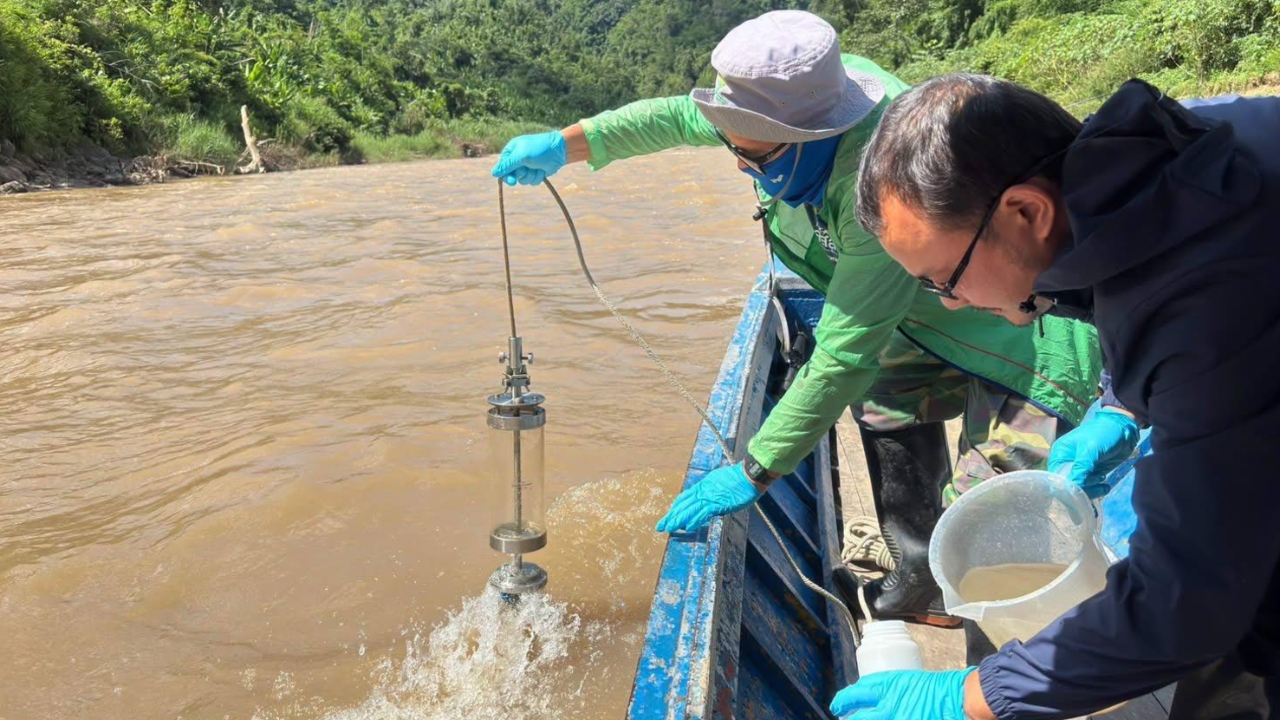
Regarding water quality, the Pollution Control Department reported preliminary arsenic testing using field kits at Ban Hua Fai on the Sai River in November 2026 found approximately 0.017 mg/L. This is a reduction from the previous 0.284 mg/L measurement but still exceeds the surface water quality standard of 0.010 mg/L. Further water and sediment samples will be collected for laboratory analysis with continuous monitoring.


Ms. Lalida added that to assist residents, Minister Suchat has ordered the Department of Water Resources to expedite four water distribution projects across three districts in Chiang Rai. These include three drinking water projects in Ban Muang Nim (Mueang Chiang Rai District), Ban San Sai Ngam (Wiang Chiang Rung District), and Ban San That Mai Phatthana (Chiang Saen District) planned for the 2027 budget year, expected to benefit 300 households.
Additionally, a solar-powered water distribution project at Rong Jok in Chiang Saen District will support 100 rai of farmland, aiding 45 farmers. Combined, these four projects are expected to benefit 345 households once completed.


Meanwhile, the Department of Groundwater Resources has been assigned to urgently clean and restore four affected groundwater wells, survey and drill new wells to expand safe water options for residents, and prepare mobile reverse osmosis (RO) water purification units for critical areas. Coordination with public health and agricultural agencies will monitor impacts on health and crop safety.
“The Prime Minister is seriously committed to resolving cross-border pollution by coordinating with Myanmar to address the source and concurrently supporting affected communities through water quality monitoring, alternative water sourcing, and groundwater system restoration. This ensures residents have safe, sufficient water for daily life and livelihoods. The government will continuously track progress and will not abandon those affected,” Ms. Lalida stated.
