

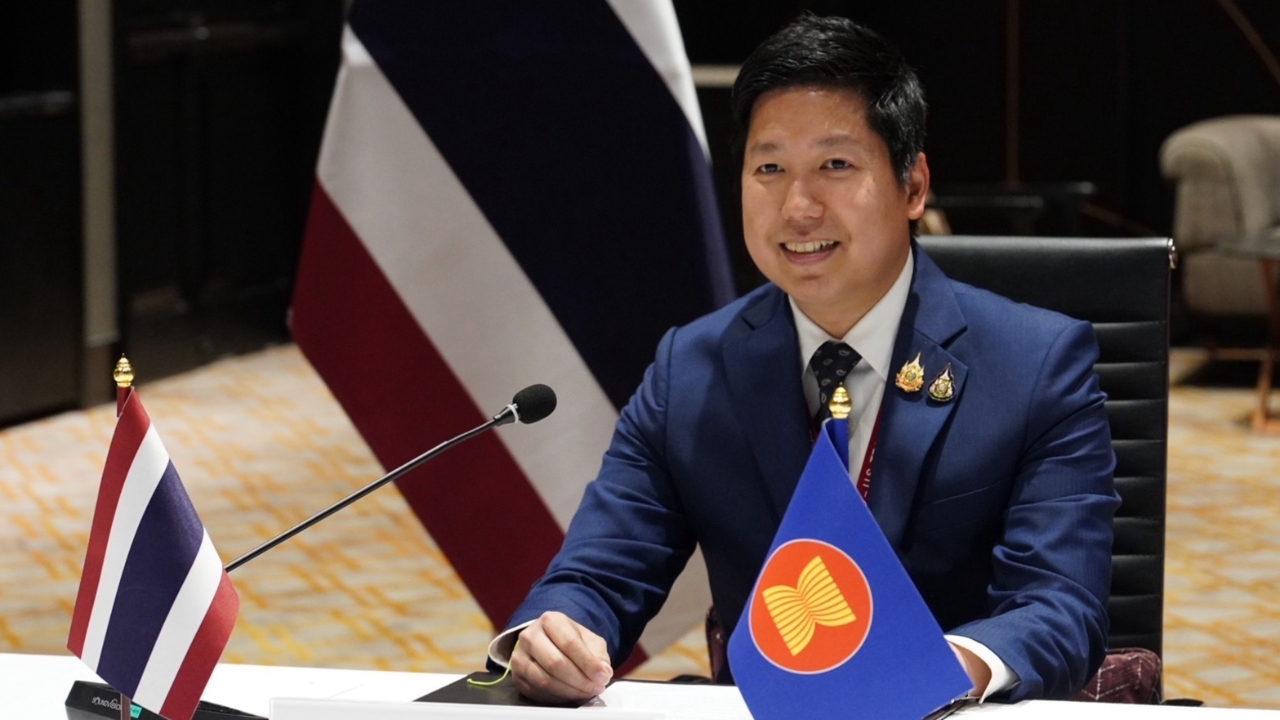
Worawong points out that the ART negotiations differ from the Thai Rak Thai era, explains that the 19% US tariff has been abolished, and stresses the need to focus on reducing tariffs to match competitors. He urges Supachai to clarify negotiation details.
On 19 Nov 2026, Worawong Ramangkul, former Assistant Minister of Commerce, explained and compared details of the Agreement on Reciprocal Trade (ART) negotiations, confirming that the product list differs from the Thai Rak Thai government period and expressing concern about broad impacts on Thai farmers.
Worawong said the legal basis for US import tariffs has changed under two administrations. Thai product tariffs in the US market have shifted legal bases multiple times within less than a year. Initially, Thailand was subject to a 36% retaliatory tariff under the IEEPA law. The negotiation team under then-Prime Minister Thaksin Shinawatra, including former Deputy Prime Minister and Finance Minister Pichai Chunhawat and former Commerce Minister Pichai Naripthaphan, succeeded in reducing it to 19%, announced on 1 Aug 2025. This rate matched Malaysia, Indonesia, and Cambodia and was better than Vietnam and China at that time.
On 20 Feb, the US Supreme Court ruled 6-3 that IEEPA did not authorize the president to impose customs tariffs, nullifying all retaliatory tariffs under that law. The US then applied a temporary 10% tariff under Section 122 from all countries until 24 Jul 2026. On the same day, the US Trade Representative announced Section 301 tariffs on 60 trading partners, with Thailand charged 12.5%, while Cambodia, Indonesia, and Malaysia paid 10%.
“The 19% tariff rate has been abolished. Currently, Thailand is charged 12.5%. Therefore, the 19% figure should not be raised again as it confuses the public,” Worawong added.
Worawong explained that under the Thai Rak Thai government, negotiation principles started by acknowledging US demands and the tariff rate Thailand would receive, then detailing product lists, aiming primarily to ensure Thailand was not disadvantaged compared to regional competitors.
Next, products Thailand already needed to purchase or import were used in negotiations—for example, crude oil and natural gas imported from the Middle East, which could be partially sourced from the US, or aircraft, since Thai Airways planned to buy 80 planes and could include this in talks.
For agricultural products, items where Thailand already granted other countries benefits without domestic market impact could be liberalized or conditionally opened, such as beef, where Australia and New Zealand had existing preferential tariffs. Corn was similar; Thailand produced only half its demand, importing the rest from neighbors harvesting by burning fields, thus a 1 million ton quota was allowed.
Finally, sensitive products for domestic production, like pork, would not be fully liberalized. If opening was necessary, quotas would be minimal, no more than 1% of the market. Non-tariff measures (NTMs) remained in place and were not lifted.
Worawong said currently Thailand faces a 12.5% Section 301 tariff, 2.5% higher than ASEAN neighbors, because the US divides rates into two groups: 10% for countries with laws banning forced labor imports or having ART agreements with the US, and 12.5% for those without. Thailand is in the latter group despite prior government negotiation frameworks. He also warned that the US is investigating another Section 301 case on structural excess capacity, which, if unfavorable, could impose additional overlapping tariffs.
“I do not oppose ART negotiations. Thailand must proceed quickly under principles that protect farmers and domestic businesses. What concerns me is that this round’s liberalization product list differs from the framework we set, especially pork, animal feed corn, soybean meal, and ethanol, which were sensitive and strictly quota-controlled under the Thai Rak Thai government. If this government shifts that line, hundreds of thousands of Thai farming households will be directly affected. Opening agricultural markets is difficult to reverse; once opened, pulling back is nearly impossible,” Worawong said.
Worawong called on Supachai Sutthumpan, Deputy Prime Minister and Commerce Minister and lead negotiator, to disclose the list of products Thailand proposes to liberalize to the US and whether Thailand’s tariff rates exceed competitors like Vietnam, so the public and farmers know before finalizing negotiations. Since ART is an international agreement, its domestic approval process is similar to an FTA, requiring public input and parliamentary approval.
“The public has the right to know what we are trading away and what we gain. If the government is confident in its negotiations, there is no reason to withhold information. I am ready to share data from previous negotiations if it benefits the country,” Worawong concluded.