

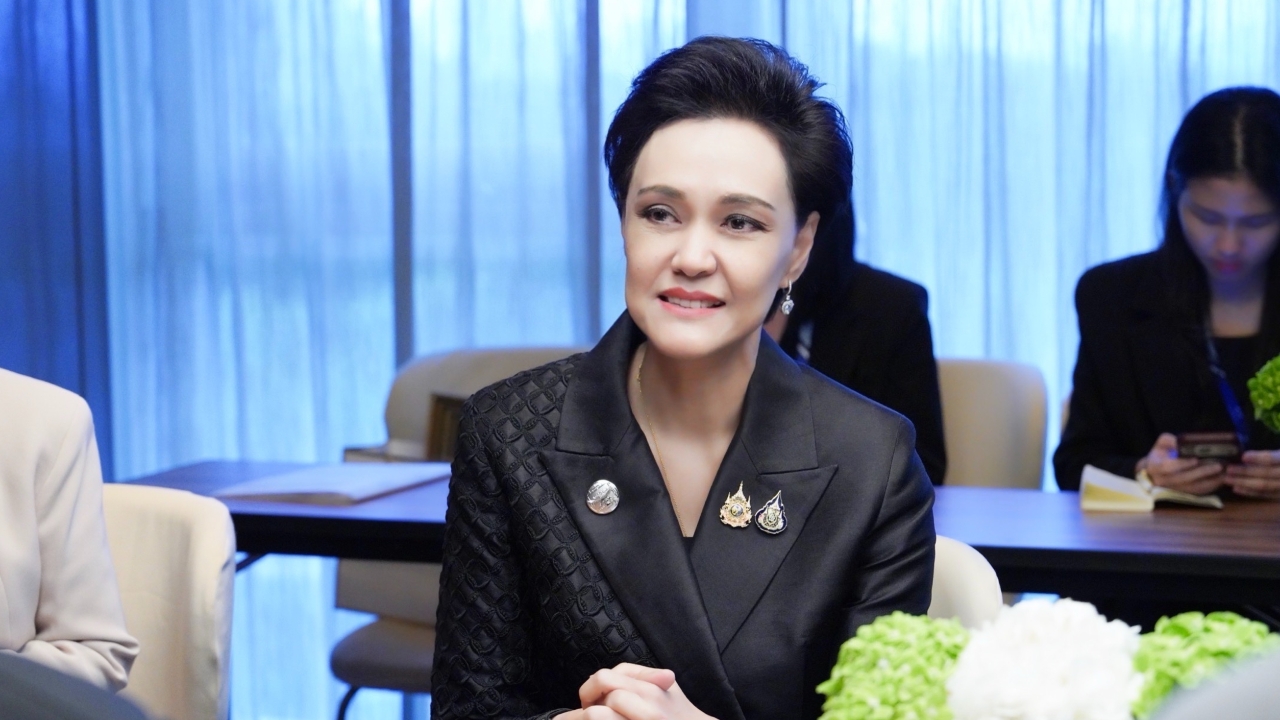
Supachai takes proactive steps after Thailand and the U.S. sign the ART joint statement, ensuring Thailand is not disadvantaged against competitors. The U.S. confirms readiness to reduce the Section 301 tariff on forced labor from 12.5% to 10%.','tags':['trade agreement','Section 301 tariff','Thailand-U.S. relations','forced labor']
On 19 Nov 2026 GMT+7, Supachai Sutthumpan, Deputy Prime Minister and Minister of Commerce, revealed following discussions with Rick Switzer, U.S. Deputy Trade Representative, on 18 Nov 2026 GMT+7 during the 33rd APEC Economic Leaders’ Meeting in Shenzhen, China, that both parties welcomed significant progress after Prime Minister Anutin Charnvirakul and President Donald Trump signed the Agreement on Reciprocal Trade (ART) joint statement in Manila, Philippines, on 17 Nov 2026 GMT+7, confirming that both countries had reached key negotiation conclusions.','tags':['Supachai Sutthumpan','APEC meeting','ART agreement','Thailand-U.S. trade']
Supachai stated that this joint statement signing is crucial for building trade confidence between the two nations, especially as they work through the legal text refinement (Legal Scrub) to finalize the ART agreement. This mutual understanding at the leadership level boosts confidence in trade cooperation, enabling businesses to prepare and plan production and investments more securely amid global economic and trade volatility.','tags':['trade confidence','legal scrub','business planning','Thailand-U.S. cooperation']
In discussions with the U.S. Deputy Trade Representative, Thailand reinforced mutual understanding to reduce the Section 301 tariff on forced labor from 12.5% to 10%, ensuring Thailand receives a tariff rate comparable to countries that have already signed ART agreements with the U.S. The U.S. confirmed proceeding with this tariff reduction as agreed. Additionally, Thailand requested the U.S. to consider applying a special Section 301 tariff on excess capacity, which the U.S. plans to implement, to ensure Thai products maintain competitive tariff rates and are not disadvantaged in the U.S. market.','tags':['Section 301 tariff','forced labor','excess capacity','trade negotiations']
Supachai said, “Maintaining competitive tariff rates is vital. If Thai products face higher tariffs than competitors, Thai businesses risk losing orders and market share, especially in the U.S., Thailand’s top export market. In 2025, exports to the U.S. were approximately 2.37 trillion baht, supporting employment for about 1.25 million Thai workers.”','tags':['tariff competition','U.S. market','Thai exports','employment']
Next steps include Thailand urging legal teams from both sides to expedite the legal text refinement (Legal Scrub) to finalize the ART agreement before submitting it to the Cabinet for consideration. Subsequently, a systematic public and stakeholder consultation will be conducted to inform all sectors and allow for feedback before proceeding to signing, parliamentary review, and necessary legal amendments for the agreement’s enforcement.','tags':['legal process','public consultation','ART agreement','Thailand-U.S. trade']
The U.S. is Thailand’s second-largest trading partner and top export market. In 2025, total trade reached 93.651 billion U.S. dollars, with Thai exports to the U.S. valued at 72.506 billion dollars, covering key products such as computers, rubber products, gems and jewelry, automobiles, and air conditioners. Imports from the U.S. totaled 21.144 billion dollars, including crude oil, machinery, aircraft and parts, chemicals, and electrical machinery. Thailand had a trade surplus with the U.S. of 51.361 billion dollars, underscoring the U.S. market’s importance to Thailand’s economy and the necessity to preserve trade opportunities and competitiveness for Thai businesses long-term.','tags':['Thailand-U.S. trade','trade surplus','export products','economic impact']}]} ?>