

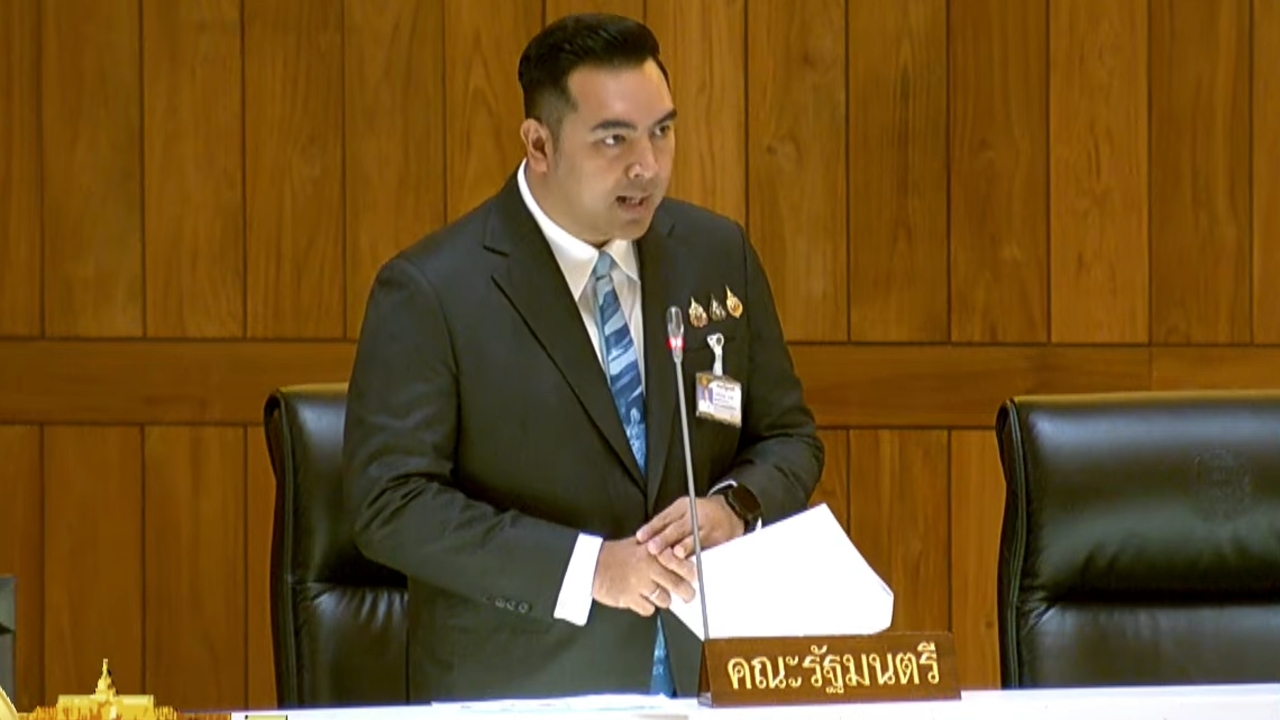
Watcharapol acknowledged that some Thai agricultural products are affected by the Thai-U.S. reciprocal trade cooperation agreement and ordered close monitoring of U.S. feed corn imports due to their impact on Thai farmers.
At 10:30 a.m. on 19 Nov 2026 GMT+7, at the Parliament, a House of Representatives meeting chaired by Vice President Lertsak Pattanaichakul considered a live question from MP Isariya Pairipayarit of the People's Party. He questioned Agriculture and Cooperatives Minister Suriya Jungrungreangkit about the Thai-U.S. trade agreement signed by Prime Minister Anutin Charnvirakul and U.S. President Donald Trump. Concerns were raised about imports of U.S. feed corn and pork priced below the Thai market.
Deputy Agriculture Minister Watcharapol Khawkhum responded on behalf of the Agriculture Minister that the Thai-U.S. trade agreement is only a preliminary framework, not a final conclusion. Several negotiation steps remain, including finalizing key points, contract review, Cabinet approval, public consultation, and Parliamentary approval. Currently, it is a broad agreement under negotiation led by the Ministry of Commerce and the Ministry of Foreign Affairs, so details cannot yet be disclosed. The Ministry of Agriculture anticipates some agricultural products, such as feed corn—which Thailand already imports heavily due to insufficient domestic production—may be affected. Under the Thai-U.S. agreement, the Ministry of Agriculture will enforce strict measures for the Ministry of Commerce to consider, aiming to protect farmers. Agriculture Minister Suriya has directed all agencies to prepare measures addressing farmer income, closely monitor sensitive agricultural products like feed corn and meat, manage import policies, ensure food security, and develop compensation plans. All actions must prioritize farmers and manage sensitive agricultural imports.