

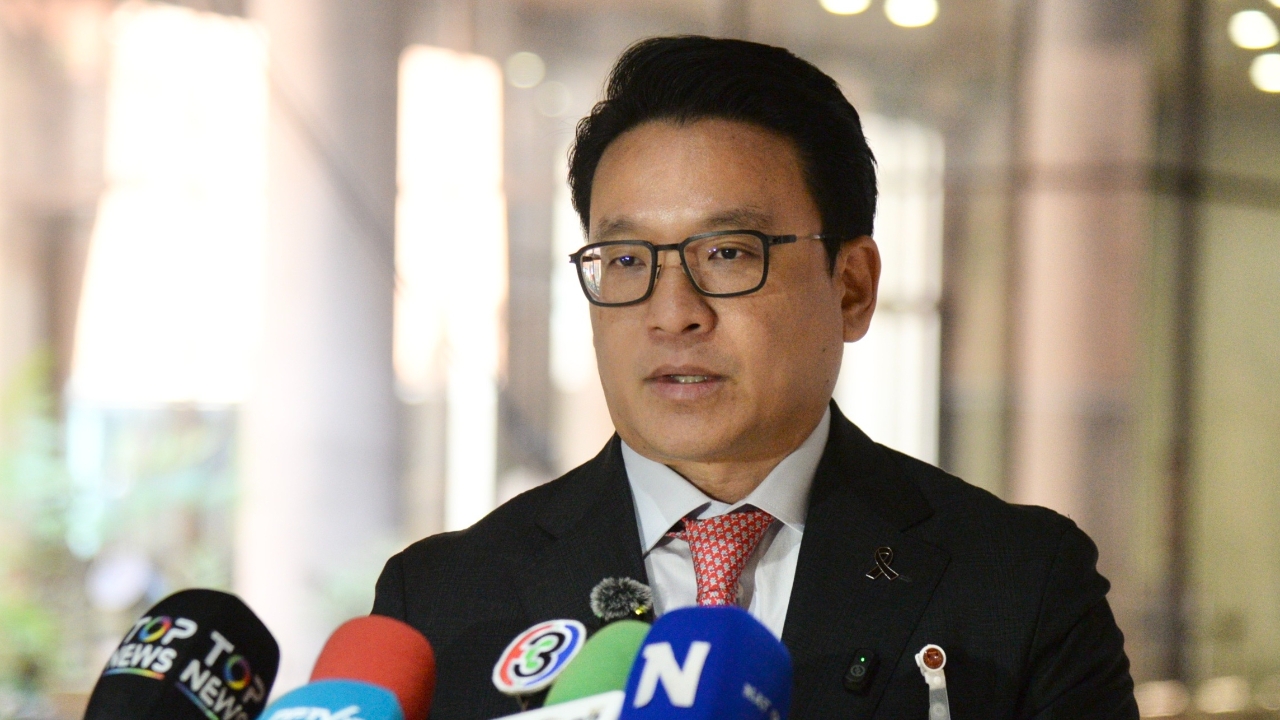
Sakolthee, Chairman of the Public Health Committee, urges the government to appoint a lead agency to resolve arsenic and heavy metal contamination in the Mae Sai River. He revealed that 94 locals have been found with elevated arsenic levels in their bodies and plans to urgently propose a motion to establish a special committee to address the root cause of the problem.
At 3:00 p.m. on 19 November 2026 at the Parliament, Mr. Sakolthee Phattiyakul, a party-list MP for the Democrat Party and Chairman of the House Public Health Committee, held a press conference following a committee meeting. The meeting included related agencies such as the Department of Disease Control, Department of Health, Ministry of Public Health, and Ministry of Foreign Affairs to discuss solutions regarding chemical and heavy metal contamination in the Mae Sai River, Chiang Rai Province, which is severely impacting local residents' health. Initial water quality tests showed a clear difference in contaminant levels between upstream and downstream areas, indicating that the pollutants are discharged from the Myanmar side. Thailand’s Ministry of Foreign Affairs stated that a joint meeting with Myanmar will be held from 24-26 November 2026 to inspect water quality according to agreed Terms of Reference (TOR). If clear evidence confirms Myanmar as the source, the Thai government will officially protest and apply pressure. Additionally, the Chinese Prime Minister has promised assistance, as contamination flowing into the Mekong River would become a regional issue affecting multiple countries. The Department of Health confirmed that Mae Sai’s tap water remains safe for consumption but advises against direct use of river water. He expressed concern that although water shortages have not yet occurred, competition for raw water sources for tap water production has begun locally, urging the government to urgently manage the situation before it escalates.
Mr. Sakolthee added that in 2026, 94 people were found to have arsenic levels exceeding the standard from screening just over 1,200 at-risk individuals (about 7%). The committee demands that the Department of Disease Control and Chiang Rai Province develop a five-year master plan to screen the entire provincial population and closely monitor patients’ conditions. They also call on the government to fund the purchase of test kits (priced at 2,900 baht each), which exceed local administrative organizations’ budgets. Furthermore, the committee has instructed an urgent inspection of agricultural products, aquatic animals, and over 300 drinking water and ice factories in the province to ensure consumer safety. To date, the government has not declared Chiang Rai a hazard surveillance zone nor assigned any agency as the lead to integrate solutions. Consequently, various ministries—the Ministry of Public Health, Ministry of Agriculture and Cooperatives, Ministry of Natural Resources and Environment, and Ministry of Interior—are working independently without coordination. Therefore, the Democrat Party plans to urgently propose a motion to form a special committee to systematically address the problem. Since rehabilitating water sources contaminated with heavy metals will take at least 3-5 years, the government must demonstrate a more serious commitment to resolving this issue.