

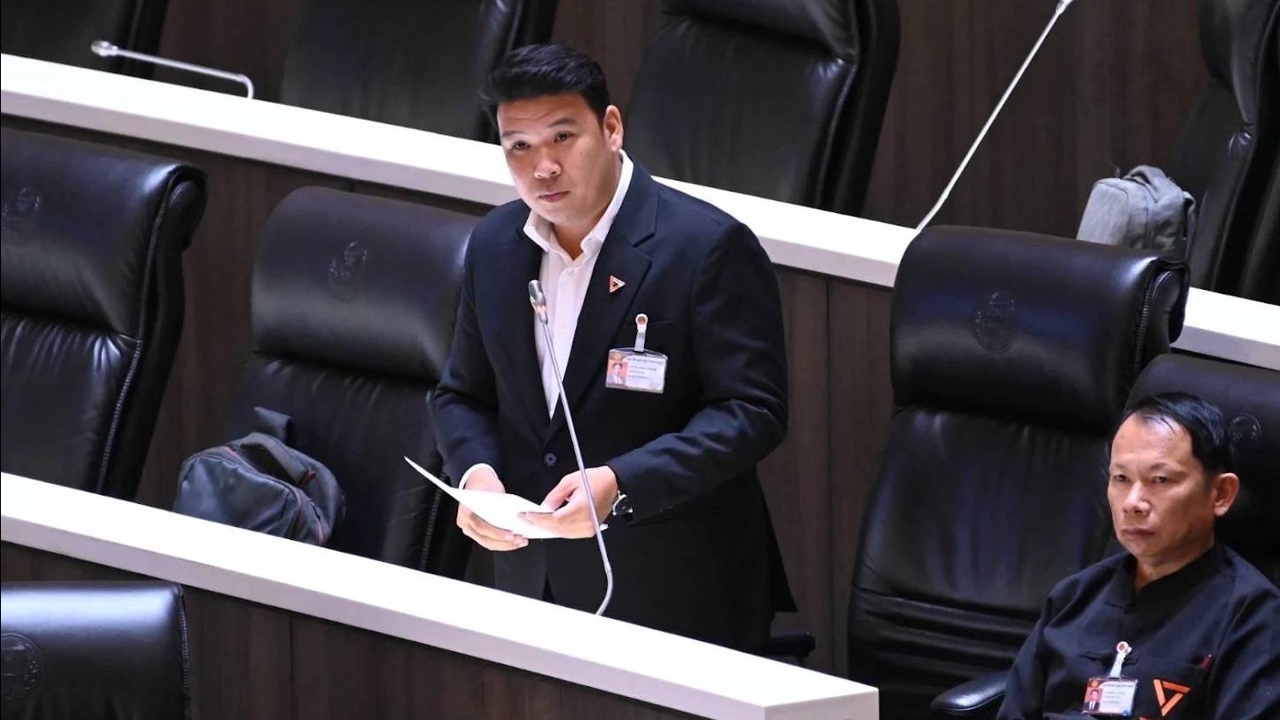
Watcharapong sharply criticized Warawut’s proposal to create a recycling industrial estate in Rayong, demanding that authorities first resolve issues with numerous illegal factories and longstanding pollution before introducing new toxic waste. He asserted that if the plan is truly good, it should be implemented first in Suphanburi.
On 20 Nov 2026 GMT+7, Watcharapong Sirirak, MP for Rayong’s 5th district from the People’s Party, commented on the Ministry of Industry’s push for a 'recycling industrial estate' policy aimed at handling solar panel waste, electric vehicle (EV) batteries, and electronic waste. The plan to pilot this industrial estate in Rayong province has caused significant concern and opposition among local residents.
Watcharapong said he and the people of Rayong do not oppose national development and agree with proper, clean technology waste management, including tougher legal penalties for factories illegally dumping industrial waste. However, the key question the government and Ministry of Industry must clearly answer is why Rayong should bear the burden of this hazardous waste. He asked whether Rayong is about to become the country’s—and the world’s—largest toxic waste dump. If the government and the minister believe the project is truly safe and beneficial, he suggested piloting it in Suphanburi, the minister’s political base, before rushing to dump it in Rayong.
Watcharapong pointed out that local concerns are grounded in three real lessons. First, the Eastern Economic Corridor (EEC) project promised to attract only clean and future industries, but in reality, Rayong still faces old industrial plants, illegal recycling factories, and foreign capital investments causing severe pollution, including chemical warehouse fires and repeated illegal hazardous waste dumping. Claims of importing good technology from Japan fail to reassure locals, who fear it may just be relocating outdated production and bringing in foreign pollution.
Second, government oversight agencies have not earned public trust. Although the minister claims there will be centralized treatment and 24-hour monitoring, in reality officials lack sufficient capacity to detect factories secretly releasing wastewater, toxic fumes, and illegally dumping industrial waste. Residents suffer declining quality of life and live in fear over their drinking water sources. If the government collects hazardous waste and worn-out batteries nationwide to concentrate here without a reliable control system, the health risks will fall squarely on Rayong’s people and their children.
Third, there is concern about legal loopholes potentially allowing cross-border toxic waste imports. Since recycling plants require high investment, private operators will want a steady supply of raw materials. If domestic electronic waste is insufficient, how can the government ensure laws will not be amended to permit importing more toxic waste from abroad? Despite current bans, illegal waste imports continue. The government must clarify how it will control and monitor this supply chain.
Watcharapong concluded that Rayong residents have long sacrificed farmland and natural resources and endured pollution to generate income and drive the national economy for decades. Today, they ask only for sincerity and clarity. He urged the Ministry of Industry to carefully reconsider this policy, promptly hold genuine consultations with local people, and most importantly, have the government address how it will resolve illegal factories and existing pollution in Rayong before contemplating introducing new hazardous waste into the community.