

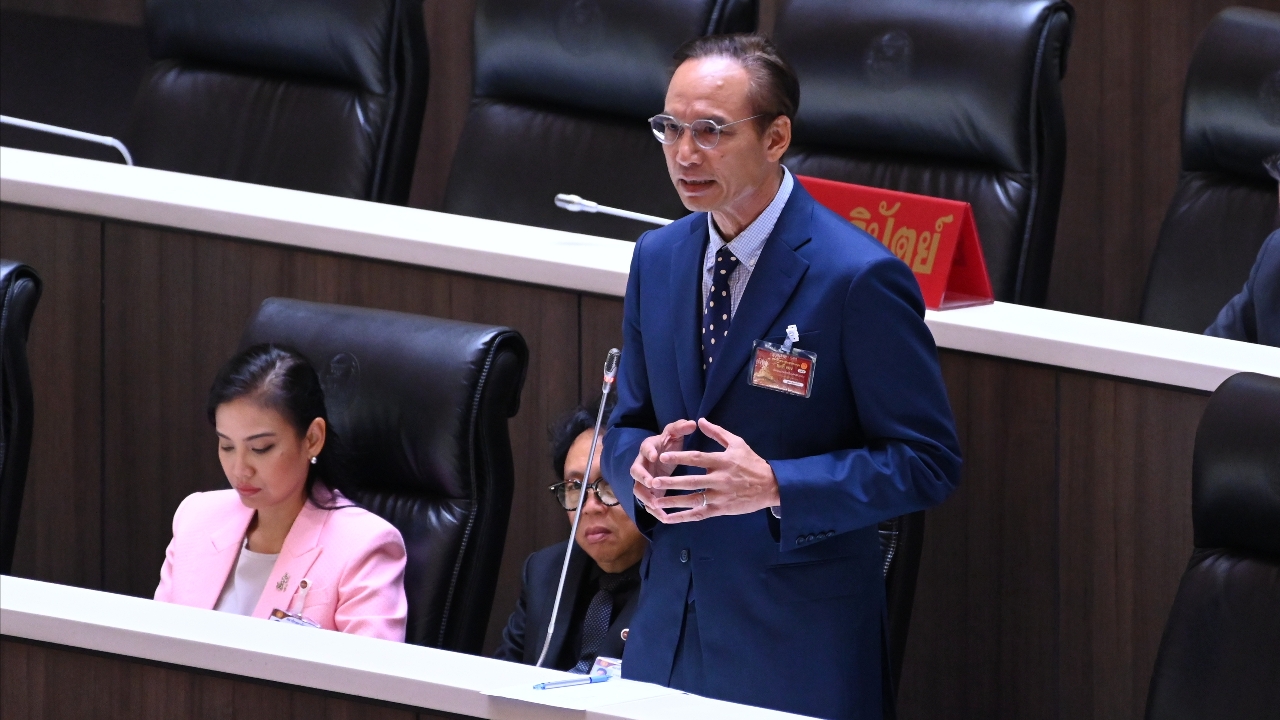
Korn expressed disappointment over the government ignoring parliament and urged the adoption of a genuine Zero-based Budgeting approach, while warning that the country's revenue structure is in crisis and risks becoming trapped by fiscal laws.
On 20 Nov 2026 GMT+7, Korn Jatikavanich, a list MP from the Democrat Party, spoke at the House of Representatives during the Pre-Budget Consultation for the 2028 fiscal year, noting irregularities in the misguided budgeting process and the government's disregard for the parliamentary forum.
Korn began by criticizing the government for not sending a single representative to listen to parliament's suggestions, pointing out that this neglect diminishes the importance of the discussions. He stated that although current and past governments claim to use Zero-based Budgeting, in practice this is untrue, as agencies are only allowed to request up to a 10% budget increase over the previous base, clearly showing reliance on the old structure as if the country had not changed.
He warned of three world-changing factors.
“If we truly started from zero, would we allocate budgets as we do now—half to bureaucracy, 30% to welfare, and 20% to investment? I confidently say no. In a changing world, the bureaucratic structure from 20 to 50 years ago is less necessary. We can replace it with digital technology,” Korn said. He said the three main factors transforming the world and directly impacting Thailand’s budget are:
1. An aging society with a shrinking tax-paying workforce and growing elderly population presents a permanent challenge, as birth rates fall annually but the budget system is unprepared.
2. Technological changes and AI: More Thai people sell through foreign platforms, and the rise of the Gig Economy makes tax collection harder. AI also affects the labor market and may cause funds to flow abroad to pay major AI platforms.
3. Industrial transition: Thailand’s automotive industry, once a treasure trove, is changing. Although EV manufacturers are setting up plants, they no longer generate employment or supply chains as before.
He called for revenue system reforms.
Korn warned the government that Thailand now “has no fiscal space left.” Public debt is close to the 70% ceiling, and deficits continue. Worryingly, recurrent state expenditures have risen to over 82%, leaving only 17% for investment, which may violate fiscal discipline laws requiring at least 20% investment budget.
“How is the government preparing for this, or will it keep solving problems by issuing emergency decrees as usual? The most important focus must be on ‘revenue.’ Currently, tax revenue from economic transactions has dropped to only 14% of GDP. Without fixing this, we will certainly be trapped in budget constraints,” Korn said. Korn stated.
At the end, Korn proposed that future budgets should prioritize social welfare more, shift investment burdens to the private sector, and most importantly, seriously reform the civil service system to reduce the strain on the national budget.