

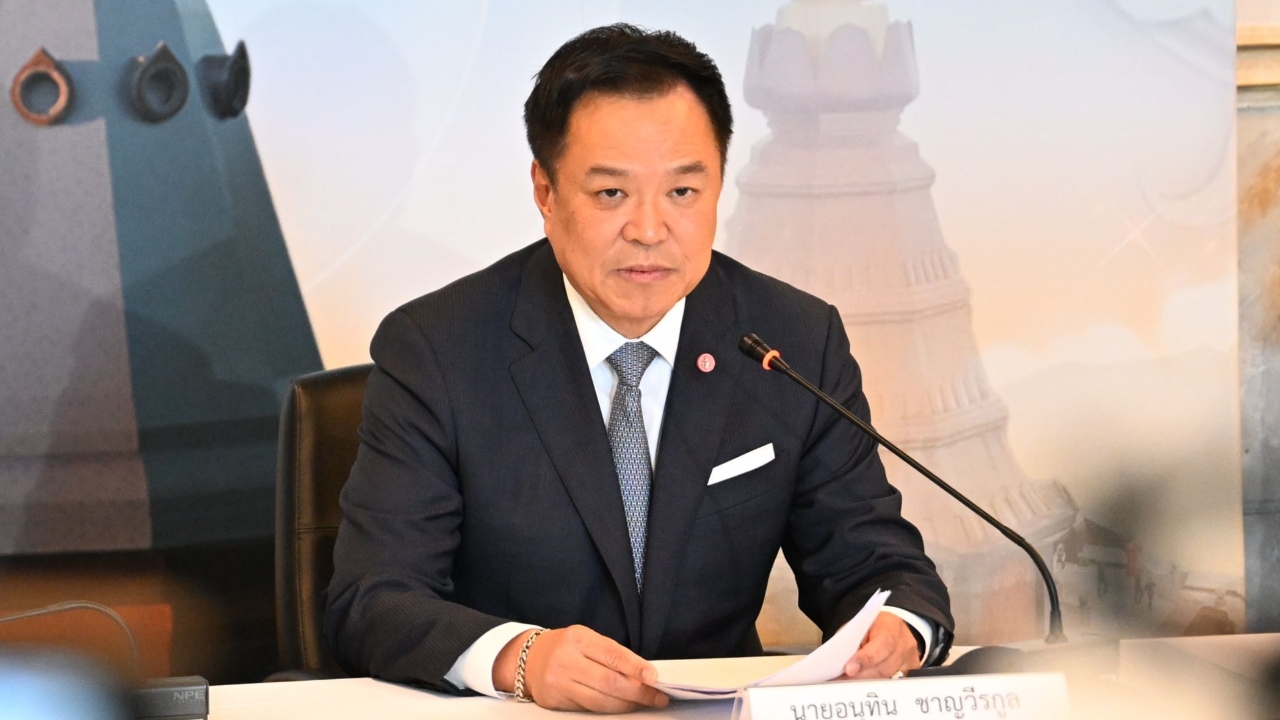
Anutin revealed that in talks with Hun Manet, Thailand opposed taking the dispute into compulsory arbitration, emphasizing that if Cambodia proceeds, border demarcation negotiations must be suspended. No discussions on opening border checkpoints yet; urged accelerating mine clearance along the border for safety.
On 21 Nov 2026, Anutin Charnvirakul, Prime Minister and Minister of Interior, disclosed on the program "Talk with Prime Minister Anutin" during his mission in Shenzhen, China, that he spoke with Cambodian Prime Minister Hun Manet about ways to restore relations between the two countries. They agreed to resolve disagreements before moving forward on shared issues in parallel.
He informed the Cambodian Prime Minister that Thailand could not accept the approach of compulsory arbitration regarding maritime areas after Thailand canceled MOU44. Thailand believes resolving issues should start with bilateral talks, and only if those reach a deadlock should compulsory arbitration be considered, not immediately applied.
“I told him that negotiations must begin between the two parties, and only if they reach a true deadlock should we proceed to compulsory measures. But Cambodia chose to go straight to compulsory arbitration, like going down a side street and then coming back to the main road, which does not align with our objectives. They want to say, 'If compulsory arbitration is not mandatory, then fine, but please continue negotiations.' However, Thailand should not stop border demarcation talks on land.”
The Prime Minister also told the Cambodian Prime Minister that if Cambodia insists on compulsory arbitration, Thailand’s stance must be to halt all negotiations due to existing conflicts. If attempts continue to negotiate border demarcation on land and water with compulsory terms — which in English is called "compulsory" — Thailand cannot explain to its people why it must accept those conditions.
Therefore, if compulsory arbitration remains on the table, all other negotiations must implicitly stop. Hence, the way forward must be found, but Thailand cannot proceed down that compulsory path under any circumstances.
When asked whether the ASEAN-China meetings discussed Cambodia-related issues, the Prime Minister said that whenever Thailand is criticized despite never speaking ill of the opposing party, it must be noted carefully. He highlighted the feelings of Thai citizens living along the border, who have suffered invasions before. He confirmed no talks have taken place regarding opening border checkpoints or shared border areas. Border demarcation may need to start by building mutual trust.
“If we don't start building trust, there will be no chance to negotiate anything. Border demarcation is important because we need to know where Thailand ends and Cambodia begins. This is significant. We may need to cooperate, as we have already signed agreements, such as landmine clearance. We should expedite clearing landmines because they pose dangers to our people who live by the forest, gather forest products, or take shortcuts through the woods. Previously, they could do this freely, but now military deployment restricts that. When the situation improves, we must ensure these hazards are removed, as they could even harm our soldiers patrolling the border. If we don't speed up clearance, risks remain.”