

The Prime Minister held an urgent meeting to resolve contamination issues in northern rivers, assigning Yotsanan to lead the task force. Plans include leveraging CMECS and Mekong-Lan Chang forums to foster cooperation in addressing cross-border pollution, stressing control from the source.
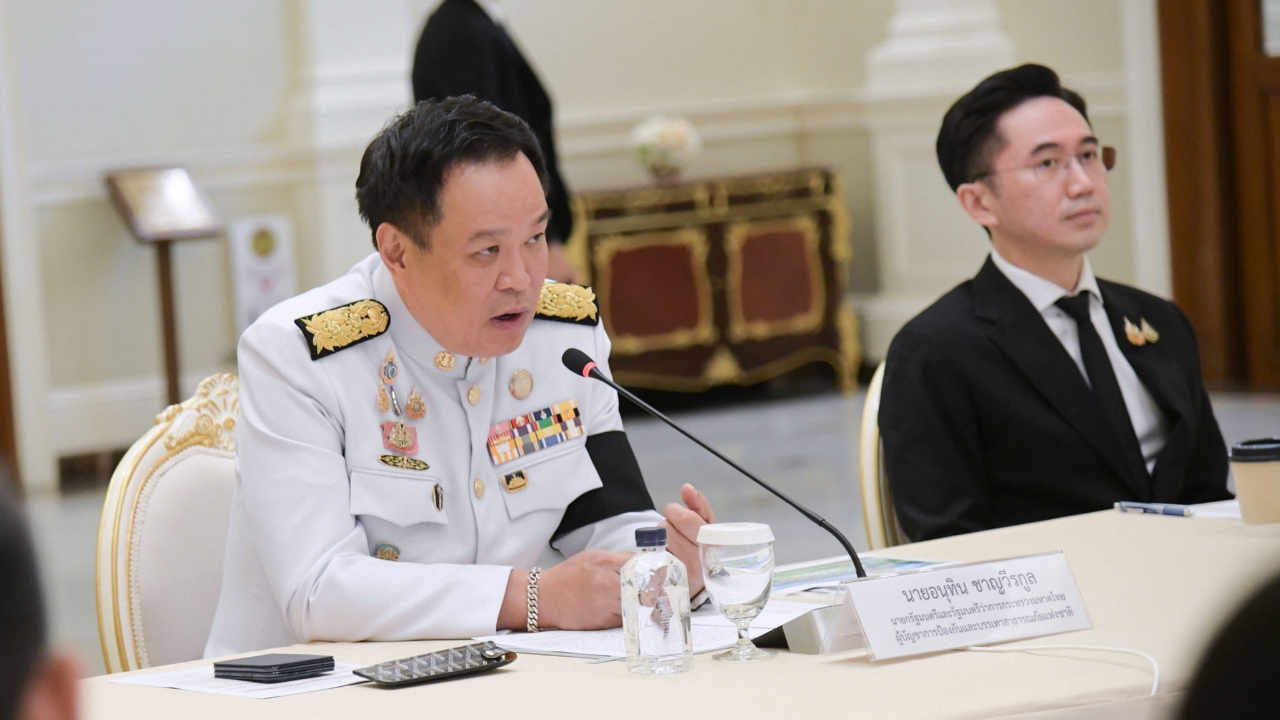
On 21 Nov 2026 GMT+7, Prime Minister and Minister of Interior Anutin Charnvirakul chaired a National Disaster Prevention and Mitigation Command meeting to monitor and resolve water contamination. Deputy Prime Minister and Finance Minister Akniti Nitithanprapas, Deputy Prime Minister and Minister of Higher Education, Science, Research and Innovation Yotsanan Wongsawat, Minister of Public Health Pattana Promphat, and related agencies attended.
The Prime Minister opened the meeting by thanking attendees and apologizing for the sudden Saturday session due to water contamination concerns, especially arsenic found in the Kok, Sai, and Ruak rivers in northern Thailand. He expressed the government's worry and care over the situation, noting continuous monitoring and assigning the Department of Disaster Prevention and Mitigation under the Ministry of Interior to conduct field follow-ups and coordinate relief to protect public health.

He added that following an APEC Economic Leaders meeting in China, he, Yotsanan, Deputy Prime Minister and Foreign Minister Sihasak Puangketkaew, and Minister Pattana met with Chinese President Xi Jinping to discuss cross-border water pollution. Prior discussions and data sharing indicated the need for China's cooperation, as neighboring Myanmar also faces pollution issues from joint mining operations and mineral processing, which introduce various toxins into waterways crossing borders into Thailand.
The Prime Minister noted that since Premier Li Qiang's visit to Thailand and his meeting with China's President, China has acknowledged the issue and communicated internally. China confirmed it does not support any activities harming the environment or public quality of life.


Therefore, Chinese authorities are ready to cooperate with Thailand to resolve river toxins and provide technical support for systematic water quality monitoring and remediation. Thailand will continue this issue at the Mekong-Lan Chang cooperation meeting. Prior to that, discussions with ACMECS leaders from Cambodia, Laos, Myanmar, Vietnam, and Thailand will be held in Hanoi, Vietnam. The government plans to present proposals on toxin reduction at the ACMECS meeting next Saturday.
At the end of December, the Mekong-Lan Chang meeting will follow up on progress, sharing results with all countries involved. The Prime Minister believes all nations will cooperate fully due to the impact on their populations.
The Prime Minister said today's meeting included only relevant agencies to report on the situation and necessary actions: the Ministry of Natural Resources and Environment overseeing pollution; the Ministry of Interior managing overall coordination; the Ministry of Industry controlling production processes; the Ministry of Public Health monitoring public health and toxin levels; and the Ministry of Higher Education leading cooperation efforts with Chinese and international organizations to establish reference data on acceptable toxin levels and reduction strategies. Currently, the problem is localized in upper northern provinces under Yotsanan’s supervision, who is appointed to lead the government-supported task force.
Regarding the Ministry of Finance's role, since import and export of materials are involved, customs must oversee regulations to ensure integrated inter-agency collaboration.

The Prime Minister emphasized that assigning tasks to deputy prime ministers is on behalf of the government, not just their ministerial clusters. He urged full cooperation from all parties to solve and prevent contamination in Thai waterways, originating both domestically and from abroad. The issue requires comprehensive resolution to avoid recurrence.
Additionally, the Prime Minister said today's meeting would discuss electronic waste, both legally and illegally imported. Flooding can spread toxins, raising public concern and potential health risks if poorly managed. The meeting aims to find joint strategies for effective control.