

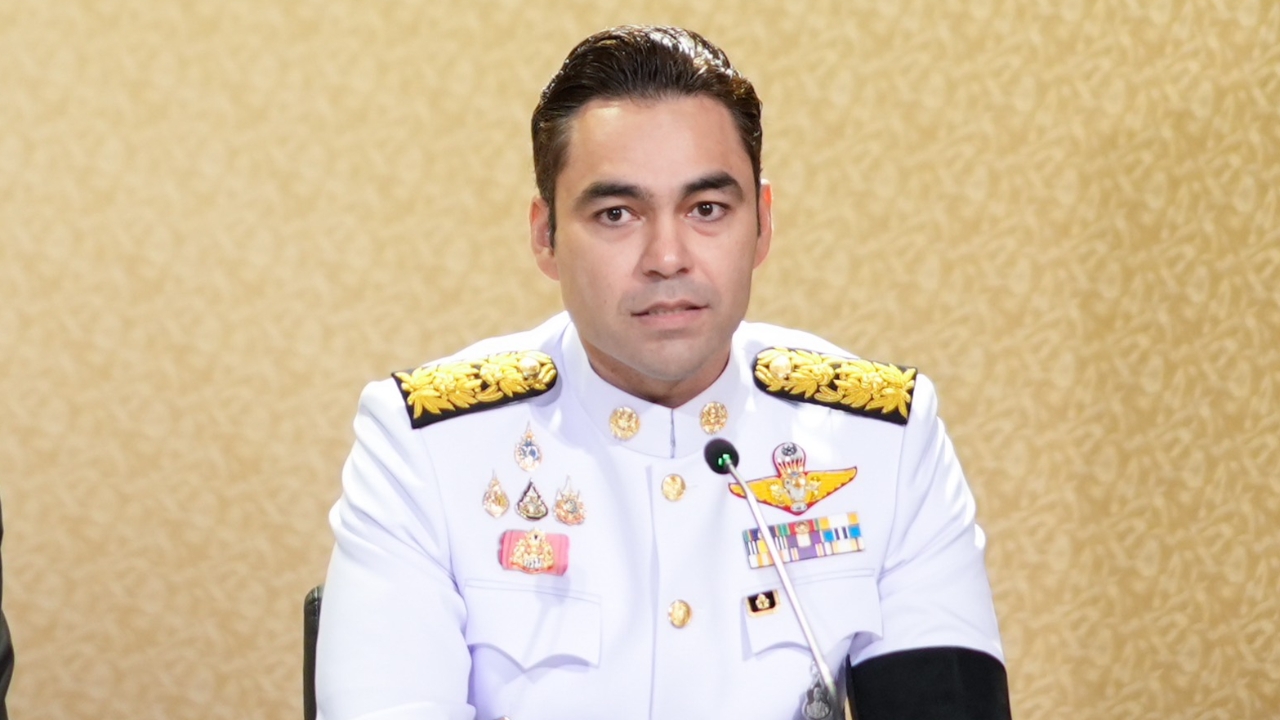
"Je Seth" revealed there is information about companies exporting chemical precursors to neighboring countries and that exports will be immediately halted if found to cause cross-border pollution. Efforts to monitor village tap water quality continue, while the Department of Disaster Prevention and Mitigation has dispatched 20 water production vehicles to the affected areas.
At 13:50 on 21 Nov 2026 at the Naree Samosorn Building, Government House, Mr. Je Seth Thaiset, Deputy Minister of Interior, held a press conference after a meeting of the National Disaster Prevention and Mitigation Command to track the situation and solutions regarding contaminated substances in water sources. He said that regarding chemical precursors, the Ministry of Commerce has already provided data on which companies export these precursors to neighboring countries. These precursors may not represent the total used by those countries, but if any part exported from Thailand causes problems or pollution affecting Thai citizens, exports must be stopped immediately, as clearly instructed by the Prime Minister.
Mr. Je Seth added that he believes halting the chemical precursors will help reduce water pollution, or at least factories will have to stop production when precursors are unavailable. This serves as a measure and pressure before entering negotiation processes.
Regarding regional tap water, today there is comprehensive monitoring and situation tracking 24 hours a day. Screening uses international systems supported by the World Health Organization (WHO). Therefore, the public is encouraged to have confidence in the regional tap water supply.
As for village tap water, orders have been given to collect data from all village water supplies—including mountain water systems, surface water, and groundwater—and send all relevant information to the Metropolitan Waterworks Authority’s laboratory, which meets global standards. Once test results are available, if any area is found at risk of affecting residents’ water use, services will be suspended until filtration systems are installed or new water sources provided. Coordination is underway with the Ministry of Higher Education, Science, Research and Innovation to install filtration units capable of removing heavy metals, especially arsenic.
Mr. Je Seth further said the public should not worry about water usage. Twenty water production vehicles from the Department of Disaster Prevention and Mitigation have been deployed widely. Cooperation has been requested from the Department of Water Resources to drill groundwater wells free from contamination, with contingency plans to deliver water to households. Citizens are advised to prepare water containers to store sufficient daily water supplies.
Mr. Je Seth added that with the Prime Minister declaring a war on pollution, all relevant agencies must perform their duties seriously. Anyone involved who does not comply with the law must consider all consequences, as the government will implement strict management measures.
Mr. Je Seth explained that the Pollution Control Department is the main agency responsible for testing and installing detection equipment for chemical precursors in water. The Ministry of Interior will monitor village and regional tap water, while the Royal Irrigation Department will inspect along the main river channels. The Ministry of Public Health will screen consumables such as meat, raw materials, and water. Consumers are encouraged to have confidence in screening efforts starting from the Ministry of Agriculture and Cooperatives.
Regarding agricultural produce, the Department of Disaster Prevention and Mitigation will provide compensation by purchasing and destroying affected crops. The Ministry of Agriculture will seek ways to assist farmers in switching to crops less likely to be contaminated before the Ministry of Public Health conducts further screening at markets and collection points to prevent toxic residues from reaching consumers.