

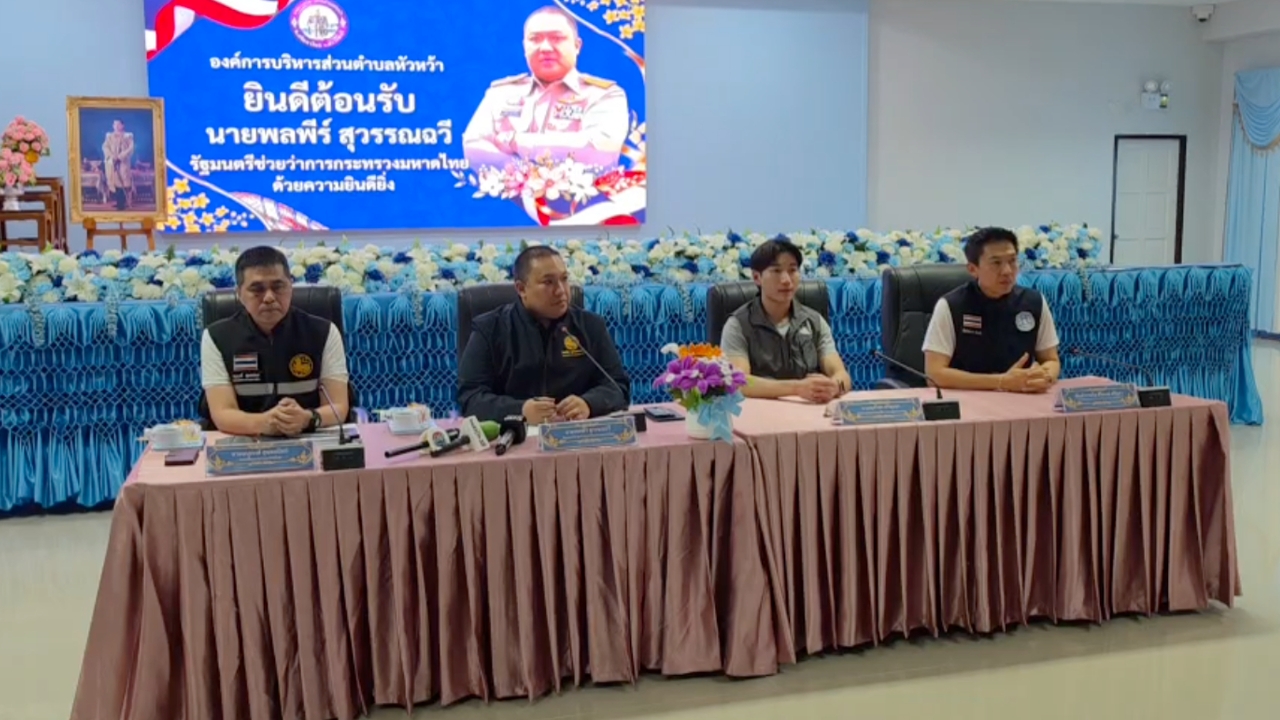
“Phonphir” launched an inspection of contaminated water in rice fields in Prachinburi, pledging villagers swift action on toxic waste from 108 ponds and preparing to initiate a province-wide crackdown on illegal factories.
At 12:00 on 22 Nov 2026 GMT+7, reporters noted that Deputy Minister of the Interior Phonphir Suwannachawi and his team visited LD Metal (Thailand) factory in Nong Prong Subdistrict, Sri Maha Phot District, Prachinburi. They identified factories numbered 105 and 106 as operating improperly and ordered a full suspension of activities, instructing relevant agencies to pursue legal action.
Phonphir and his team then inspected water conditions in rice fields of villagers in Sa Ma Kuea, Khok Pib Subdistrict, Sri Maha Soth District, where locals demanded permanent closure of harmful factories. Subsequently, he attended a meeting with representatives from the Ministry of Natural Resources and Environment, Pollution Control Department, the National Anti-Corruption Commission, Department of Business Development (Ministry of Commerce), and other agencies.
Phonphir stated in the meeting that agencies should apply Section 97, Paragraphs 1 or 3, to enforce actions regardless of lawsuits or complaints. According to Ministry of Industry regulations, factories have only one day to rectify violations. He emphasized that all agencies present must develop their own checklists to determine legal actions and verify land use compliance; if a factory occupies land unsuitable for industrial use, the entire operation is illegal from the start.
The Ministry of Natural Resources and Environment has identified air, atmospheric, and water pollution. If toxic substances are detected, the ministry will file complaints within its jurisdiction. Industry agencies already have legal frameworks and checklists to assess compliance with business regulations and must act accordingly. All agencies must report centrally to the provincial deputy governor acting as the governor, avoiding isolated actions.
The meeting also opened for civil society representatives to express concerns and impacts experienced by villagers. Representatives acknowledged that the meeting brought hope and urged authorities to address factories harming local communities.
After the meeting, Deputy Minister Phonphir Suwannachawi disclosed that relevant agencies are reviewing legal authorities to expedite handling of industrial waste and prevent its removal from the area. As the case is ongoing, they await clear announcements or measures from the National Environment Board to enable lawful agency interventions.
Initial data indicates about 108 industrial waste ponds in Prachinburi, containing approximately 50,000 tons of waste. Moving and disposing of this waste at authorized facilities is expected to cost around 500 million baht. Responsibility for funding is under consideration among the Ministry of Natural Resources and Environment, Ministry of Industry, local administrative organizations, or possibly central government budget if other sources are insufficient.
Regarding proper legal disposal, discussions with waste treatment factories are required. Disposal fees reportedly rose from about 800 baht per ton to potentially 2,000 baht per ton, necessitating fact verification. Phonphir emphasized that price hikes should not exploit public funds for profit in this situation.

Phonphir also noted that out of approximately 160 factories in the province, about 114 are suspected of legal violations. He tasked the provincial governor to coordinate all ministries in conducting joint legal inspections with a shared checklist to standardize factory audits. Any legal breaches found should be prosecuted accordingly.
For factories with environmental impact assessments (EIA), authorities must verify compliance with prescribed measures and enforce laws if violations occur. Prachinburi will be the starting point before expanding inspections to neighboring provinces facing similar issues. Regarding industrial waste used as landfill on factory premises or distributed to locals for land filling, or dumped on land without legal title, the acting governor was ordered to investigate these sites and file legal complaints if illegal dumping is confirmed.
There are also concerns about factory shareholding. Preliminary information shows two Chinese and one Thai shareholders initially, with the Chinese shareholders disappearing in October. Authorities will verify if the Thai shareholder has adequate financial capacity for multi-hundred-million-baht investments, origins of imported industrial waste, and whereabouts of former Chinese shareholders. The Department of Business Development (Ministry of Commerce) has been contacted to investigate potential foreign nominee shareholders under the law. Regarding factory land ownership, suspicions exist about the legitimacy of land titles, possibly involving forest land outside designated agricultural reform zones. The Department of Lands and Ministry of Natural Resources and Environment were assigned to examine whether the area is forest land and verify the legality and parties involved in issuing titles.
Regarding waste conditions, Phonphir reported visual inspections revealed materials resembling electronic waste and shredded debris used as landfill inside and outside factory areas. He ordered relevant agencies to collect evidence and pursue legal action. A meeting of relevant Prachinburi agencies will establish clear timelines and work plans from 3 to 15 days, assigning tasks and scheduling public progress reports.
Jamalong Chuirord, advisor to the Minister of Natural Resources and Environment and head of a special task force, revealed that following complaints on 28 Sept, the task force inspected water quality on 1 Oct. They confirmed that if tests find heavy metals or industrial toxins, legal charges will be immediately pursued. For industrial waste exceeding 50 tons, the case will enter formal investigation processes including cooperation with the Anti-Money Laundering Office to trace assets and enforce laws.
Current investigations in Rayong show trends of industrial waste being moved elsewhere. Officials intercepted waste transport vehicles in Saraburi. Some industrial waste disposal sites in Chonburi have closed after operators learned of intensified inspections. The task force coordinates with governors in Saraburi, Chachoengsao, and Chonburi to share intelligence and monitor transport routes using surveillance and detection tools to verify if materials contain heavy metals or hazardous substances before compiling evidence for prosecution.
They also found attempts to evade inspection by transporting about 15 tons of industrial waste in unregistered vehicles. This data supports officials’ monitoring of transport routes. Phonphir stressed that operations must gather evidence and obtain warrants before conducting inspections.
Addressing concerns about foreign operators withdrawing shares or leaving the country amid the crisis, Phonphir assured that investigations can extend to all involved parties despite changes in names or nationality. Coordination with relevant agencies and Interpol will be undertaken if necessary. If the Anti-Money Laundering Office or the Department of Special Investigation gathers sufficient evidence, they can proceed with investigations and asset seizures under the law. A follow-up visit to Prachinburi province is planned for next week.