

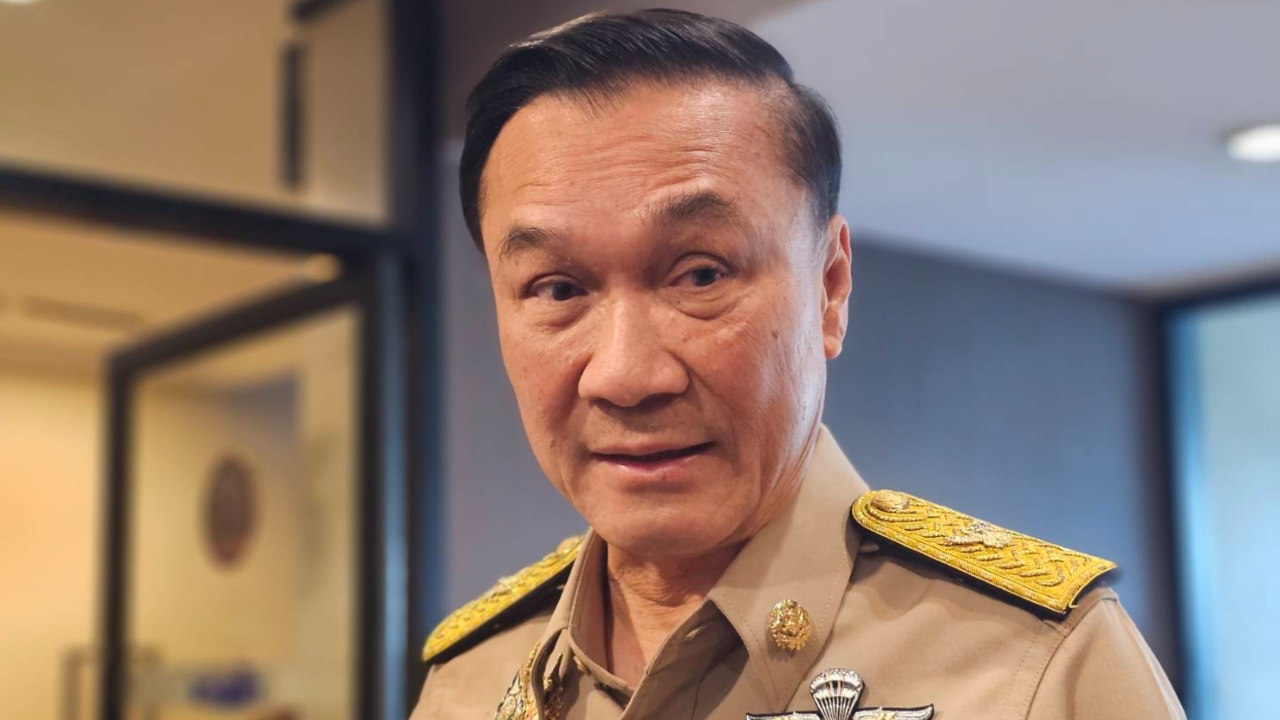
Deputy Prime Minister Songsak Thongsri has called a meeting with the Permanent Secretary of the Ministry of Natural Resources and Environment this afternoon following public alarm over toxic contamination spreading from the Kok and Sai Rivers into the Mekong River. He revealed bilateral discussions with Lao PDR ministers expressing concern about chemical use in gold and sand panning and confirmed ongoing monitoring of the problem.
At 10:45 a.m. on 23 Nov 2026 GMT+7. Deputy Prime Minister Songsak Thongsri gave an interview at the Government House. Regarding his recent attendance at the second Mekong–Lancang Cooperation (MLC) Ministerial Meeting on Water Resources in Hanoi, Vietnam, he explained that the meeting comprises two forums: the MLC forum including six countries—Myanmar, Thailand, China, Cambodia, Lao PDR, and Vietnam—and the Mekong River Commission (MRC) forum with four countries. He represented Thailand at the meeting.
He said that the Mekong River cooperation focuses on jointly protecting the river from harm and benefiting people in all Mekong basin countries. Thailand raised concerns about cross-border pollution and how to sustainably share the river’s benefits without harming people in any Mekong basin country. Thailand called on all relevant countries, especially those with mines and the use of heavy metals or chemicals that cause residues such as arsenic or heavy metals flowing into rivers reaching Thailand, where levels have been found above standards. He urged all parties to enforce regulations within standard limits as part of joint cooperation.
When asked if toxic contamination in the rivers would be a main topic at the MLC leaders’ meeting in Guilin, China, in December 2026, Songsak said it was one of the issues. He also mentioned concerns about two dams—Sanakham and Phung Noi—that could have impacts. Thailand requested a review of their construction; specifically, for Sanakham Dam, Thailand proposed relocating the site. Although the dams are on the Lao side of the Mekong, they affect tributaries, the environment, and local livelihoods. Thailand’s concerns led to a request to consider relocation, which Laos has agreed to study carefully.
Regarding public concerns that toxic substances from the Kok and Sai Rivers might flow into the Mekong River, Songsak said he had invited the Permanent Secretary of the Ministry of Natural Resources and Environment for discussions this afternoon. He has been continuously following the issue. The Prime Minister assigned Deputy Prime Minister and Minister of Higher Education, Science, Research and Innovation Yotschanan Wongsawat to oversee the matter, coordinating work across all agencies.
Songsak added that he is personally monitoring the issue, especially the responsible agencies’ actions and whether joint committees have inspected affected areas. Currently, efforts focus on assessing impacts on people. Sustainable solutions require addressing the source of contamination—how to prevent harmful toxins from remaining in the rivers. This approach involves negotiations with neighboring and related countries and encouraging Thai investors to recognize the importance of protecting public health.
When asked about chemical discharges from the Lao side into the Mekong, Songsak said he has followed the news and, in bilateral talks with Lao officials, expressed concerns after reports similar to those in Mae Sai district, Chiang Rai Province, about gold and sand panning using chemicals potentially contaminating the Mekong. The Lao Minister of Agriculture and Environment acknowledged the issue and agreed to deploy officials to investigate. They also allowed the Office of the National Water Resources to send joint inspection teams to ensure accuracy and transparency.