

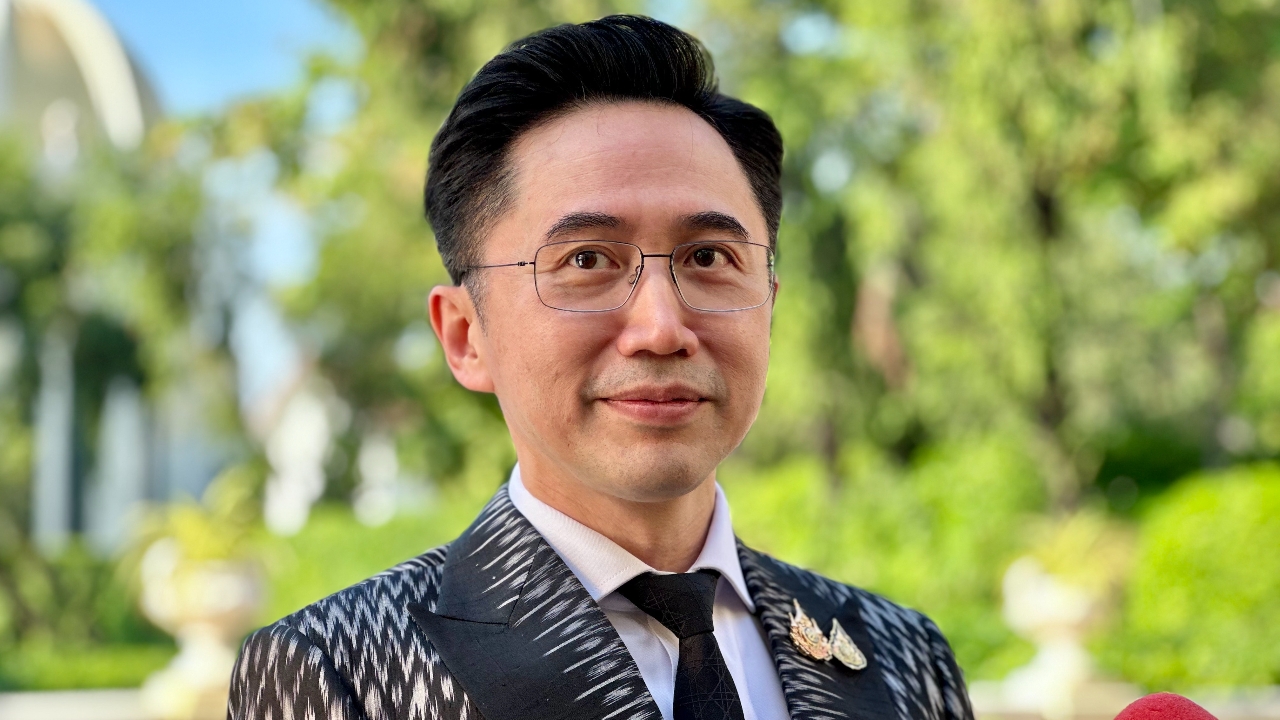
The government is addressing heavy metal contamination in the Kok and Salawin Rivers. Yossanan is set to meet with representatives from Thailand, Myanmar, and China this afternoon, emphasizing the need to identify the mine owners responsible for wastewater discharge. Regarding the ban on consuming 10 species of aquatic animals, inspections have found nothing to conceal.
At 08:50 on 24 Nov 2026 GMT+7, Deputy Prime Minister and Minister of Higher Education, Science, Research, and Innovation, Yossanan Wongsawat, spoke at the Government House about his visit to Chiang Rai Province to address residual heavy metal contamination in rivers caused by mining activities in Myanmar. He said communication guidelines have been set, with all information consolidated at the Department of Disaster Prevention and Mitigation (DDPM), linked to Chiang Rai, where a war room has been established. Briefings will be held at least once daily, including infographics addressing public concerns.
Yossanan further revealed that they are currently scanning agricultural and environmental data to create an online list map. Each ministry is tasked with data collection to form a comprehensive information map, aiming to complete it within this week. This includes parallel efforts in water management and safety, as well as field visits to explore sediment-trapping weir methods and engage local communities.
Reporters then asked about the detection of high arsenic levels in the Salawin River and plans to expand investigations. Yossanan said upstream areas need attention as well, requiring discussions with Myanmar authorities this afternoon. Continuous pollution is unacceptable. The Kok and Salawin Rivers have multiple points connecting to Thailand.
Asked about obstacles encountered during field visits, Yossanan noted public concerns over how long the problem will persist and conditions upstream. He outlined a two-level approach: first, dialogue with Myanmar to clearly identify mines and their authorities, urging proper water management. If Myanmar asserts only partial control over certain mines, China will be asked to mediate inspections. The second level involves cutting off chemical exports.
Yossanan added that on 23 November he met with the Secretary-General of the Organisation for Economic Co-operation and Development (OECD) to discuss these issues. He stressed the need to elevate this matter, as many international rivers cross borders. They aim to establish traceability standards to verify rare earth mineral sources from certified mines. This is a global responsibility regarding chemical use, not just a Thai issue.
Regarding concerns that contaminated water might be used in agriculture, Yossanan said this has been monitored for several days. Current worries focus on whether dry-season rice cultivation is feasible. Areas marked as green zones have been confirmed suitable for rice farming, while guidance is provided on what crops should be planted near water sources.
About today's trilateral talks, Yossanan said there must be acceptance that contamination originates in Myanmar. It is necessary to request detailed information on mine ownership. While Thailand can provide knowledge, they seek to install water quality sensors to monitor conditions. The laboratory is ready for identity verification. They will not tolerate wastewater discharge and must discuss budget and management plans, likely seeking Chinese support.
Toward the end, when asked about the Department of Fisheries' announcement warning the public to avoid consuming 10 species of aquatic animals, Yossanan said the results come from ongoing inspections conducted throughout the week. He affirmed, "We have nothing to hide." He concluded that these tests are complex and being conducted gradually. Once data scanning is complete, it will be sent to the Department of Disaster Prevention and Mitigation to compile a database and develop the best possible measures.