

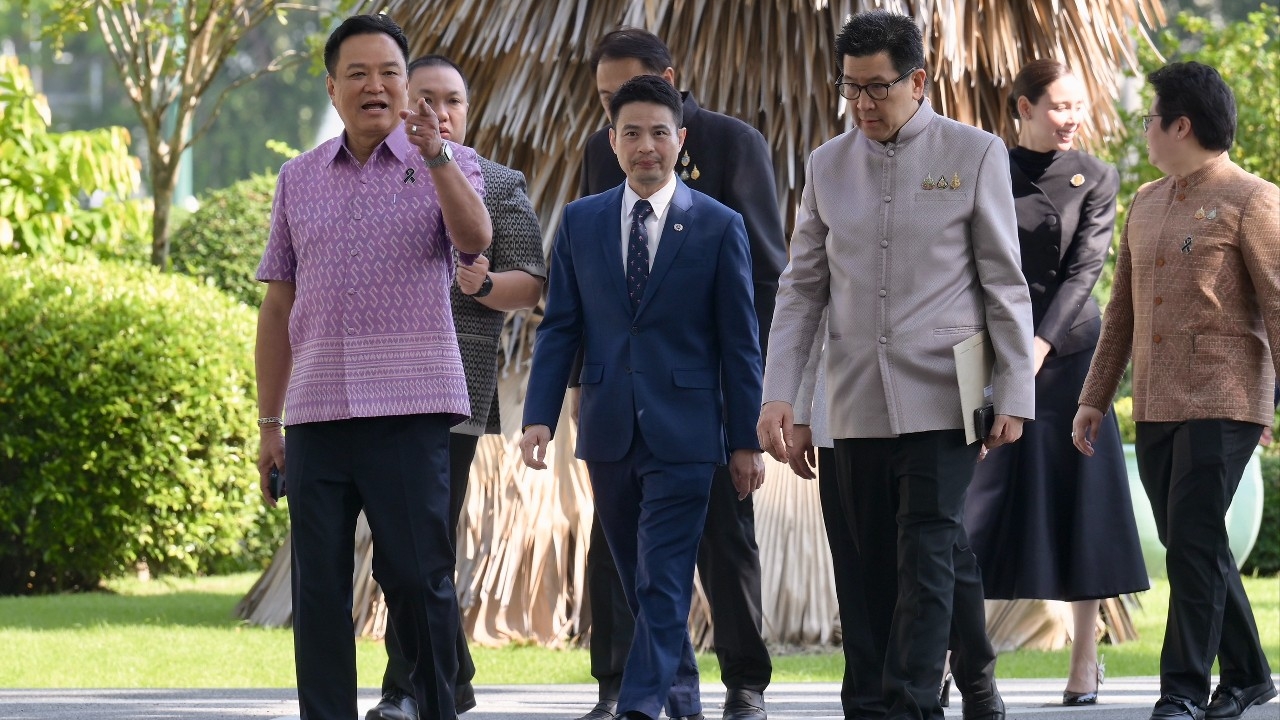
Anutin said the Cabinet has not yet approved the Early Retirement scheme because it must be confident of its advantages and disadvantages; he is concerned about ongoing pension obligations after employees leave.
At 1:00 p.m. on 24 Nov 2026 at the Government House, Anutin Charnvirakul, Deputy Prime Minister and Minister of Interior, spoke about the Cabinet's pending decision on Early Retirement. He said many dimensions must be carefully considered; it is not a rejection. The government examines budget concerns and whether the policy truly reduces state burdens. For example, if early retirement occurs, must all related positions be cut permanently, or will replacements return in two years, which has happened frequently? Thus, everything must be reviewed carefully, especially since the budget is limited and must be used optimally. When asked if the formulas proposed by the Civil Service Workforce Policy Committee, chaired by Deputy Prime Minister Pakorn Nilprapunt, especially regarding lump-sum payments, need revision, Anutin confirmed this is correct. Asked when the issue will return to Cabinet for consideration, he said as soon as possible. No harm is done by waiting, given the estimated cost of over 20 billion baht. The benefits and costs of the Early Retirement policy must be compared; it should not result in lost funds and personnel without increased efficiency, only to refill positions later. Confidence is needed that such problems will not recur.
When asked if previous reviews were insufficiently thorough, Anutin replied, "That's the question." Asked if he has given additional policy guidance, he said the Cabinet has been careful. The proposing side, representing civil servants, and the Cabinet, as administrators, must consider many aspects comprehensively. They must ensure all budgets spent generate the expected benefits. Regarding early retirement, he said in Cabinet meetings that its core principle is to reduce staff and end obligations, as in the private sector. However, obligations continue, such as pensions and lump-sum payments. While acknowledging it cannot be compared 100% to the private sector, the key of early retirement is that once payment is made, the retiree must find a new path outside the organization, which must also benefit from the reduction.
When asked if laws allow civil servants who take early retirement to return to government service, Anutin said this has not been addressed yet. Asked if he worries about possible returns, he said it is not a fear of their return but a concern about continuing obligations. Currently, the government pays about 70% of the current salary as pension after retirement, so it must assess whether this initial expense is worthwhile. The large budget involved might mean losing talented personnel while still maintaining pension payments. Therefore, the matter requires careful review; this does not mean a rejection.