

Warawut confirms there is no rivalry in addressing industrial waste issues, explaining that transporting waste from Prachinburi to Rayong is done by a professional, authorized disposal plant, not carelessly abandoned. He is expediting the submission of a new Industrial Waste Management Act to parliament for approval. Tags: [Industrial Waste Management, Ministry of Industry, Waste Disposal, Legislation, Environmental Policy]
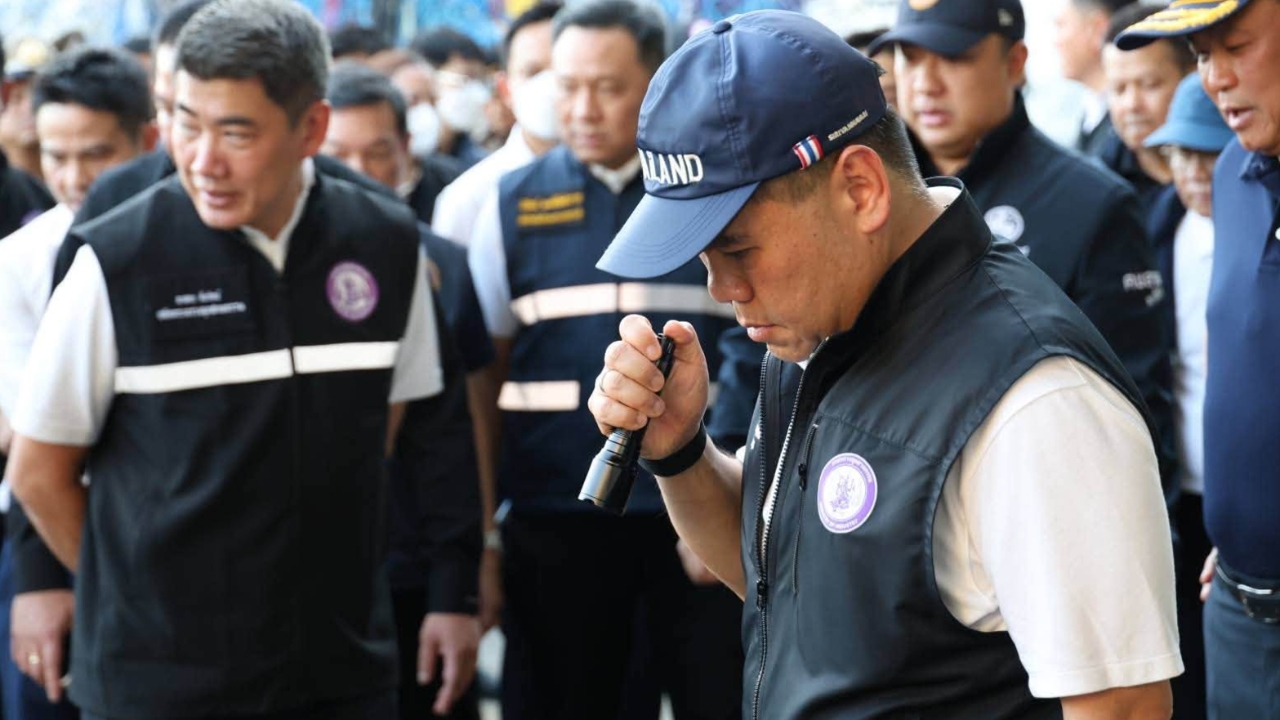
On 25 Nov 2026, Warawut Silpa-archa, Minister of Industry, spoke on the program Inside Thailand about his joint field visit with the Prime Minister on 24 Nov to inspect industrial waste disposal and electronic waste recycling factories in Prachinburi. He said inspections have covered the 105th and 106th factories out of 3,049 registered with the Department of Industrial Works, totaling nearly 1,000 factories or about one-third. Some factories have received administrative orders for violations such as operating machinery exceeding declared horsepower, improper waste disposal against academic standards, or illegal dumping elsewhere. These factories were ordered to cease operations to correct violations, with licenses revoked as necessary.Tags: [Factory Inspections, Ministry of Industry, Administrative Orders, License Revocation, Waste Disposal Violations]
Warawut stated that today, all agencies including the Ministry of Industry, Ministry of Natural Resources and Environment, Ministry of Interior, Ministry of Commerce, Ministry of Finance, and Ministry of Justice are integrating their efforts. When violations are found, offenders face not only the Industry Ministry’s laws but also other relevant legal actions. Regarding the Prachinburi factory inspected on 24 Nov, the Department of Special Investigation (DSI) has taken it up as a special case.Tags: [Interagency Cooperation, Legal Enforcement, DSI, Prachinburi Factory, Industrial Violations]
On long-term solutions, especially the insufficient provincial industrial officials relative to the large number of factories, Warawut acknowledged earlier controversy over establishing a waste recycling industrial estate. Some MPs criticized and debated this plan, which includes clear regulations and laws. Currently, such factories are scattered across areas; consolidating them in one zone with centralized wastewater management and controlled raw material imports would be more manageable. He emphasized the need to ask local residents which is preferable: dispersed factories or a single, closely managed industrial zone, as done in countries like Japan with well-secured facilities.Tags: [Waste Recycling Industrial Estate, Long-term Planning, Factory Management, Public Consultation, Environmental Control]
When asked if expanding such factories risks illegal electronic waste imports given that industrial waste volume may not increase proportionally, Warawut replied that electronic waste imports have been banned since 2020. However, smuggling still occurs via ports and borders. Japan, with its recycling industrial estates, tracks clear origins and destinations. Thailand faces issues with intermediaries and tracking but stressed that the industrial estate concept is still under consideration. The public should not worry about an immediate establishment; site selection, local opinions, environmental impact assessments (EIA), and public hearings are necessary. The current problem with factories numbered 105 and 106 is their scattered locations without zoning, causing ongoing issues.Tags: [Electronic Waste Import Ban, Smuggling, Recycling Estate Planning, Environmental Impact, Factory Zoning]
Asked about the necessity and benefits of expanding the recycling industrial estate for the country and its people, Warawut said that devices we use today, like mobile phones and electric vehicles (EVs), will eventually become electronic waste, which is expected to increase. Without proper disposal sites, this will worsen future environmental problems.Tags: [Electronic Waste, Recycling Facilities, Environmental Risks, Future Planning, Waste Management]
When asked if related agencies might be merged into a single unit for one-stop service, Warawut said he sees no need. The Ministry of Industry and other involved ministries are fully integrating their work without creating new committees or agencies. Regarding some academics' concerns about competition between the Ministry of Industry and Ministry of Interior, he clarified there is no rivalry; all parties are fully engaged and working hard. The recent floods prompted a system-wide review, and he is pushing to resolve longstanding issues swiftly as part of the government’s commitment.Tags: [Interagency Coordination, Government Efficiency, Ministry Cooperation, Flood Impact, Problem Resolution]
On progress in pushing the Industrial Waste Management Act, Warawut said the draft law increases penalties, including fines and imprisonment. Some have proposed establishing a Sustainable Industry Fund, currently under discussion with the Ministry of Finance. He expects to submit the bill to parliament by 2026 or early 2027.Tags: [Legislative Progress, Industrial Waste Law, Penalties, Sustainable Industry Fund, Ministry of Finance]
Warawut also addressed accusations by some MPs that the Ministry of Industry plans to move electronic waste from Prachinburi to Rayong on 30 Nov. He clarified that the waste is being properly handled by a licensed disposal factory in Rayong. If not sent there, he asked where else it should be disposed of. The GENCO factory in Rayong is a legitimate, professional company for this task and the waste is not being abandoned carelessly.Tags: [Electronic Waste Disposal, Prachinburi, Rayong, Licensed Facility, GENCO Factory]