

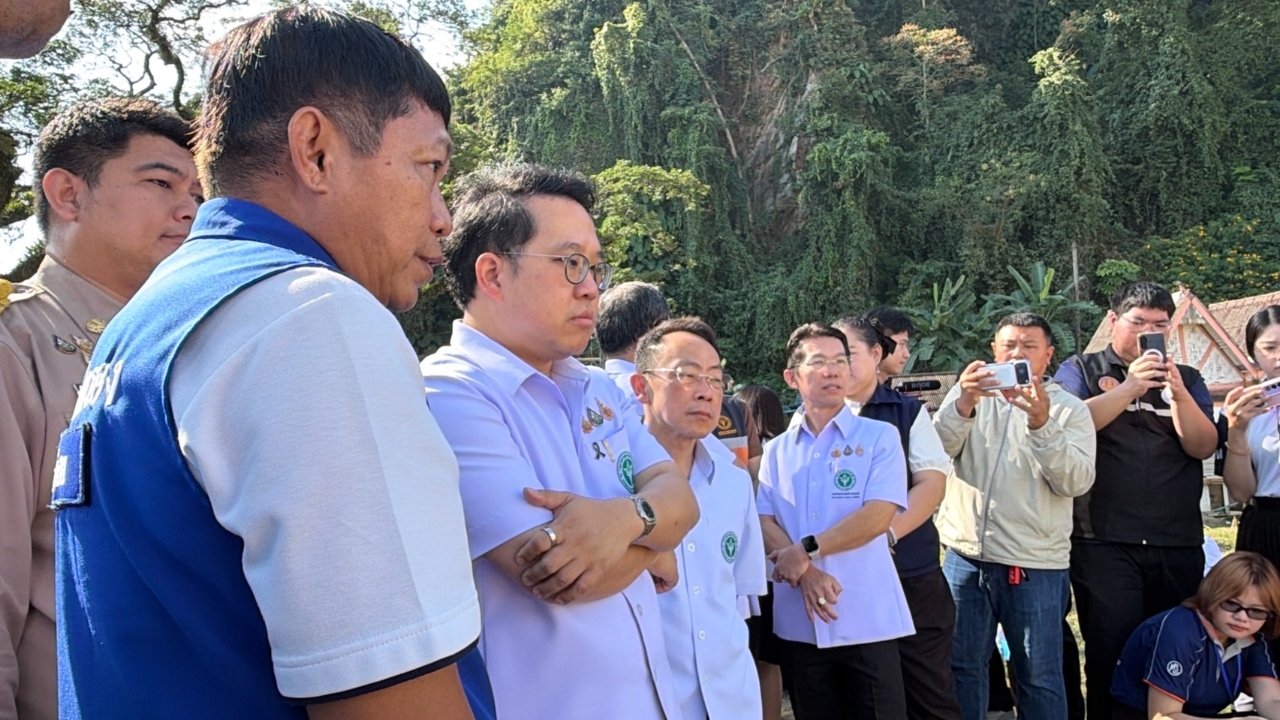
Health Minister Patthana visited Mae Sai in Chiang Rai Province to open a frontline center monitoring heavy metal contamination, emphasizing the government's commitment to protecting public health from polluted water sources.
25 Nov 2026 GMT+7 Mr. Patthana Prompattana, Minister of Public Health, accompanied by Dr. Somruk Jungsaman, Permanent Secretary of the Ministry of Public Health; Mr. Prasert Jitpleechip, Deputy Governor of Chiang Rai Province; Dr. Thiti Saengtham, Director-General of the Department of Health; and Dr. Piya Sirilak, Public Health Inspector for Health Region 1, visited Chiang Rai to monitor heavy metal contamination in the Mae Sai River, meet affected residents, and inaugurate the Ministry of Public Health's frontline operations center to oversee health impacts from water contamination in Chiang Rai.
At 09:20, they visited and encouraged affected resident Mr. Charan Tapanya, 48, of Huafai Village, Wiang Pang Kham Subdistrict, Mae Sai District. Mr. Jetr Kanthika, one of the residents found with arsenic in his body by health officials, was present to provide information. They then proceeded to Huafai, the observation point on the Mae Sai River, to inspect the river. Around 10:00, Mr. Patthana and team went to the Chiang Rai Provincial Public Health Office to open the frontline operations center.
During the visit, Mr. Charan, one of the screened villagers, said doctors found only minimal contamination, almost negligible, and suggested it was unlikely related to water but possibly from dietary habits, as he had purchased fish from the market. After the contamination was detected, doctors advised dietary control and caution to prevent toxin levels from rising. He eats market-bought Nile tilapia and catfish at home, does not fish himself, and has no symptoms—only the screening results. His home is about 100 meters from the Mae Sai River; he usually does not enter or use the river water. Possible exposure could have been during floods when he waded through water and mud, but two years have passed with normal life. He continues to use tap and bottled water, tested free of contaminants.

Mr. Jetr Kanthika, 58, a farmer from San Mana Village 5, Mae Sai Subdistrict, said he has farmed rice for nearly 30 years and was found with contaminants during an annual health check. He is unsure of the source but suspects herbicide spraying in farming. Initially worried, he showed no symptoms. A recent second test showed normal results after the first test, about a month prior, detected above-normal levels. About five years ago, the municipality found similar contamination when the area still had mining activity. He was unaware of his contamination until screening, and now takes care to avoid chemical exposure, washing immediately if contact occurs. His family of four was not screened initially but passed subsequent tests. Life at home is normal, with no concerns, and they use RO-filtered drinking water supplied by a trusted provider.

, Mr. Patthana stated that the government prioritizes protecting public health from water pollution. The frontline operations center will serve as a proactive command and coordination hub, linking environmental and health data through four key approaches:
1. Close monitoring and care of at-risk groups, including those with urinary arsenic levels exceeding reference limits.
2. Ensuring confidence in drinking water quality and food safety by monitoring village tap water, crops, aquatic animals, and drinking water production sites.
3. Proactive risk communication through health networks and village health volunteers.
4. Data and resource integration with local agencies including environment, agriculture, fisheries, and administrative authorities.
Dr. Piya explained that the frontline center's duties include providing guidance on water and food safety, health screening and coordination, initial risk assessment, detailed testing and follow-up if indicated, and addressing public concerns. Health Region 1, Department of Disease Control, Department of Health, Chiang Rai Provincial Public Health Office, and partner networks are implementing four main measures covering environmental health, public health, awareness communication to avoid direct water source use, and collaboration with subdistrict health promotion hospitals, related agencies, and the Medical Science Center 1/1 in Chiang Rai to ensure rapid and timely problem resolution.
