

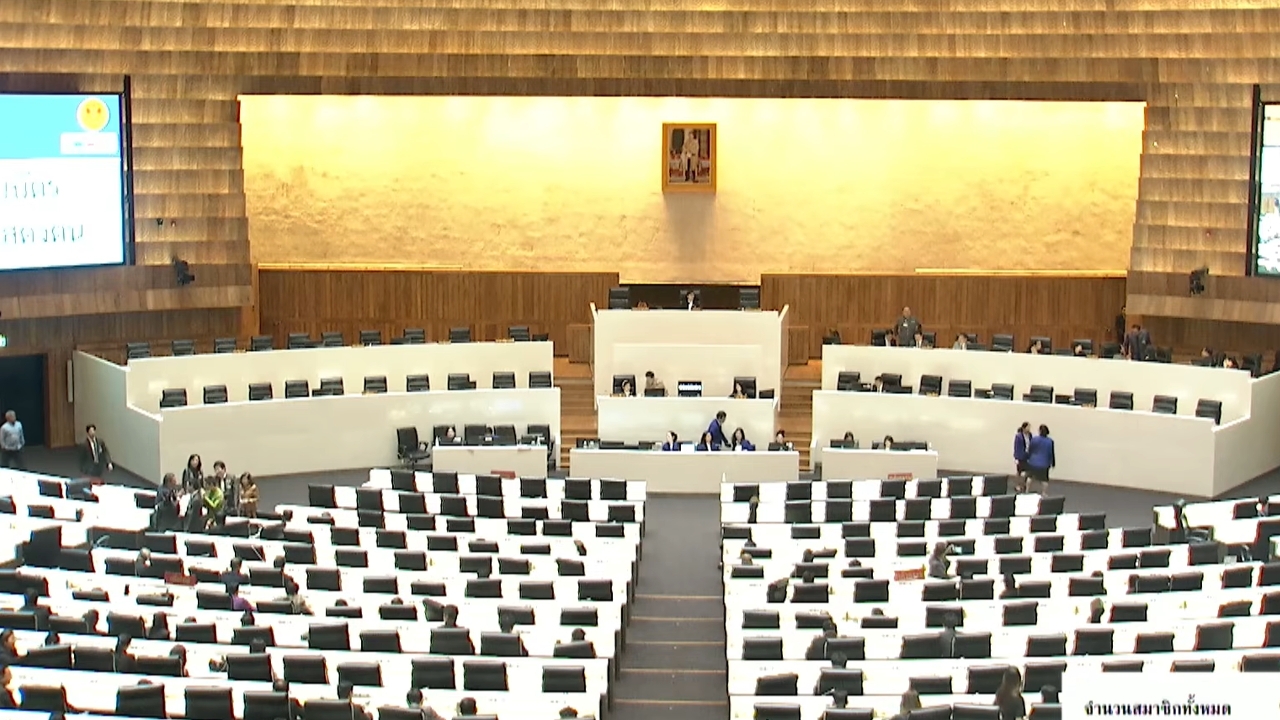
The House of Representatives overwhelmingly passed the Clean Air Bill with 430 votes. MP Patrapong urged the government to prepare to enforce the law to tackle dust pollution next year. MP Kandi called for urgent promotion of three additional related laws.
On 25 Nov 2026 GMT+7, during a House of Representatives session, the Clean Air Management Bill, also known as the Clean Air Bill, was considered. The joint committee of the House and Senate had completed their review after the House previously rejected Senate amendments, leading to the formation of the joint committee to resolve disagreements.
The joint committee revised the bill after the Senate proposed 92 amendments. The committee approved 54 Senate amendments and further amended 50 articles, adding new provisions and adjusting articles not amended by the Senate. Key elements maintained include establishing the Clean Air Fund, mechanisms for pollution data collection and disclosure, empowering provincial clean air committees to control polluting activities, protecting vulnerable groups, and managing transboundary air pollution.
MP Patrapong Leelaphat of Chiang Mai, from the Prachachon Party, said the Clean Air Bill is nearing completion. Although many Senate amendments were incorporated, some concerns remain, especially regarding the penalty ceiling. The House originally set the maximum fine at 50 million baht, which the Senate reduced to 5 million baht, but the joint committee raised it back to 25 million baht. Even the judiciary, consulted during the joint committee stage, expressed concern that the penalty might still be too low. However, the majority of the committee insisted on the 25 million baht fine.
Considering the bill overall, Patrapong expressed confidence that proper government implementation will make it an important tool for resolving air pollution issues, not only PM 2.5 dust but other types as well. He thanked civil society, which initiated and gathered over 20,000 signatures to propose the bill to the House, as well as all political parties that submitted varying versions and the House committee that merged these into the comprehensive current draft.
"While awaiting the law’s official enforcement, if the government directs all agencies, including local administrative organizations, to prepare according to the bill’s measures, I am confident this law will become another effective tool in addressing air pollution next year," Patrapong said.

Thanking all parties for their collaboration.
Meanwhile, MP Kandi Liaopairoj, a party-list MP from the Democrat Party and joint committee member, expressed support for the bill during debate. She thanked all sectors for their seven years of effort in pushing this law and noted that dust pollution is returning with clearer impacts. Although the bill’s review was thorough, she stressed the government and parliament still have important work to ensure this long-awaited law is enforced effectively.
Proposing three additional bills.
Kandi further urged the government and fellow MPs to expedite at least three important bills, which are not subordinate laws but equal in status and serve to connect and complement the Clean Air Bill, as noted in its observations. These include:
1. The Pollutant Release and Transfer Register (PRTR) Bill, an important extension since the Clean Air Bill focuses on airborne toxins, but scientifically pollutants may originate from other environmental sources. She urged the government and MPs to push the PRTR Bill, which has passed first reading, to be implemented quickly without waiting another seven years.
2. The Circular Economy Bill to support the “deposit and return” measures, aiming for rapid enforcement. This is not redundant work but complements the Clean Air Bill to maximize its effectiveness.
"3. The Environmental Litigation Procedures Bill is crucial for establishing temporary and emergency protections in cases related to air pollution. Although today the House has succeeded in advancing the Clean Air Bill and I am proud to be part of this achievement, we must still urgently promote these three parallel bills. I also sincerely thank many civil society and academic groups who, though not attending meetings in person, provided valuable information and knowledge to the joint committee for careful consideration," Kandi said.

Confidence in joint committee’s careful deliberation.
MP Anurak Jurimas of Roi Et, from the Bhumjaithai Party and joint committee chairman, explained that the committee carefully considered the content, focusing on protecting public health and effective pollution prevention and control. Key revisions include appointing provincial governors as chairs of provincial clean air committees to ensure unified local action, empowering these committees to designate and control polluting businesses locally, removing requirements to install pollution monitors in agricultural areas to avoid burdening farmers, and establishing mechanisms for international cooperation among the Ministry of Natural Resources and Environment, Ministry of Foreign Affairs, and relevant agencies to manage transboundary pollution effectively. Penalties for polluters are set at up to 25 million baht for first offenses and 50 million baht for repeat offenses, proportionate to the severity of violations.
Most MPs supported the joint committee’s amendments before unanimously approving the bill with 430 votes in favor and none against. The bill will be sent to the Senate for confirmation on 30 Nov 2026 GMT+7.