

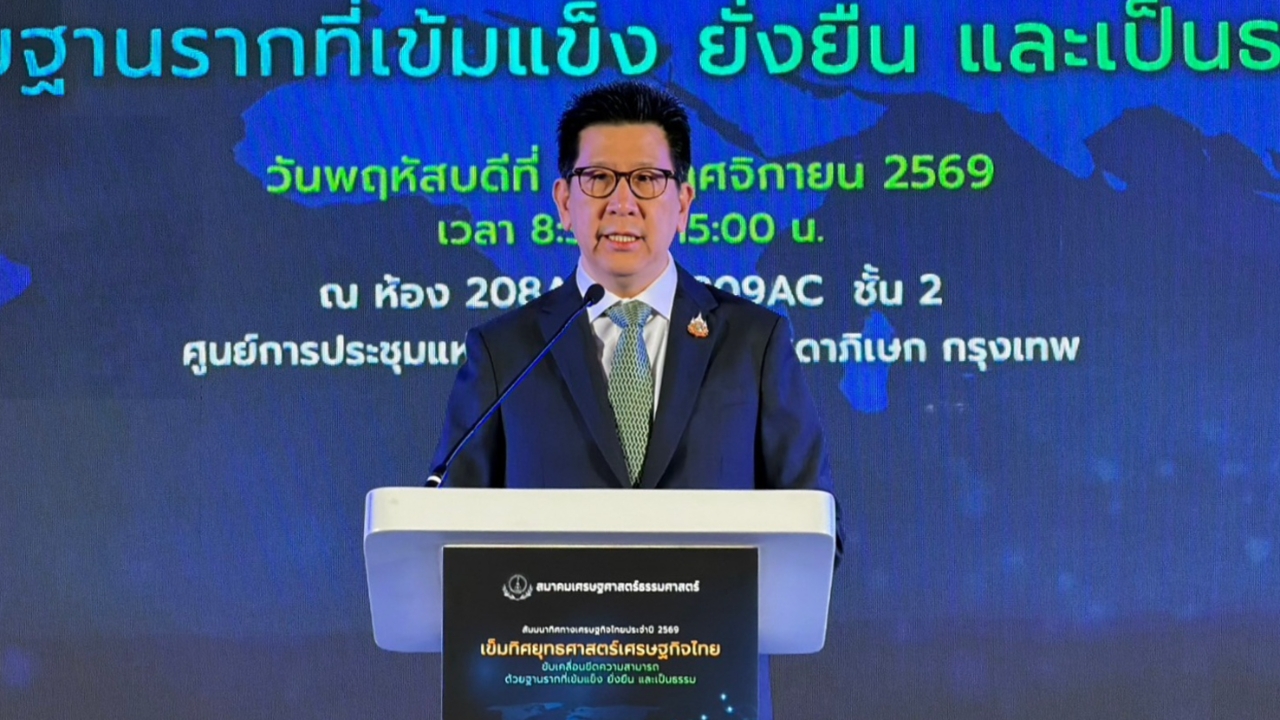
Akniti unveils plans for the 'Old Car for New Car' project, aiming to use unused loan funds to support the 'Half-Price Down Payment' program, and discusses with the Ministry of Interior and the Electricity Authority to unlock obstacles in the 'People's Solar' initiative.
25 Nov 2026 GMT+7 Mr. Akniti Nitithanprapas Deputy Prime Minister and Minister of Finance, revealed progress on the 'Old Car for New Car' project. He said the project’s key goal is to phase out old vehicles that emit pollution and fine particulate matter (PM 2.5) to protect public health. Currently, the government is considering proposals from the private sector suggesting joint support from the government and car manufacturers. The 'Half-Price Down Payment' scheme is intended to assist citizens wishing to replace their vehicles.
Regarding funding, since the government budget is limited, private sector participation is necessary to help citizens with this transition. The government may also consider using remaining loans under the 2026 Royal Decree granting the Finance Ministry authority to borrow up to 400 billion baht to address energy crisis impacts and drive the country's energy transition as partial funding for this project.
The project requires that new vehicles participating must be compatible with alternative fuels E20 or B20 to reduce energy costs for citizens and support domestic agricultural prices, including palm oil, sugarcane, and cassava. To ease citizens' purchasing concerns, the government has also discussed technical options with the private sector, such as converting existing car engines as an alternative. Currently, the project is being coordinated among the Finance Ministry, Transport Ministry, and Excise Department before finalizing details to present to the Cabinet.
Meanwhile, Mr. Akniti also spoke about progress on the People's Solar project, noting that although policies have been clearly announced, many practical problems and obstacles remain. Discussions have taken place with Mr. Ponpi Suwanchavee, Deputy Minister of the Interior, and plans are underway to meet with the Electricity Authority, the direct implementing agency, to carefully examine the issues and identify obstacles where the Finance Ministry and the government's economic team can provide support and unlock solutions.
However, both the People's Solar and automotive transition projects share a structural goal: to reduce reliance on imported energy and build sustainable economic security for the people.