

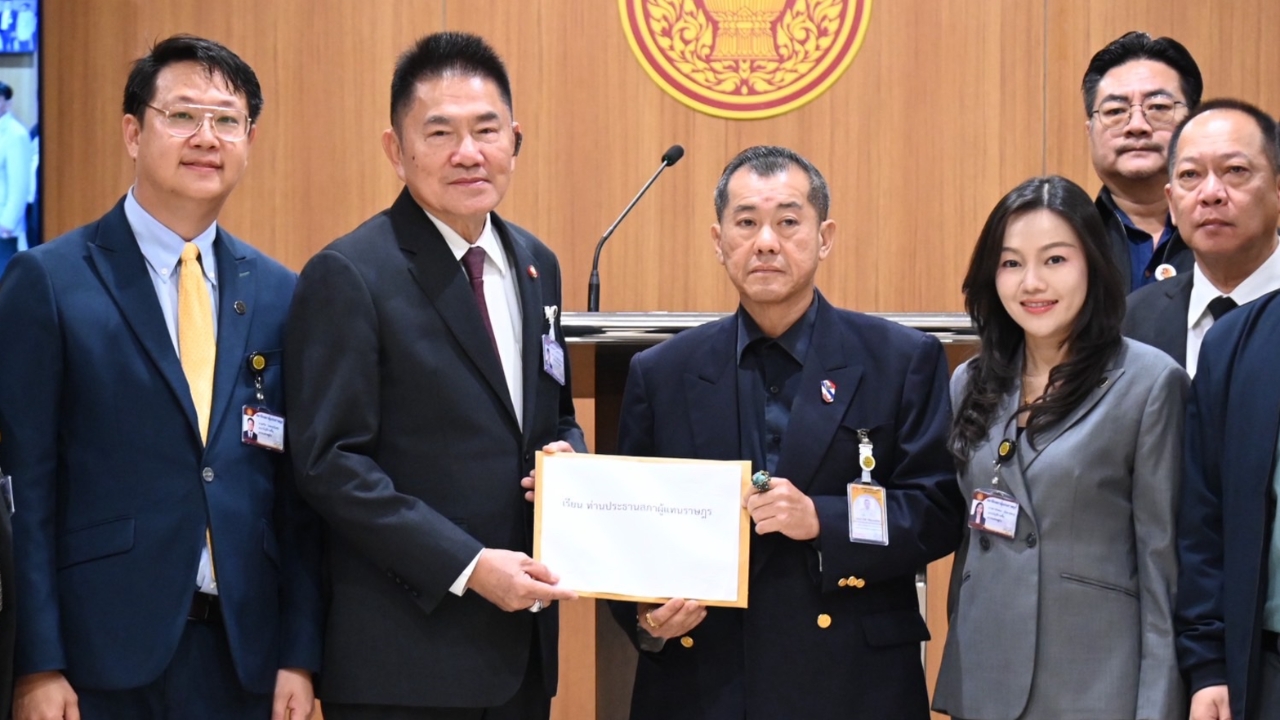
The Economic Party submitted four bills promoting the policy “Corruption equals death penalty,” proposing the death penalty for both bribe givers and receivers, with no statute of limitations and no sentence reductions allowed.
At 12:50 p.m. on 26 Nov 2026 GMT+7, General Rangsit Kitiyanatthap, leader of the Economic Party, together with Chris Potranan, party list MP and party chairman; Peeraphon Kanokwalai, party list MP and party secretary; and Angsana Niamwanichkul, party list MP and deputy secretary, submitted four draft laws to Police Major General Wichai Sangprapai, advisor to the Speaker of Parliament, at the press conference room on the first floor of the Parliament building to push forward the policy “Corruption equals death penalty” as announced to the public.
The main points of the four bills are as follows:
1. Amend the Criminal Code to increase the maximum penalty for corruption to the death penalty, covering both bribe givers and receivers, officials who commit corruption or abuse their duties causing death or damages of at least 1 billion baht, or widespread damage to the economy and public services under specified conditions, punishable by death. For damages between 100 million and under 1 billion baht, penalties include death, life imprisonment, or 20-50 years imprisonment, plus fines of 2-5 times the value of damage or illicit gains, whichever is higher.
Additionally, the bills propose abolishing the statute of limitations, prohibiting sentence reductions for mitigating circumstances in specified offenses, increasing penalties for negligent state officials and justice officials, enhancing penalties for repeat serious criminals, and mandating execution within one year from the final judgment date.

2. Amend the Criminal Procedure Code to tighten rules on withdrawal of charges, amending indictments, and bail for suspects or defendants in serious cases. Courts must explicitly state conditions prohibiting sentence reductions and parole in detention orders. The bill also revises criteria for royal pardons without affecting royal prerogatives.
3. Amend the Corrections Act to restrict the Department of Corrections’ authority to reduce sentences or grant parole. Convicts of serious crimes as defined by law must serve sentences as ordered by the court, with no sentence reductions, parole, or imprisonment outside prison allowed.
4. Amend the Act on Reopening Criminal Cases to set a one-year limit from the final judgment date for death row inmates in serious cases to file for case reopening, while maintaining channels to correct judicial errors.
Police Major General Wichai said the four bills are very important. He had previously discussed with General Rangsit the country's situation and the need for strict measures to address problems, agreeing it would benefit the public. He will expedite presenting the bills to the Speaker of Parliament to proceed through the legal process.
The Economic Party thanked the 20 MPs who signed the bills to successfully propose them. The bills will now enter the process to be scheduled on the House of Representatives meeting agenda.