

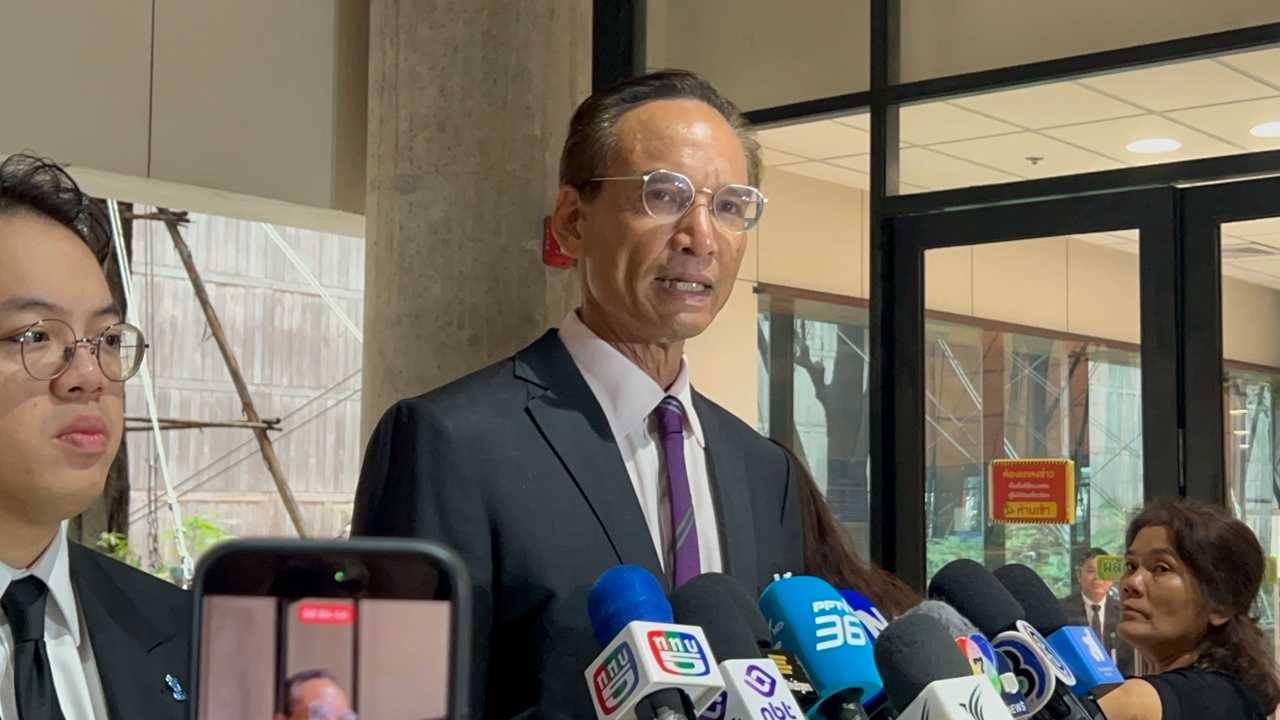
Korn criticized the government for concealing details of the US trade agreement after being blindsided by the US imposing an 18% tariff on Thai imports under Section 301, pressing the government to quickly address the root problem of Chinese goods misusing Thai trade privileges.
At 2:00 p.m. on 26 Nov 2026 at the parliament, Korn Chatikavanich, party-list MP and deputy leader of the Democrat Party, spoke on the announcement by US President Donald Trump to impose an 18% tariff on Thai imports to the US. This followed the Thai Prime Minister's negotiation of a trade agreement to reduce US import tariffs to Thailand to 0%. He said the US tariff announcement contradicts the agreement the Thai government told the public after signing with Trump last week. On the night of 25 Nov, US authorities announced the 18% tariff on Thai goods under Section 301, with Thailand among 14 countries targeted, citing that Thailand exports industrial products originating from a third country.
Korn explained that the US implication is that the third country is China. Since the Thai-US trade agreement signing last week between Prime Minister Anutin Charnvirakul and President Donald Trump, Trump announced that Thailand received a reduction of its import tariff to 10%, while Thailand agreed to reduce US import tariffs to 0%. However, now Thailand faces an 18% tariff based on a different allegation. The US also indicated that if negotiations fail or Thailand does not comply, tariffs could increase to 25%.
“I urge the government to communicate honestly with the Thai public about what the Prime Minister actually agreed to, what issues were settled, and what remains unresolved. People deserve to know who benefits, who loses, and who must make sacrifices. Initially, we were told tariffs would be 10%, but it increased to 18%, despite Thailand reducing its import tariffs to 0%. Meanwhile, the long-term agricultural sector impact—such as imported pork, animal feed corn, soybeans, and others—has been passed back and forth between the Ministry of Agriculture and the Ministry of Commerce, with the latter citing confidentiality of negotiations as a reason for non-disclosure. This management is inappropriate,” Korn said.
He noted that the 1997 and 2007 constitutions include Section 190, requiring the government to report negotiation frameworks to parliament before signing international agreements. Although this provision was omitted in the 2017 constitution, democratic principles and transparent governance demand that the government communicate the truth to Thai citizens through parliament. The government should clarify what concessions were made, what positions were taken, and openly share negotiation details with parliament so the country can prepare in time. Currently, Thailand's status is unknown beyond statements from President Trump and his delegation, with no information provided to prepare.
“I ask the government to reconsider its negotiation methods and communication. We only know the US claims they impose an 18% tariff because Thailand exports products of a third country—China. If true, why does the government not address this root cause that forces Thai exporters to face higher tariffs, while those misusing trade privileges by exporting Chinese goods go unpunished? These are observations and recommendations the Democrat Party offers to the government.” Korn said.
When asked whether the government's past negotiations were unsuccessful, Korn replied that success has not yet been achieved because there is no conclusion on what was agreed or signed. The public does not know who must sacrifice or what Thailand gains. The US position has been inconsistent—one day saying tariffs would be reduced from 12.5% to 10%, then increasing another tariff to 18%. He questioned whether the Thai government was aware of these issues beforehand and why it did not address the root cause to prevent the US from using Section 301 tariffs against Thailand. Regarding the impact of an 18% tariff, Korn acknowledged that about 20,000 product types are tariff-exempt, especially those the US cannot produce, like electronics and AI equipment, which Thai exporters of such goods are not affected. But many other products suffer. He stressed the government must care for those affected by these measures. Simply looking at aggregate numbers may mask the real need to resolve root problems, which does not help those impacted.
Asked whether parliamentary mechanisms would be used to demand government clarification, such as submitting questions or calling for committee explanations, Korn said that when the Democrat Party was in government, they provided explanations to parliament under Section 190 whenever negotiating or signing agreements with long-term national impact. It is a good, responsible practice. Although the current law lacks such requirements, this does not prevent the government from clarifying facts to the public inside or outside parliament. Whether the government answers parliamentary questions depends on its genuine intent to govern transparently and democratically. If the government is conscientious, legal mandates are unnecessary, and it can demonstrate openness and sincerity by telling the truth. When asked about Deputy Prime Minister and Commerce Minister Supachai Sudthammapan's remark that President Trump's statement was merely to appease the US public, Korn responded by asking, “Then why does the Thai government not appease its own people?” Korn concluded.