

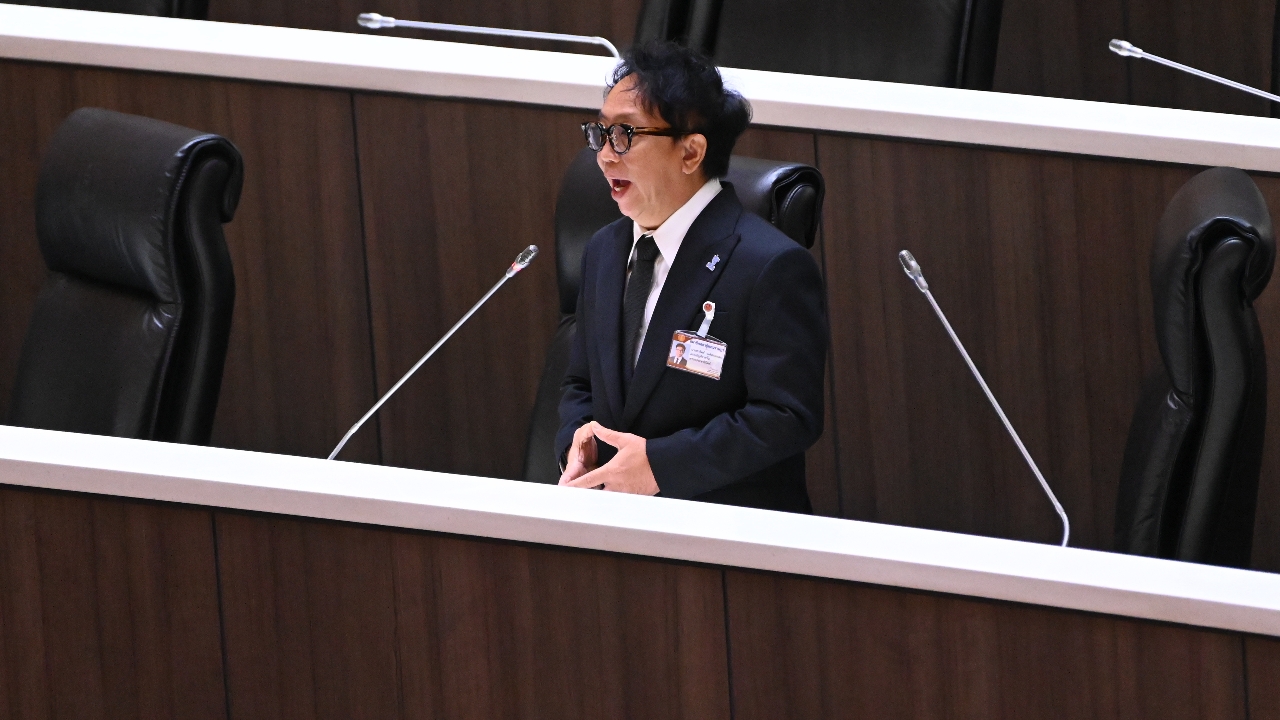
Satit pointed out the NBTC is facing a crisis of trust with over ten failed meetings and raised questions about the chairman's refusal to step down, fearing hidden benefits related to the USO fund and C-Band frequencies.
On 26 Nov 2026, during a parliamentary session reviewing reports from the National Broadcasting and Telecommunications Commission (NBTC), Satit Wongnongtoey, a Democrat Party party-list MP, questioned the NBTC's credibility crisis, internal conflicts, and leadership legitimacy, which impact national interests worth hundreds of billions of baht.
Satit said he was initially concerned that those explaining to parliament on behalf of the NBTC would be individuals claiming to be the chairman and acting secretary-general, both of whom face issues concerning their official status. Their absence today was positive, as allowing those with questionable status to present would undermine parliament's role in upholding the law's sanctity.
Points out NBTC's lack of credibility
Satit stated that over the past one to two years, the NBTC has been viewed as lacking credibility and questioned for failing to protect public interests, citing the mobile merger between True and Dtac and internet company consolidations. In the past four to six months, the problem worsened when the NBTC selection committee decided on 17 July 2026 that the chairman was disqualified and should vacate the position. Although the chairman appealed to the administrative court, in September the court ruled the committee's decision lawful. Attempts to petition the constitutional court also failed, and the prime minister has submitted the matter to the King.
Nevertheless, the individual has refused to leave the position, while the acting NBTC secretary-general lacks approval from other commissioners but insists on staying. This has caused intense internal conflict, with one group calling meetings while another opposes their legitimacy, even threatening disciplinary action against civil servants attending rival meetings. This turmoil has led to over 10 failed NBTC board meetings, stalling spectrum allocation plans and digital television operations.
Demands investigation into hidden benefits
Satit strongly suggested that the prolonged deadlock and refusal to step down may involve concealed interests, citing two key issues:
1. The Universal Service Obligation (USO) Fund, which holds vast sums but has several irregular projects. Questions arise about links to contractors and how the chairman’s prolonged tenure influences procurement within the fund.
2. The C-Band frequency, originally used for satellite TV and planned for transition to IMT mobile systems. Due to the inability of commissioners to meet, the roadmap is stalled, prompting questions about who benefits from the delay.
Satit also emphasized that while parliament can acknowledge this report, the ongoing NBTC issues are eroding the organization's credibility and severely harming national interests. He left a critical question for the presenters: how will this situation be resolved, and how can the NBTC guarantee transparency and fairness to parliament and the public?