

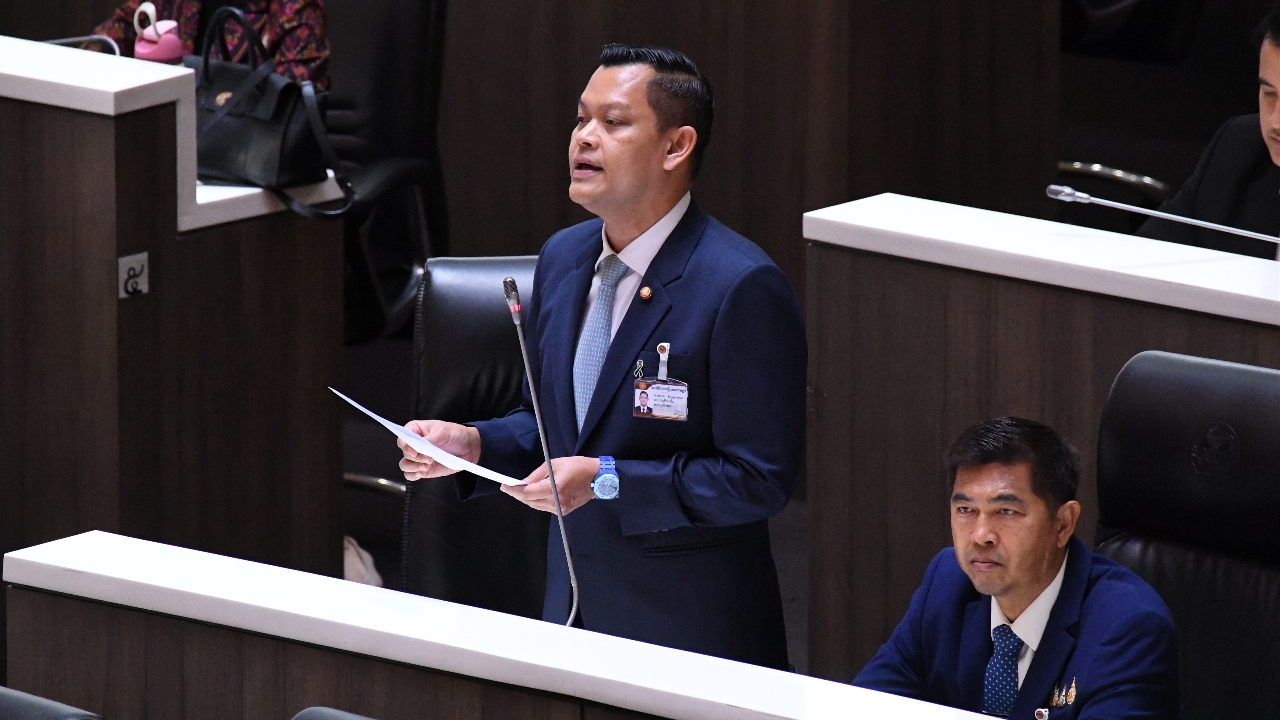
Thanakorn appeals to the government and the National Savings Fund (NPS) to help people access savings so they have sufficient income in retirement and can live their senior years with dignity. He supports the 'Retirement Lottery' or 'NPS Lottery,' emphasizing that even if participants do not win, they still have their own savings.
On 26 Nov 2026, Thanakorn Wangboonkongchana, party-list MP of Bhumjaithai Party and former Industry Minister, commented on the 2025 annual report of the National Savings Fund (NPS). He said the NPS is very important for informal workers, most of whom have no regular employers, but its coverage should be expanded with saving methods suited to people's lives. At the end of 2025, the NPS had about 2.85 million members, while Thailand has approximately 20.9 million informal workers. We should cross-check data from the NPS, Social Security, and welfare systems to identify those without retirement income security, then use the Bank for Agriculture and Agricultural Cooperatives, cooperatives, local organizations, and community networks to encourage them to start saving. Although the government contributes up to 1,800 baht per year, for those with unstable income this remains difficult. The ongoing 'Retirement Lottery' or 'NPS Lottery' project is a good approach and should be supported because even if participants don't win, they still have their own savings. However, conditions must be clearly explained and monitored to see how much it effectively turns existing expenses into increased savings.
Thanakorn further proposed the 'save when you earn' approach: farmers save part of their income when selling produce; merchants save from daily earnings; wage earners set aside part of their pay into their NPS account through existing payment channels voluntarily, choosing amounts and pausing deductions if necessary. He also urged promotion of platforms for buyers and employers to co-contribute to workers' savings and facilitate family members adding money to parents’ accounts, enabling businesses and families to help increase savings and strengthen retirement security. Consistent saving is essential to accumulate sufficient retirement funds; intermittent saving slows growth, risking inadequate income at retirement. He asked the NPS to help members save according to their capacity, cultivate saving habits, and resume saving when income recovers. For those who stop saving, reasons should be identified and payment amounts or schedules adjusted to help them resume saving.
"Helping members have emergency funds alongside retirement savings is important. I understand the NPS is considering more flexible use of savings. I urge exploring options to partner with banks to provide members with emergency savings accounts separate from retirement accounts. This way, in case of illness or income disruption, members have funds available without touching retirement savings. The design must suit members' saving capacity," Thanakorn said.
He also called for reviewing asset allocation, risk diversification, and investment costs to improve returns within suitable risk levels, considering legal constraints and fund guarantees. Additionally, investment portfolios should be tailored to members’ ages since those with many years until retirement and those nearing retirement tolerate volatility differently. Even small improvements in returns or cost reductions, accumulated over decades, significantly impact retirement funds. Clear responsibility and timelines are needed. He urged the government and NPS to help people access savings, contribute according to capacity, and secure sufficient retirement income so informal workers can build stability for themselves and their families and live their senior years with dignity.