

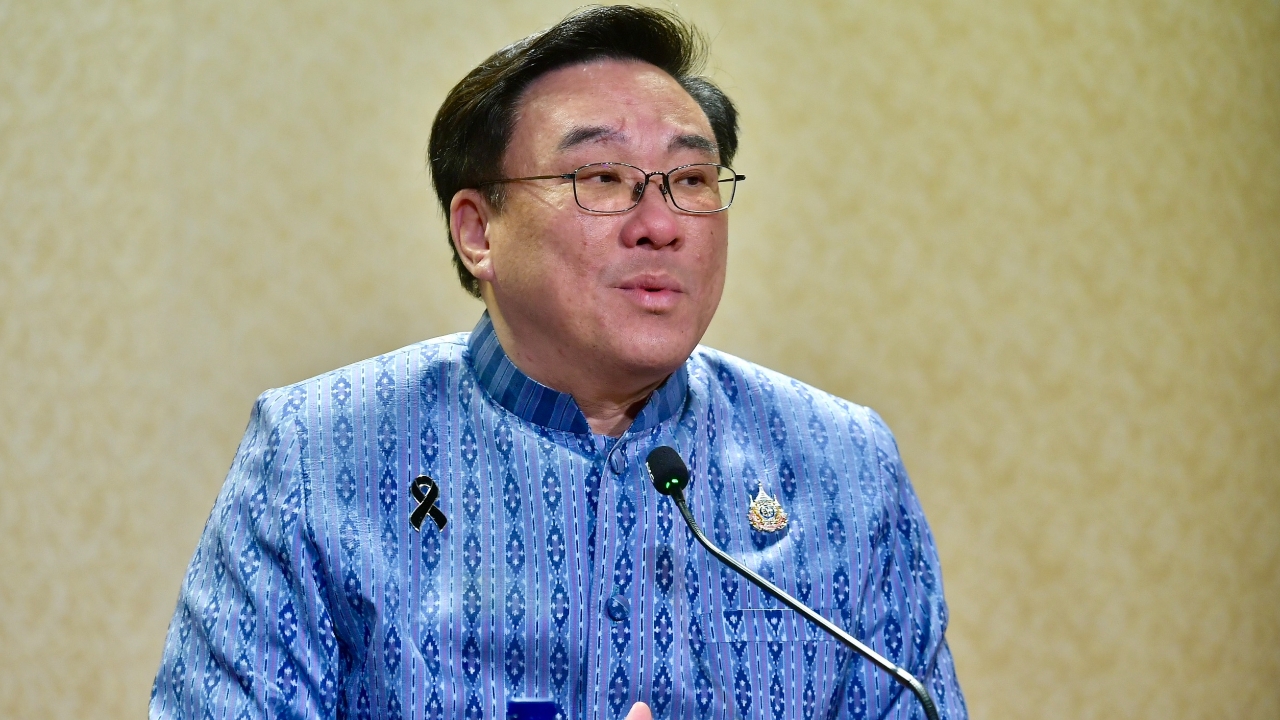
Julpan emphasized that disqualifying candidates in the Social Security Board election followed legal procedures and was not politically motivated. He affirmed clear evidence of disqualification and said he was not concerned about Saththaram's plan to file lawsuits in the administrative and criminal courts opposing the decision. He expressed confidence that all actions comply with the law and advised the People's Party to review their candidate selection process carefully.
At 11:30 a.m. on 27 Nov 2026 at the Government House, Labor Minister Julpan Amornwiwat spoke about the Social Security Election Commission's unanimous decision to disqualify Mr. Thanapong Chueamuangphan, a candidate elected as a Social Security board member representing insured persons. He clarified that although the People's Party nominated the candidate, the issue was not political but legal. Clear evidence showed the candidate did not meet qualifications required for Social Security board membership. The unanimous decision on 26 Nov was supported by firm evidence. The commission promptly forwarded the evidence and names to him, and the documents confirmed the disqualification under regulation 23(8). Regardless of who sat on the panel, the ruling would be the same.
When asked about Mr. Saththaram Thammabutsadee, a representative of the Progressive Social Security team, planning to file complaints with the administrative court and the criminal court for corruption and misconduct early next week to challenge the decision, Julpan said he was not worried and would proceed according to legal rights. The Social Security Office would not be affected as the announcement concluded the matter. The next step is to await formal complaints. Regarding the candidate to be promoted next in line, he confirmed that vote counts would not be considered, regardless of how many votes they had, because the law mandates that if a candidate is disqualified, the next in line is promoted, without regard to vote totals.
Julpan urged the public to review the People's Party's candidate selection, noting that some candidates did not meet qualifications and raised many questions. He questioned why a candidate could not serve on the board despite having previously held a term, with no prior complaints. He gave the example of parliamentary elections where candidates submit documents as required by law at registration. The initial assumption is that all candidates are innocent until proven otherwise by documents or complaints.
When asked if the Social Security Office would take legal action against candidates who knowingly lacked qualifications, Julpan said there are procedures because the matter has ongoing consequences and is complex, especially since some had previously served on the board. Unlike parliamentary elections, which involve campaign expense issues, this law clearly states that the next candidate in line is promoted, so no election expenses are incurred. However, previous improper board membership remains problematic, as any income from that tenure may need to be recovered, and issues about voting legitimacy exist. Still, this likely has little impact because the previous Social Security Board rarely voted and mostly reached consensus, so the effect is minimal.
Asked whether he could disclose which qualifications the disqualified candidate lacked, Julpan said that on the night of 26 Nov he discussed with the Permanent Secretary of Labor, who chairs the Social Security Election Commission. The evidence was sent to the complainant early this morning, but he was unsure if the individual had received it. The documents included court rulings, but Julpan declined to reveal details because it involved personal corruption matters.
Asked if there were other complaints under review, Julpan said there were none. He expected the certification of the seven board members to take about another seven days, as the process requires waiting for the eighth name to appear so that objections can be raised. Recently, much misinformation circulated, including claims by Saththaram that the new board's vote split was 13 to 15 including seven advisors. Julpan clarified this was incorrect; advisors have no voting rights. The seven advisors are specialists who provide consultation only and have no authority to vote. The minister's role is to propose advisor candidates, but the Social Security Board has the authority to approve and appoint them, and currently no names have been proposed.
Julpan said he hoped people would adhere to academic principles rather than politicize the matter, as the facts are clear. The board has 21 members; even if reduced from 14 to 13, that still constitutes a majority with authority to appoint advisors. The law is clear. He questioned why there was an effort to create fear in society unnecessarily. He urged the People's Party to reflect on their candidate selection process and why problems keep arising.
When asked about the People's Party's demand to reveal the identities of the complainants, Julpan said it was not possible to disclose them. He noted that the party is on the board and should know. When the time comes, they can seek the facts. If they want to disclose, that is their choice, but he would not do so to avoid a witch hunt. He confirmed that both complainants were legitimate under the law, meaning they had the right and presumably were candidates themselves. He did not know their names because the process follows legal steps without regard to identity, which holds no benefit for him.
Asked about social media losing confidence in the minister and the Pheu Thai Party over this matter, Julpan said all actions were lawful. He suggested losing confidence in those who selected the candidates might be more appropriate. He did not want to engage in disputes over this but emphasized following the law. If a candidate list includes unqualified persons, what else could be done? Appointing someone known to be unqualified would harm society and impede progress. He stated he has no personal interest in this issue. He was clear that the office must move forward with transparency, efficiency, and better welfare for insured persons, as mandated by law. He was confident no complaints had been mishandled and that all procedures complied with legal channels. He would not bend the law to favor anyone but was ready to discuss ways to advance the Social Security Office. However, appointing unqualified individuals is impossible, with clear evidence and court admissions preventing continuation.
Army Lieutenant Colonel Phatdarasmi Thongsaluaykorn, Deputy Spokesperson of the Prime Minister's Office, said that proceedings must adhere to legal principles and facts under the rule of law. Social sentiment or vote counts cannot override law and facts. All parties are duty-bound to respect the law and follow prescribed procedures.