

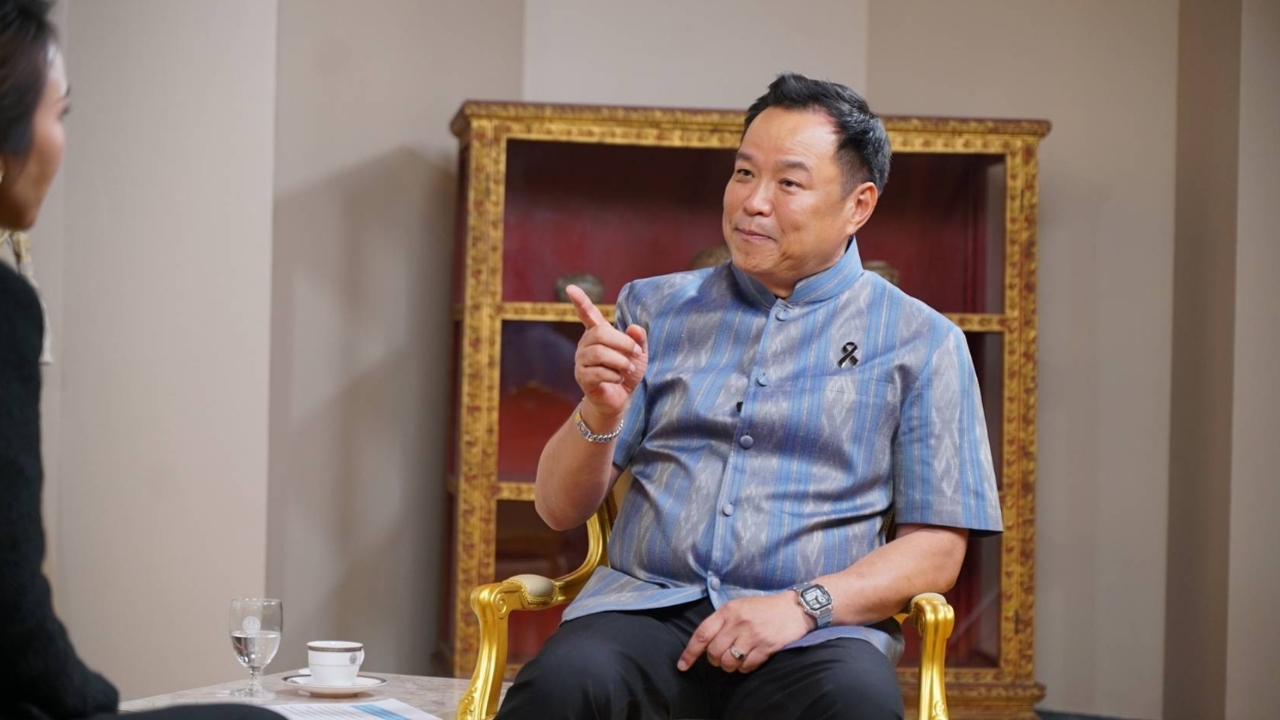
Anutin reveals the background of the US 18% tariff deal, writing a handwritten letter to Trump requesting tariff exemptions for Thai products. He denies withholding information about the negotiations and confirms Team Thailand worked at full capacity. The UK has started trade talks, hoping to conclude the EU FTA by 2027.
On 28 Nov 2026 GMT+7, Anutin Charnvirakul, Prime Minister and Minister of Interior, disclosed on the program “Talk with PM Anutin” the background of trade negotiations with the US after Thailand received a tariff ceiling proposal of 18%. He also described writing a handwritten letter to President Donald Trump requesting tariff exemptions for certain Thai products.
The 18% tariff proposal followed Thailand signing a Joint Statement with the US. The full Agreement on Reciprocal Trade (ART) is still being drafted by legal teams, while the USTR informed Thailand of cooperation in negotiations and finding solutions leading to key mutual conclusions.
Previously, Thailand had estimated a tariff range of about 19-20%, but the latest result capped it at no more than 18%. It is seen that higher tariff barriers would negatively affect investment climate, production planning, and exporters’ competitiveness in the US market.
Anutin also described that during the APEC meeting, Deputy Prime Minister and Commerce Minister Supachai Suthumpun asked him to write a handwritten note to President Trump to request additional tariff exemptions on key Thai products, citing examples like jasmine rice and corn.
“I wrote a handwritten note on paper starting with ‘Dear Mr. President,’ asking him to consider additional tariff exemptions on important products such as jasmine rice and corn, then handed it to him,” Anutin said.
The Prime Minister continued that after submitting the letter, he told Trump there was no need to read it but just to pass it on to the US Trade Representative. However, Trump read it carefully before placing it in his suit pocket. After the meeting ended, Anutin approached the USTR representative behind him to request follow-up on the matter directly from the President.
Anutin stated that regarding criticism accusing the government of hiding negotiation details with the US, trade agreements contain many details that require negotiation between both parties, and no one side can unilaterally set terms. He reaffirmed that Team Thailand worked fully to ensure progress in negotiations.
“I have nothing to hide. I don’t know who might be hiding what or trying to deceive whom. Everyone has reached this point; no one is smarter or dumber than anyone else. It depends on what compromises are made. Our Team Thailand has done everything to the best of our ability,” Anutin said.
The Prime Minister noted that progress in US trade talks has encouraged other countries to show greater interest in trade agreements with Thailand. The United Kingdom has already started negotiations, while discussions continue with partners at national, regional, and multilateral levels.
Each trade agreement takes considerable time, sometimes several years, such as the agreement with Peru which took about 5-6 years. Therefore, continuous negotiations are necessary to expand trade channels and increase opportunities for Thai products abroad.
Anutin said the government hopes to finalize the Thailand-European Union Free Trade Agreement (Thailand-EU FTA) by 2027, as it would open new trade opportunities for Thai entrepreneurs, including those who own and operate businesses in Europe.
Examples include department stores, food, paper, power plants, and restaurants. If the Thailand-EU FTA succeeds, it may enable greater imports of raw materials, components, or packaging from Thailand, whereas currently some products still face tariffs of about 20%.
The Prime Minister addressed progress on Thailand’s application to join the Organisation for Economic Co-operation and Development (OECD), saying Thailand has passed the first assessment but still has 24 steps remaining. Some steps can be pursued simultaneously without waiting to complete all sequentially.
The OECD Secretary-General has expressed positive views on Thailand’s efforts, including compliance with guidelines and cooperation, praising civil servants for preparing data and pushing the membership process continuously alongside political officials.
However, the important issue is not just the date Thailand becomes an OECD member but improving national standards starting now—regarding transparency, oversight, non-discrimination in trade, and prohibition of forced labor—without waiting to begin only after membership is granted.
When asked about corruption issues, Anutin said that increased scrutiny from society, independent organizations, courts, and justice processes requires officials and authorities to be cautious and act transparently. He emphasized that maintaining Thailand’s standards and credibility is an ongoing responsibility.