

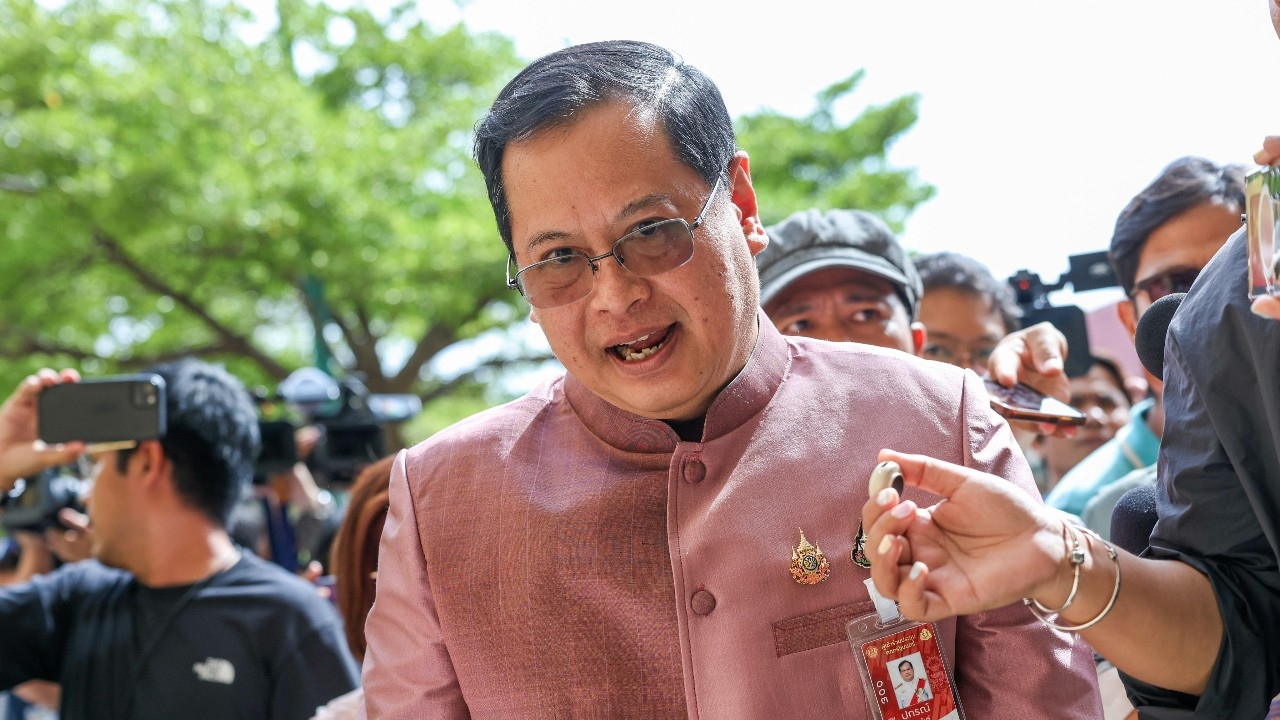
Deputy Prime Minister Pakorn Nilprapunt has rejected political speculation regarding the Cabinet's postponement of the Early Retirement project, insisting he was not humiliated. He explained that the Civil Service Commission and Budget Bureau were asked to refine figures and clearly address concerns. Emphasizing that he is not engaging in politics, he stated this concerns the national interest, pushing forward administrative reforms to reduce budget burdens, with a summary to be presented to the Cabinet by January 2027.
On 28 Nov 2026, Deputy Prime Minister Pakorn Nilprapunt posted on Facebook that many well-meaning people had sent him analyses about the Cabinet "sending back" the Early Retirement issue before proceeding. He thanked them but explained that he had been abroad on official business and then ill, so he had not seen these until recently. He only just learned that some analysts concluded he had been "politically humiliated."
He said he does not engage in politics or perhaps is thick-skinned, so he does not feel that way. The issue of civil servant numbers has long been discussed, and many former civil servants agree that with extensive use of technology to assist work, adding more staff is unnecessary. Many have urged him, warning that the current 73% recurring expenditure of the annual budget is excessive and that urgent cost reductions are needed.
He added that he has been working very hard. By 6 Dec, he will have served eight months and had already presented the basic principles to the Cabinet by the end of last month, which was very fast. All relevant agencies have collaborated to find solutions, gather opinions, and summarize principles for Cabinet consideration. He thanked all involved for their efforts.
He clarified that the Cabinet did not "send back" the project but rather "postponed consideration" to allow the Civil Service Commission and Budget Bureau to carefully review figures and clearly address Cabinet concerns—especially whether a large number of skilled staff leaving would affect operations, why payments are not made as a lump sum like in the private sector, ensuring no future requests to increase abolished positions, and so forth. Once complete, the proposal will be resubmitted to the Cabinet. The two agencies are currently working on this.
He explained that these issues have been thoroughly debated by the government workforce allocation committee. The details are known but may not have been clearly presented in the submitted documents. He emphasized that civil service reform is not just about reducing the number of civil servants or early retirement; other measures are being implemented simultaneously. He gave some examples.
(1) A ban on increasing workforce numbers beyond those existing on the date the Cabinet approved is already decided. The current authorized workforce is the maximum allowed. For the proposed early retirement measure, the workforce must be reduced by the number who retire early each year. How positions are managed is up to each agency.
(2) Restructuring government agencies without increasing positions to align with changing mission contexts, called "rearrange" by the Office of the Public Sector Development Commission, is allowed and has been encouraged for many years—since his time as secretary-general, about seven to eight years ago.
(3) Increasing use of digital technology in work will reduce administrative burdens and allow more online services without needing as many staff. Importantly, the government has enacted a royal decree connecting government data with electronic document standards, enabling the use of artificial intelligence for organizing and analyzing data. This requires redesigning work processes to eliminate unnecessary steps rather than digitizing outdated procedures.
(4) Changing civil servant employment models by increasing contract employees, currently about 200,000 general, service, and technical contract staff performing similar administrative roles as civil servants. Only about 12,000 hold specialized or expert professional positions.
(5) Addressing concerns about losing skilled staff, the screening measure allows agency heads discretion to approve applicants for early retirement, limiting participation to no more than 5% of each agency’s total civil servants annually. Not all applicants are automatically accepted.
He noted that while many worry about losing skilled staff, the opposite perspective suggests most current staff are not skilled, which is a strange logic implying the civil service hires mostly unskilled workers and promotes them. This indicates problems with past personnel management. He has tasked the Civil Service Commission to review and strengthen performance evaluations, noting that having 80-90% rated outstanding is not accurate.
Other ongoing measures include revising civil service laws and regulations to diversify hiring methods based on needs and missions, with appointments, transfers, and compensation aligned accordingly, rather than a one-size-fits-all approach. The long-used evaluation system is also being reviewed for suitability, a task assigned to the Civil Service Commission.
(6) The project design may be expanded or changed, such as offering very high one-time payments including pension, medical benefits, and other rights equivalent to normal retirement. Participants would waive future claims to pensions, medical care, and other benefits and manage the funds themselves to reduce long-term fiscal burdens.
Regarding participants, he does not believe they will simply stop their lives and wait to use the money. He expects many to become entrepreneurs to generate additional income, aligning with a future economy that is more open with more small businesses. The government's future role will be to facilitate and promote rather than control everything. These are the details to be proposed to the Cabinet. The Civil Service Commission aims to complete this by January 2027 to meet scheduled deadlines.
He reiterated that if reforms are not made, fiscal burdens will worsen soon because of population decline, reducing tax revenue used for the budget, potentially increasing deficits, which would harm the country’s future.
He concluded that no one is humiliating him; this concerns the public good and national interest. He urged everyone to think carefully for the country’s and future generations’ sake. He described himself as an ordinary citizen without special status, humorously adding, "Haha."