

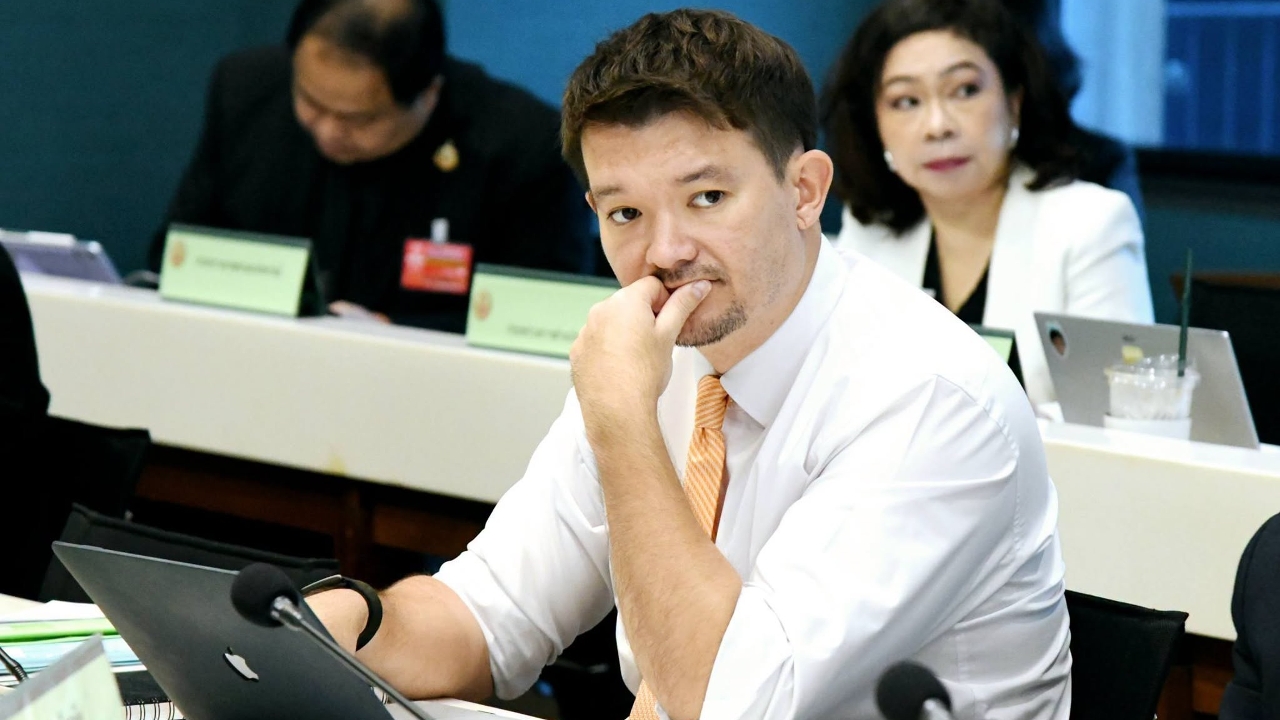
Phattharaphong highlights that tests of Kraburi River water in Ranong Province found arsenic exceeding surface water standards. He urges the government to speed up tap water treatment, secure backup water sources, and resolve upstream mining issues, expressing concern that Pak Chan Subdistrict Administrative Organization cannot handle long-term cross-border pollution.
On 29 Nov 2026, Phattharaphong Leelaphat, Member of Parliament for Chiang Mai from the People’s Party and chairman of the subcommittee studying cross-border water pollution in the House of Representatives, revealed that tests of Kraburi River water in Ranong Province detected arsenic levels exceeding surface water standards. He called on the government to urgently improve the tap water treatment system, provide alternative raw water sources for Pak Chan residents, and address pollution from upstream sources promptly.
On 21 Jul 2026, Phattharaphong and the subcommittee visited Kraburi River in Ranong Province and noted a clear difference in water conditions between the Yueng Canal on Myanmar’s side and the Thai side. The water on Myanmar’s side was much murkier; the Pollution Control Department measured turbidity at 212 NTU. Local fishermen reported impacts preventing them from fishing as before. Importantly, Pak Chan residents rely on Kraburi River as their main raw water source for tap water production.
Recently, environmental science research from Chiang Mai University, released on 26 Nov, found arsenic at 0.013 mg/L in Kraburi River water, exceeding the 0.010 mg/L surface water standard. Lead was detected at 0.043 mg/L—within surface water limits but about four times higher than the WHO drinking water guideline of 0.01 mg/L. Chromium test results remain inconclusive as differentiation of chromium types is still required.
Phattharaphong said coordination with Pak Chan Subdistrict Administrative Organization showed arsenic levels in treated tap water at 0.005 mg/L, within the 0.01 mg/L standard. However, current treatment effectiveness does not guarantee long-term capacity if raw water quality worsens. Also, there is no clear data on lead levels after treatment. He expressed concern whether Pak Chan’s administrative body has sufficient budget and resources to manage ongoing cross-border pollution problems.
He noted that the Kraburi water issue differs from the Kok and Sai rivers, which have regional waterworks with more resources and support systems and options like groundwater use for village water supplies. Pak Chan relies directly on Kraburi River water, necessitating urgent planning for treatment system upgrades and backup water sources if raw water quality declines further.
Meanwhile, upstream pollution sources from mining activities are expanding. Data shows tin ore imports through Ranong checkpoint in 2026 exceeded 4,000 tons, up from about 2,000 tons in 2025. However, there is no clear information on which mines the ore came from or on chemical and waste management from mining operations.
He therefore called on the government to take five urgent actions:
1. The Department of Health should test for arsenic, lead, other heavy metals, and chromium in Pak Chan tap water after treatment, and publicly disclose the results.
2. Expedite improvement of the tap water treatment system. The subcommittee has already coordinated with Pak Chan Subdistrict Administrative Organization and technology agencies like Nanotech, urging budget allocation and planning for alternative raw water sources for Pak Chan.
3. Issue ministerial regulations controlling ore and chemical imports without delay, requiring disclosure of mine coordinates, treatment systems, and wastewater test results. Imports should be banned if data cannot be verified.
4. The Pollution Control Department should regularly monitor both Yueng and Kraburi canals and make all test results publicly available.
5. The government should raise the Kraburi water pollution issue in Thailand-Myanmar cooperation mechanisms. He noted that the joint working group meeting on 25 Nov did not address this despite the need for comprehensive cross-border pollution solutions.
He confirmed ongoing follow-up on all demands until receiving concrete responses and effective measures to solve the problem.