

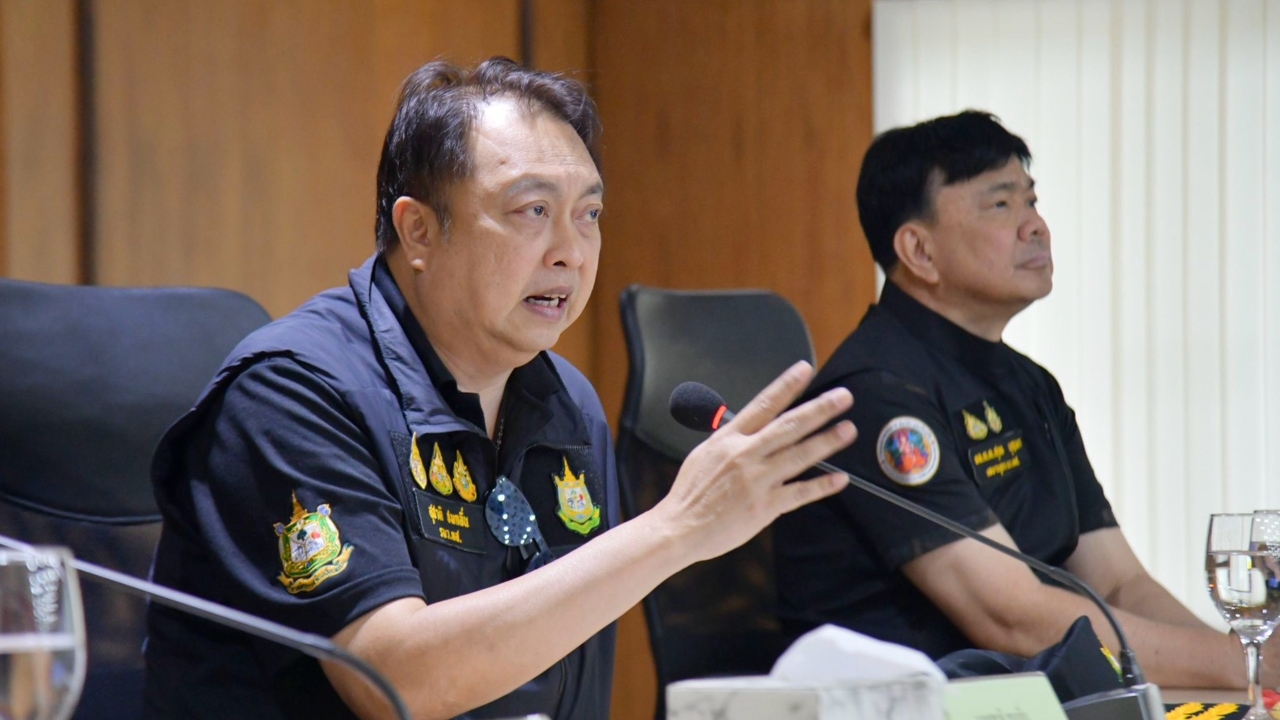
Suchart accepted the Prime Minister’s directive to dismantle the toxic waste cycle in eight eastern provinces, establishing two subcommittees to pursue the syndicates and prosecute to the root cause. A 90-day deadline was set to achieve real results and restore a safe environment for the public.
29 Nov 2026 GMT+7 Suchart Chomklin, Minister of Natural Resources and Environment and chairman of the Disaster Prevention and Mitigation Committee for the Eastern Region, launched a serious operation to intensify the crackdown on toxic waste and industrial waste problems. He announced efforts to dismantle syndicates illegally dumping and burying toxic waste at the source by establishing two subcommittees focused on suppression and law enforcement. The aim is to integrate forces from all agencies to investigate, expand results, and prosecute offenders decisively, with a 90-day deadline for tangible operational outcomes.
At a meeting to monitor and resolve toxic waste and industrial waste issues at Prachinburi Provincial Hall, Suchart gave urgent directives to provincial governors and relevant agencies in eight eastern provinces—Prachinburi, Chonburi, Rayong, Chanthaburi, Trat, Chachoengsao, Nakhon Nayok, and Sa Kaeo—to join forces to close loopholes for illegal industrial waste dumping, which harms natural resources and the environment, including water sources, soil, air, agricultural products, and public health, especially in Prachinburi province, which has faced prolonged accumulation issues.


Suchart stated the government under Prime Minister Anutin Charnvirakul prioritizes serious resolution of this issue. No agency will evade responsibility by claiming “not their duty.” All parties must systematically manage the problem. Investigations will cover all violations, including licensed factories illegally dumping waste, unauthorized factories, operations exceeding legal limits, abandoned warehouses, pits, and agricultural forest areas used as illegal toxic waste burial sites. Five operational guidelines were set as follows:
1. Prosecute decisively without exception, regardless of whether offenders are Thai or foreign investors, influential persons, or state officials involved in dereliction of duty.
2. Expand investigations to the root of the syndicate, from waste transport contractors and source factories to beneficiaries. If money laundering or special cases are suspected, immediately coordinate with the Anti-Money Laundering Office and the Department of Special Investigation.
3. Manage accumulated toxic waste and prevent new waste by promptly rehabilitating contaminated sites scientifically, adhering to the polluter-pays principle.
4. Protect the public by monitoring environmental and health impacts, transparently disclosing information, and establishing whistleblower protection systems.
5. Mobilize local forces by designating provincial governors as central coordinators to liaise with district chiefs, local administrative organizations, village chiefs, and community networks to closely monitor and inspect high-risk areas.
“I want to see clear solutions, not just meetings or reports. There must be real action, genuine inspections, arrests, and prosecutions of those behind the scenes. The government supports operators conducting business legally but will not tolerate anyone using the eastern region as a dumping ground for toxic waste or exploiting people’s suffering. Within 90 days, all agencies must demonstrate tangible management of this problem. We will not allow toxic waste to become a harmful legacy for future generations. We must restore a safe environment for the people.”

