

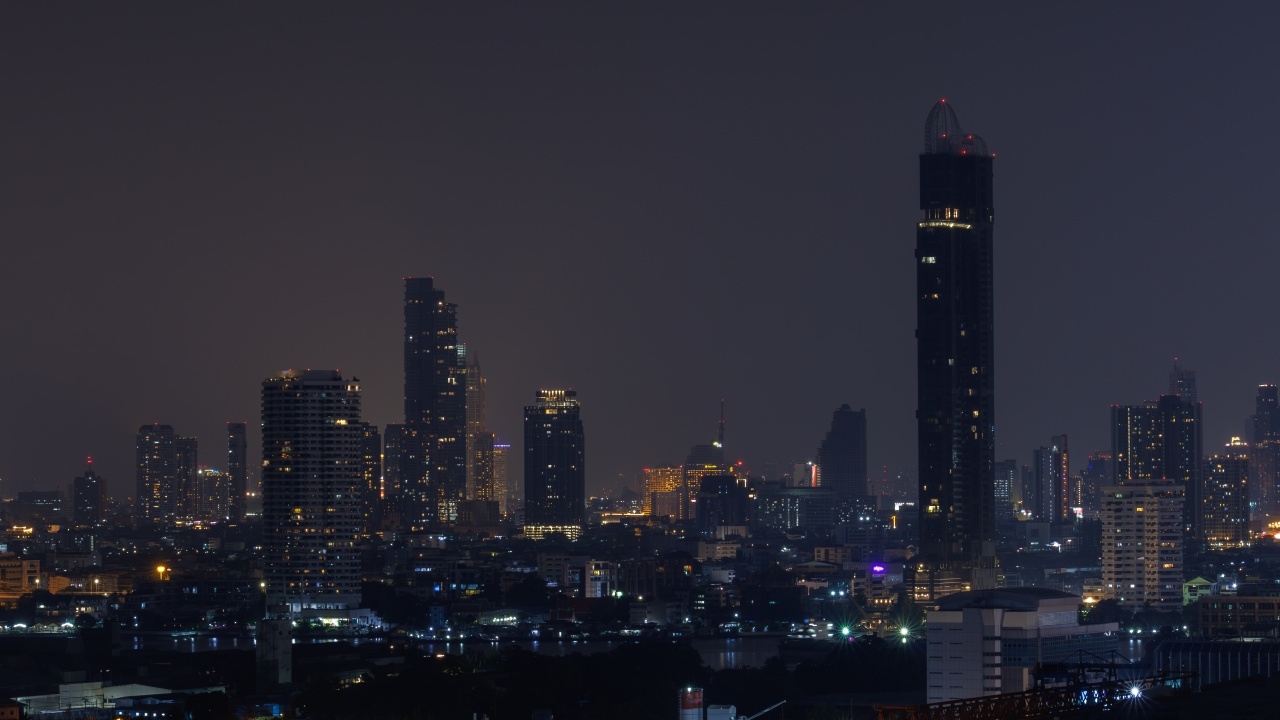
"Winter Solstice" The longest night of the year occurs on 21 December 2025, lasting about 12 hours and 41 minutes. For countries in the Northern Hemisphere, this marks the beginning of "winter" while countries in the Southern Hemisphere enter "summer."
Mr. Supharuek Karuhanon, Assistant Director of the National Astronomical Research Institute of Thailand, revealed that this year, Thailand will experience its longest night on 21 December 2025, a day known as "Winter Solstice." (pronounced Wĭn-ter Sol-stice) The sun rises at its most southeastern point and sets at its most southwestern point on the horizon.
Each day, the sun appears in different positions, shifting about 1 degree daily. Since September, the sun has gradually moved from directly over the equator down towards the south. This is observed by the progressively earlier darkness in the sky. When the sun reaches its southernmost position on the Winter Solstice each year, the night is longest and the day shortest. In Bangkok, the sun rises around 06:36 and sets around 17:55, totaling just 11 hours and 19 minutes of daylight.
Furthermore, the Winter Solstice marks a seasonal change: countries in the Northern Hemisphere enter winter, while those in the Southern Hemisphere enter summer. Earth's seasons arise because its axis is tilted 23.5 degrees relative to the plane of its orbit around the sun. This tilt causes varying sun angles and heat energy received across different regions, resulting in temperature differences and varying lengths of day and night. In summer, the sun rises earlier and sets later, producing longer days than nights, whereas in winter, the sun rises later and sets earlier, making nights longer than days.
Over the course of a year, as Earth orbits the sun, four key solar events occur related to sunrise and sunset: the Vernal Equinox and Autumnal Equinox, when day and night are equal in length; the Summer Solstice, with the longest day; and the Winter Solstice, with the longest night. Those interested can follow more phenomena on the National Astronomical Research Institute's Facebook page at www.facebook.com/NARITpage or their website www.NARIT.or.th.