

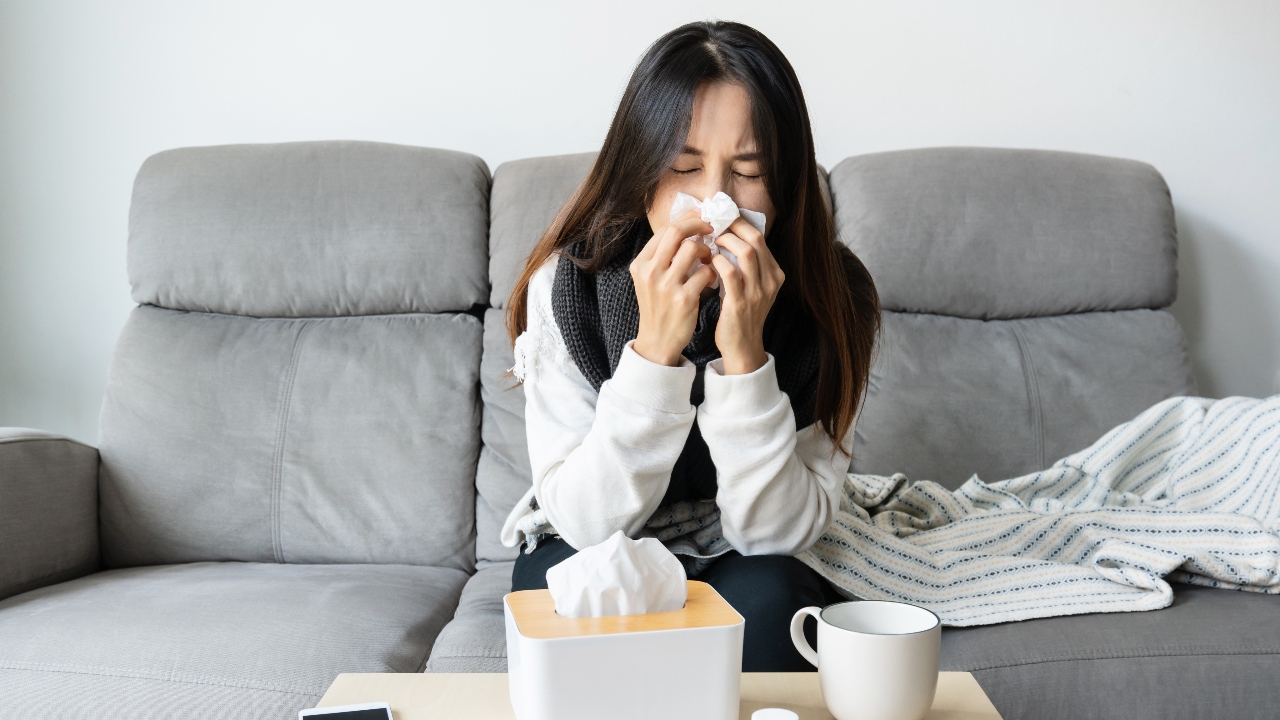
Dr. Yong warned that influenza is currently spreading widely, especially the A H3N2 strain, which is concerning due to genetic mutations that make it more easily transmissible, though the severity of the disease has not increased.
On 8 January 2026, Professor Dr. Yong Poovorawan, head of the Clinical Virology Specialty Center, Department of Pediatrics, Faculty of Medicine at Chulalongkorn University, posted about the widespread influenza outbreak and changes in the virus strain.
He stated that from last year to now, there has been a large influenza outbreak. The strain of concern currently is influenza A H3N2, which has undergone genetic changes greatly reducing vaccine effectiveness.
Last year saw the highest number of influenza cases recorded by the Ministry of Public Health to date. Early last year, the outbreak was caused by the A H1N1 2009 strain, but by the end of the year, the circulating strain shifted to influenza A H3N2.
Influenza B has been detected occasionally as the Victoria strain only; the Yamagata strain has not been found in five years. Therefore, there is no need to use a quadrivalent vaccine; a trivalent vaccine is as effective as a four-strain vaccine.
The influenza A H3N2 strain spreading widely in the Northern Hemisphere during this winter is concerning due to genetic mutations in the HA1 immune system region at about 6–9 sites, allowing it to evade existing vaccines. This strain is classified as the K type, leading to widespread infection and a large number of cases.
However, despite increased transmissibility due to these changes, the disease's severity has not increased, nor has antiviral medication effectiveness decreased. The rise in cases is mainly due to reduced vaccine effectiveness.
Even though vaccine effectiveness has decreased, vaccination against influenza is still recommended because the current vaccine is an inactivated vaccine that is safe, has very few side effects, and is not expensive.
In Thailand, the new Southern Hemisphere vaccine will arrive in March this year to help prevent outbreaks during the rainy season.
Information from Yong Poovorawan